
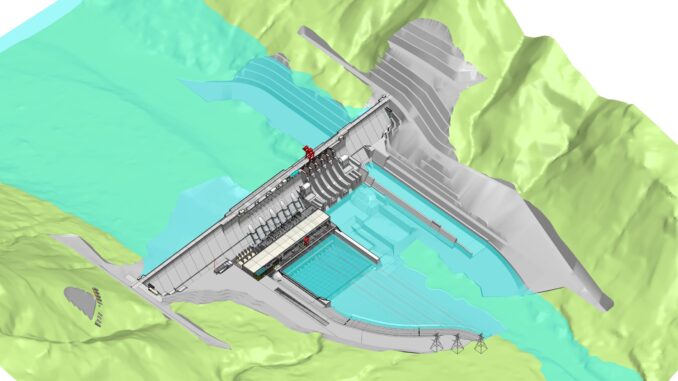
At the Year in Infrastructure 2016 conference in London, the Be Inspired Awards attracted over 300 submissions. Many of these were impressive in how they applied digital technology to designing, constructing and maintaining buildings and infrastructure. The winner of this year’s Power Generation sector award was a remarkable full-lifecycle BIM project for a hydropower projects in a remote part of Yunnan, China.
Longkaikou hydro-power station is located in Heqing County, Dali Autonomous Prefecture, Yunnan Province. The primary focus of the project is generating electricity, but it also supports irrigation, water supply and flood control. The dam is a concrete gravity dam. There are five turbine-generator units with a total installed capacity a 1,800MW. Construction began in 2007 and in 2012 the reservoir began to fill. By January 2014, all power generation units were fully operational.
The Longkaikou hydropower station is the first hydropower station in China that fully employed 3D digital design technology from the start of the project. Design of the power plant began in 2005. More than 20 different disciplines were involved including geology, hydraulic, plant, water diversion, construction, road & bridge, metal structure, hydro-machinery, electrical, HVAC, and drainage.
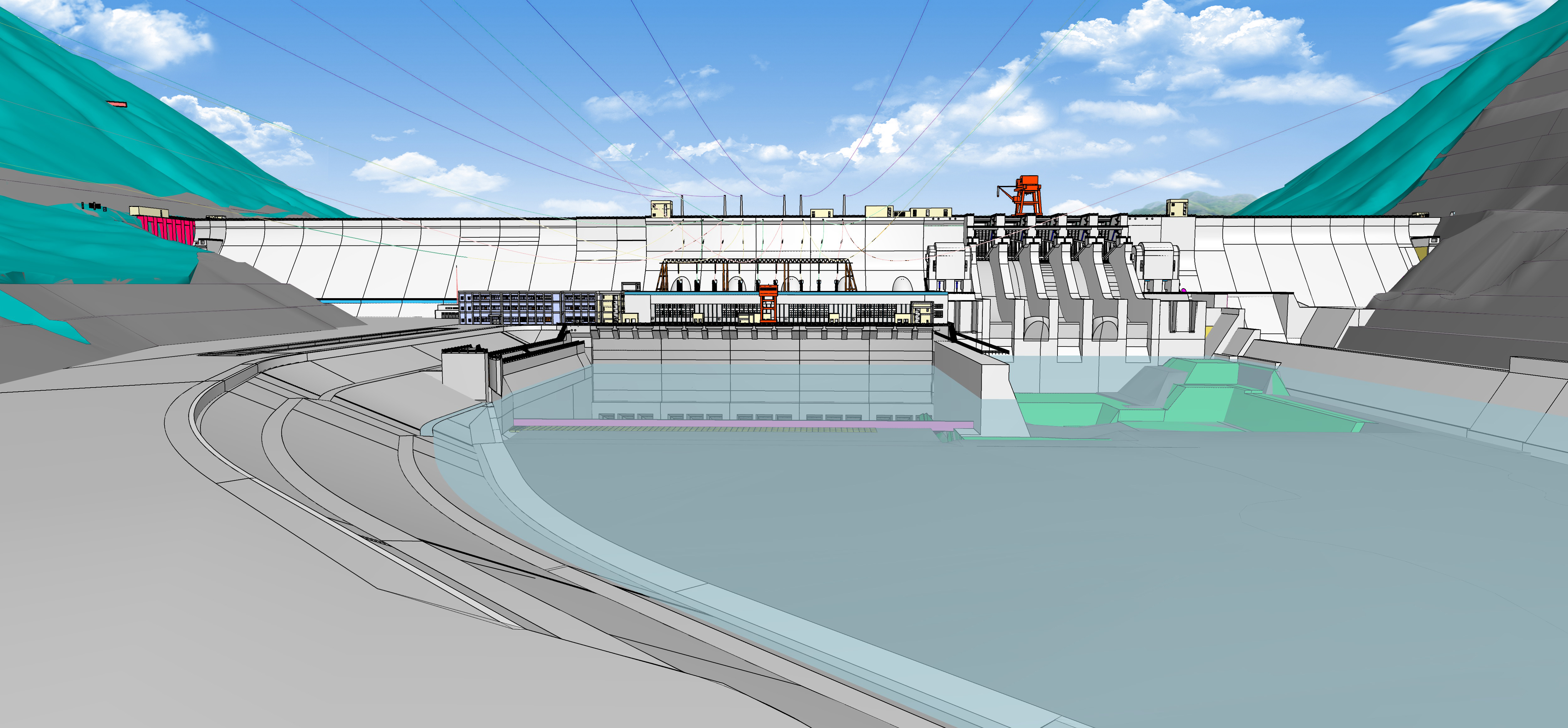 PowerChina Huadong Engineering Corporation (Huadong Institute) was responsible for design of the project. It was the first institute in China’s hydropower industry who migrated from traditional 2D CAD design to 3D collaborative design. The project employed digital model throughout the lifecycle. The project survey, design, construction and operation are all digital. This is considered a revolutionary technical innovation in the Chinese hydropower industry.
3D digital design greartly improved the efficiency of the design process by enabling collaborative design. Clashes between designs from different design teams were greatly reduced and product quality was significantly improved. For example, equipment clashes were reduced by 95%. The amount of on-site design change was reduced by over 80%. In the design of some equipment systems and the preparation of drawings, design time reduced by more than 50%.
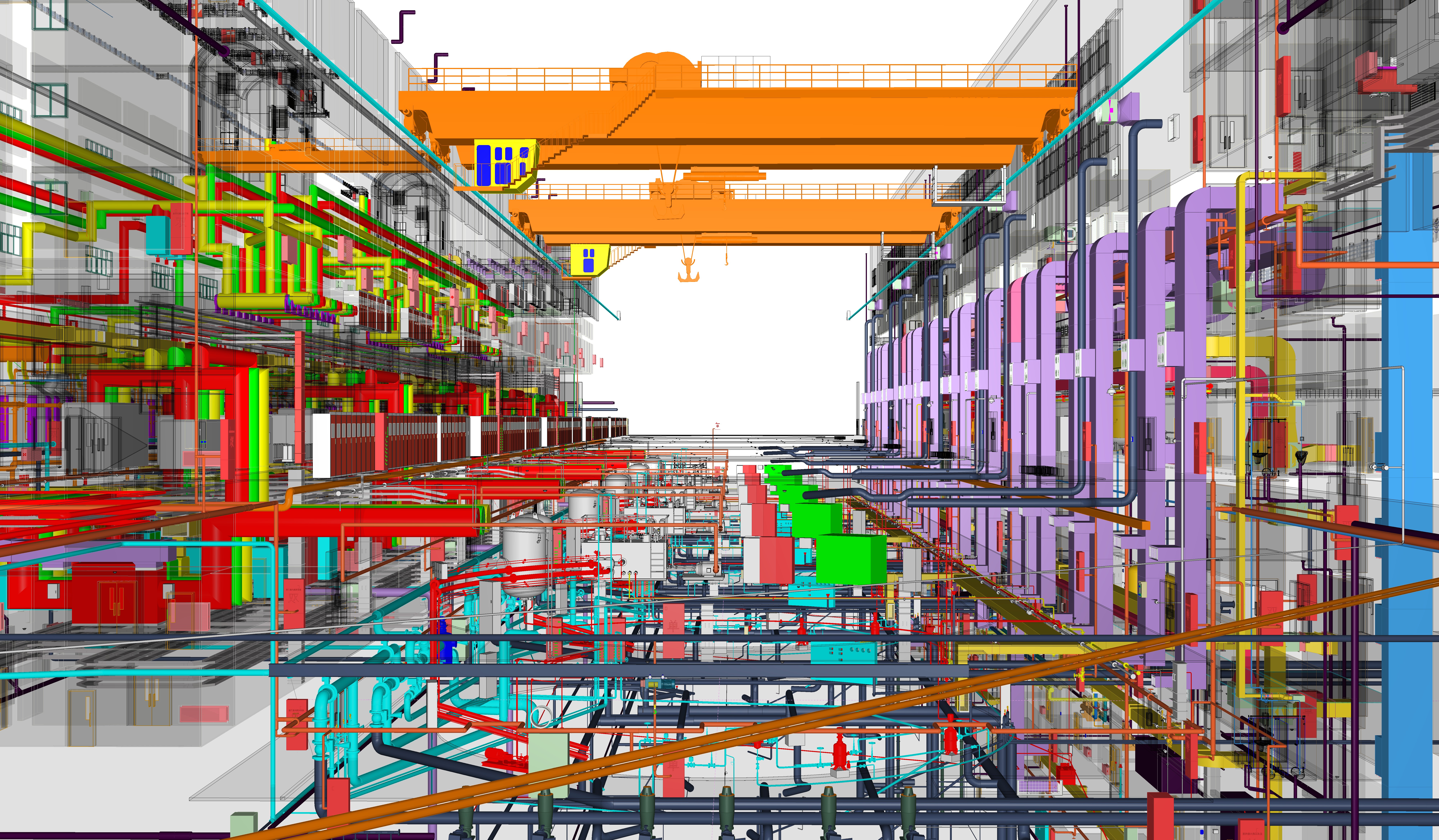 The efficiency of collaboration between disciplines was significantly improved. Being able to view designs from different design teams in one unified model greatly reduces the time for review and signoff. In the past, it usually took more than one month to review and signoff a power plant’s layout drawings. With 3D modeling, collaboration between disciplines improved design efficiency by over 40%.
The digital design platform made it possible to assess alternative design scenarios in order optimize designs. It is estimated that optimization of the dam’s foundation surface construction based on a 3D geological model saved about CNY 194 million in engineering costs. The dam’s foundation’s is unique and complex and required innovative engineering because there was no previous model to follow. Using a 3D model of the geology (digital terrain model) made it possible to design and compare alternative construction scenarios to optimize the design. As a result of design optimization, the project was completed about 10 months ahead of schedule, creating economic benefits of up to CNY 1.79 billion.
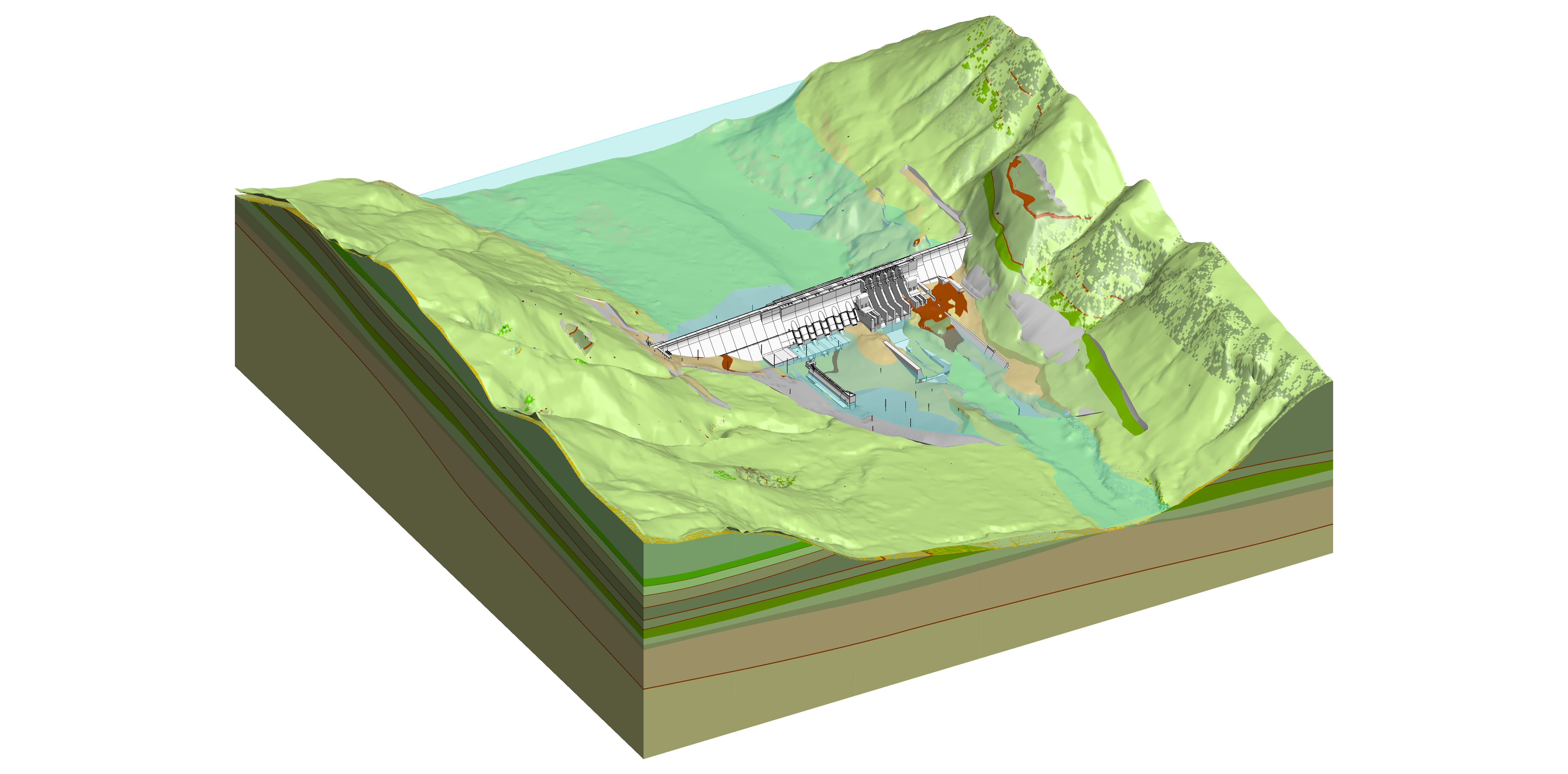 With the use of 3D digital design and geo-coordination, the Longkaikou Hydropower Station project not only enjoyed a shortened design cycle, improved project and service quality, and reduced construction costs, but also provided the basis for digital operation and maintenance of the facility by the owner. Geo-coordination, a term minted by Bentley, is key to integrating data from many different sources including reality modeling, 3D building models and associated information. Bentley recognized the value of geo-coordination very early on. With all Bentley applications in the last 12 years every infrastructure asset has geo-coordination in the form of real world x y z coordinates. It is recognized as essential for full-lifecycle (design, build, maintain and operate) BIM. In this project it was fundamental not only for integrating the dam and hydropower plant design and the digital terrain model, but also for making it possible to reuse the BIM model and associated data during operation and maintenance.
The design was praised by both the construction contractor and the owner. It enhanced the core competitiveness and reputuation of the Huadong Institute, establishing a strong foundation for winning future hydropower projects.

Be the first to comment