

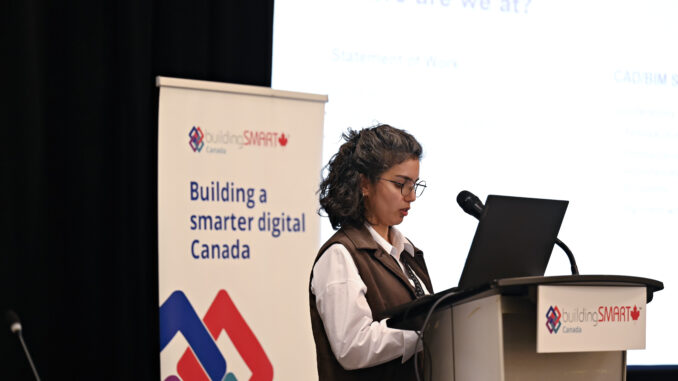
As governments and institutions worldwide embrace the digital transformation of the built environment, there is one key question to answer: What does it mean to be a “knowledgeable owner” in the age of BIM and digital twins? At GeoIgnite 2025, Ozge Kuden’s CAD/BIM Specialist at Defence Construction Canada (DCC), offered a compelling perspective on this question. The answer lies in strategic adoption of ISO 19650 and the principles of OpenBIM.
Why ISO 19650 Matters
Ozge emphasized that ISO 19650 is more than a set of technical standards. It’s a framework for collaboration, data governance, lifecycle thinking, and the foundational elements needed to manage the increasingly complex assets under public ownership.
(If you’re not familiar with ISO 19650, check out this introductory article.)
For organizations like DCC and their client, National Defence’s RPSpatial Group, applying this standard is crucial to supporting national security, operational readiness, and long-term infrastructure sustainability.
But aligning existing workflows with ISO 19650 is not a small task. Government projects often operate in silos, shaped by historical processes, multiple stakeholders, and localized requirements. Each department or project site might have its own way of working, with legacy systems and fragmented communication making standardization difficult.
The Role of OpenBIM
According to Ozge, OpenBIM is a powerful enabler of interoperability and collaboration. OpenBIM ensures that data can be exchanged, reused, and audited across different platforms and teams without being locked into a single vendor’s ecosystem.
For National Defence projects, where information must remain accessible and verifiable across long asset lifecycles, OpenBIM supports better decision-making and risk mitigation. It also ensures that when ownership or responsibilities change (whether internally or externally) the data remains reliable, structured, and secure.
Collaboration is Not Optional
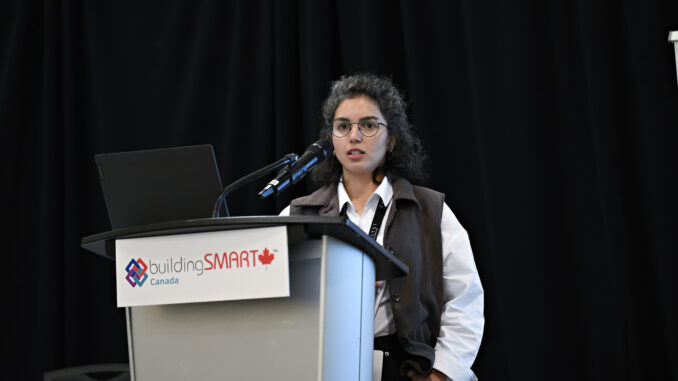
One of Ozge’s strongest messages was that digital transformation cannot succeed in isolation. It requires bringing together architects, engineers, contractors, and clients to define and implement Exchange Information Requirements (EIRs) from day one. These documents align expectations and ensure that the right data is captured and delivered at each project phase. Becoming a knowledgeable owner means more than mandating standards. She explained at DCC, project information templates and digital workflows that reflect this alignment are currently being developed . Also pilot projects and academic collaborations to test and refine the approaches before scaling it across the organization is being supported.
Barriers and Breakthroughs
Ozge added that no transformation comes without resistance. Many teams are unfamiliar with BIM processes or unsure how to implement ISO standards in real-world projects. Others may feel overwhelmed by the shift from traditional deliverables to data-centric outcomes.
What’s needed is a cultural shift, supported by training, education, and clear guidance materials. We’re working to bridge this gap, providing both policy and practical resources to help teams build confidence and consistency.
Looking Ahead: From Documents to Data
Ozge illustrated a future where information is treated as a strategic asset, not just for design and construction, but for maintenance, operations, and beyond. This means moving away from paper-based thinking and toward structured, accessible, and intelligent data environments. At the heart of this effort is the concept of the “knowledgeable owner”: someone who knows what data they need, when they need it, and how to use it to make decisions that are sustainable, accountable, and aligned with national priorities.
A Call to Action
In her closing remarks, Ozge encouraged both public and private sector organizations to invest not just in digital tools, but in governance, communication, and collaboration. By embracing open standards like ISO 19650 and OpenBIM, and by sharing lessons learned, digital maturity of Canada’s infrastructure sector will be advanced.
“Ownership doesn’t start at handover,” she said. “It starts with understanding.”
DCC remains committed to this journey and they welcome collaboration with others striving toward the same goal.



Be the first to comment