
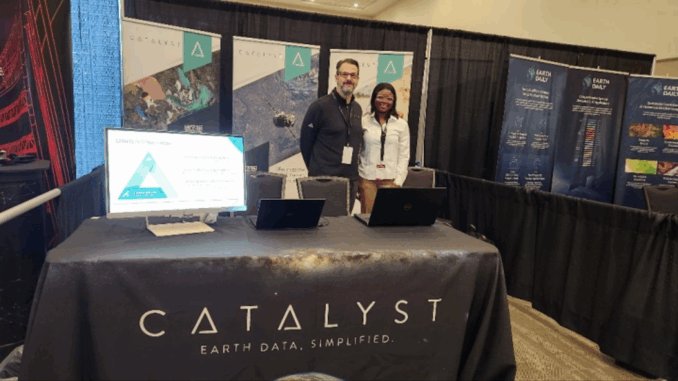

Why the name ‘Catalyst’? What’s the story behind that re-branding?
Catalyst is the brand we created to modernize and expand the identity of PCI Geomatics, which has been around since 1982. As the industry shifted—especially with the rise of cloud computing and growing demand for insights over raw data — we wanted a name that reflected transformation. The word “catalyst” signifies change, and that’s what we’re about: helping clients do things differently using our technology.
The rebranding marked a new direction for us — toward delivering scalable, operational-ready geospatial solutions that simplify complex Earth observation workflows. We’re focused on helping users get actionable information faster, whether they are monitoring environmental changes, planning infrastructure, or analyzing land use. That shift, from selling tools to enabling decisions, was central to the rebrand.
How do you see Catalyst’s role evolving in the broader shift toward operationalizing EO data for decision-making across industries?
We see our role as part of a growing movement to make Earth observation truly operational — not just for experts in remote sensing, but for planners, analysts, and decision-makers across sectors. It’s about turning geospatial intelligence into a daily utility.
At Catalyst, we are focused on delivering that through flexible deployment — whether via cloud infrastructure, lightweight APIs, or desktop applications. But it’s not just about the tech, but about making the experience intuitive and scalable, so users don’t have to think about the complexity behind the scenes.
We also see huge potential in partnerships — integrating our capabilities into broader geospatial ecosystems where EO becomes one input among many. That’s how we help clients unlock real value: by embedding remote sensing into everyday workflows that support smarter decisions.
What inspires your product strategy at Catalyst?
I am motivated by the real-world impact Earth Observation can have on operational decision-making. EO and geospatial analysis have immense potential, but they are often underutilized or misunderstood. I enjoy translating these complex technologies into clear, usable information products that solve real problems. That’s where the inspiration lies — helping customers discover solutions that enhance how they manage their work.
You have played a role in making complex tech more accessible. How does storytelling play into that?
Storytelling is an essential part of this strategy. When I joined the company, there wasn’t much in the way of video content or tutorials. So I helped start a YouTube channel to demonstrate how to use our products in practical, understandable ways. That content is still used today, even 10–15 years later. Clear communication removes barriers and helps users feel empowered, especially when they’re first encountering tools that might otherwise feel overwhelming.
I actually started in journalism. But I took a geography course in university that introduced me to Landsat and SPOT satellites, and I was hooked. The visuals and possibilities fascinated me. From there, I transitioned into geospatial science and never looked back. So, this background helped a lot.
What trends do you see shaping the future of the EO industry?
One major trend is the explosion of data from new satellite missions. While the excitement around launching satellites is real, a key challenge is ensuring that the data collected gets turned into useful products before those satellites degrade or become obsolete. Processing that massive volume of data efficiently and delivering value quickly is where the future lies, and where companies like ours play a critical role.
For those aspiring to build a career in geospatial science, what do you believe are the most important things to keep in mind?
The younger generation has more to offer than they often realize. They bring fresh perspectives and a strong voice to the table. My advice would be to lean into that, participate in events, ask questions, and don’t be afraid to be seen or heard. Building confidence is key.
Also, be proactive. Document your projects, create a portfolio, and share your learning journey, whether through LinkedIn, GitHub, or a personal website. This shows curiosity and initiative. Every small project adds up, especially when you can point to something tangible that reflects your skills and interests.
Lastly, patience is important. Growth in this field takes time, and early on, it might require putting in extra effort or even unpaid work to gain experience. But those steps are valuable investments in your career.


Be the first to comment