

The Canadian Space Agency has opened a new call for expressions of interest for a project known as the Quantum Communications and Networking Demonstrator. The call is part of a growing effort to prepare for secure, long distance communication using quantum technology. It also aligns with the upcoming launch of QEYSsat, Canada’s first quantum communications satellite, planned for 2026.
A G7 Commitment That Set the Stage
This initiative traces back to the G7 meeting held in Kananaskis, Alberta in June 2025. At that meeting, Canada and the United Kingdom made a commitment to work together on secure, transatlantic communication systems that draw on quantum technology. The agreement reflects an interest among G7 nations to strengthen critical digital infrastructure and explore new ways of protecting information as technology evolves.
The goal is to connect national systems and to lay the foundation for a future global network that supports secure data exchange. The current call from the CSA is one step toward that broader vision.
Inside the CSA’s New Initiative
The CSA is inviting eligible organizations to share non committal project ideas that will help prepare for an in orbit quantum communications demonstration. This demonstration would involve secure links between a satellite and ground networks in both Canada and the UK. The agency also encourages proposals that involve potential end users who may rely on secure communication systems in the future.
At the same time, Innovate UK has launched its own call for terrestrial demonstrations of quantum communication and networking. These activities are meant to build readiness for a joint demonstration that would eventually involve a satellite mission with Canada.
The deadline for submitting an expression of interest is December 12, 2025.
Understanding the Technology
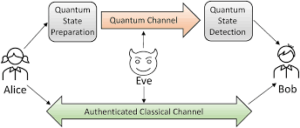
Quantum communication uses the properties of quantum particles to exchange encryption keys in a way that makes them extremely difficult to intercept. A common technique is quantum key distribution, which allows two parties to create a shared secret key with a level of security that is not possible with traditional methods.
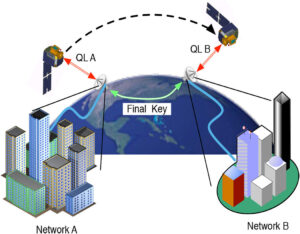
Satellites play an important role because quantum signals cannot travel long distances through optical fiber without degrading. A space based link can bridge larger gaps, including transatlantic distances. Before a satellite demonstration can take place, the ground systems in both countries need to be ready to send, receive, and test these signals.
QEYSsat and Canada’s Quantum Roadmap
QEYSsat is scheduled for launch in 2026. It will be Canada’s first satellite dedicated to quantum communication research and will help scientists test secure links between space and ground stations. The mission is a key part of Canada’s National Quantum Strategy, which was released in 2023 and aims to advance quantum research and commercial development.
The new expression of interest supports that strategy by encouraging Canadian groups to explore applications, technologies, and partnerships that could work alongside QEYSsat or inform future missions.
Where the World Stands on Quantum Networking
Several countries are also investing in quantum communication research. China has already conducted space based experiments using the Micius satellite and continues to test quantum key distribution over long distances. The European Union is building its EuroQCI program, which aims to connect member states through a combination of terrestrial and space based links. In the United States, the Department of Energy has outlined plans for a future quantum internet and continues to support research through national laboratories.
These efforts show that many nations are exploring ways to secure communication systems for the future. Canada’s initiative fits within this larger global movement.

Why This Matters for Canada
The development of quantum networking is still in progress, but early preparation helps ensure that Canada has the infrastructure and expertise needed to participate in future communication systems. The call for expressions of interest gives Canadian researchers, companies, and potential end users an opportunity to shape what an in orbit demonstration could look like.
It also strengthens scientific collaboration with the United Kingdom and supports long term goals outlined in the National Quantum Strategy.
What Comes Next
There is still a great deal to test and refine. The current call for project ideas is meant to gather input and understand what Canadian groups can contribute. As both countries advance their plans, new partnerships and technical pathways may emerge.
The Quantum Communications and Networking Demonstrator marks another step in Canada’s plan to explore secure communication through quantum technology. With QEYSsat set for launch in 2026 and new commitments to international collaboration, Canada is positioning itself within a wider effort to develop the next generation of communication networks. Interested groups have until December 12 to submit their ideas to the CSA.



Be the first to comment