

Canada is entering a once-in-a-generation infrastructure boom — ports, roads, pipelines, renewable energy projects, and national security initiatives are all ramping up under the federal government’s 1.5% GDP commitment to critical infrastructure. But even before shovels prepare to hit the ground, a quieter crisis threatens to derail progress: the collapse of Canada’s geomatics education pipeline.
Across the country, surveying and geomatics programs are shutting down. Post-secondary funding is shrinking. Employers are struggling to find skilled field technologists and crew chiefs — especially in remote or resource-intensive projects. The result is a growing disconnect between what Canada needs to build, and the people it has to build it.
To better understand the roots of this disconnect, GoGeomatics is conducting a special interview series with senior education professionals across Canada. This is the second in that series.
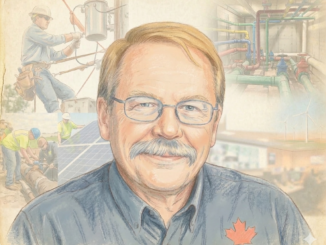
In this edition, we speak with Carina Butterworth, a veteran instructor in SAIT’s Geomatics Engineering Technology program and a passionate advocate for practical, field-ready training. Based in Calgary, SAIT (Southern Alberta Institute of Technology) is one of the country’s most prominent polytechnic institutions — and a long-time training ground for surveyors, geomatics technologists, and applied geospatial professionals. With a strong track record of industry engagement, SAIT sits at the intersection of education, technology, and workforce development — making it a key player in addressing Canada’s skills gap.
In this unfiltered and deeply informed conversation, Butterworth discusses what’s broken — and what it will take to fix it.
How would you describe the current state of geospatial and geomatics education in Canada? Is it fair to call it a crisis?
I’d say it’s a dire state. It’s been progressively getting worse. Maybe 25 years ago it was amazing, but it’s gone downhill. Education institutions are closing programs — it’s not a good position to be in. There’s potential, but we need major societal changes.
The biggest factor behind this decline is cost. Running geomatics programs is expensive — maintaining equipment, purchasing or renting software, hiring instructors with field experience — it all adds up. Even with educational discounts, we’re not breaking even.
At the same time, there’s a perception of oversaturation. It sounds strange, because we keep hearing there aren’t enough skilled workers — and that’s true on the field side. But there are also so many master’s, undergrad, and diploma programs producing graduates who still aren’t finding jobs. So, it’s both oversaturation and over-specialization.
And then there’s the terminology problem. The term “geomatics” is still unfamiliar at the K–12 level. We try to get the word out, but there’s no consistent language. One person thinks geography is geomatics, another thinks civil engineering is surveying. That confusion spreads us too thin, and makes it harder to attract students. The more specialized programs, in particular, struggle to get enrollment.
RELATED READ:
- ‘We’re Losing Talent We Can’t Afford to Lose’: NAIT’s Patrick Whitehead on Geospatial Program Closures
- Treat Geomatics Like a National Asset, Not an Afterthought
But industry says it needs more people, yet graduates can’t find work. Where’s the mismatch?
Industry wants skilled workers who can do everything, but especially fieldwork. Most job postings ask for crew chiefs, but that’s not a glamorous job. Many students don’t want to work outside.
Universities prepare students for tech jobs, which can be limited. So, students go into surveying jobs temporarily, waiting for a tech job to open up. Even when we fill seats, students don’t want to be in the bush—they want a desk job.
The focus on credentialing means people are expected to come out knowing advanced math, least squares, geodesy—but you don’t need to do calculus in the field. There’s demand for people who may not have done well in high school but want to work hard outdoors. We should be training those people in an apprenticeship-style program.
Right now, our programs are geared towards high academic achievers, but someone with a 95% average likely doesn’t want to be driving a quad around. That’s the mismatch — industry needs boots-on-the-ground workers, but academia is producing analysts.
So, the demand is on the field side, not the desk side?
Exactly. Analysts and office roles are filled by diploma and degree grads. But the field side—that’s where we’re missing people. SAIT, NAIT, COGS, and BCIT are some of the few producing field-ready graduates.
Calgary alone has four programs producing GIS grads annually. If SAIT previously had four GIS intakes, that’s 128 grads a year just from one school. Multiply that across institutions—it’s no surprise we don’t have enough people staying in the field.
Job postings in Alberta rarely ask for plan checkers or licensed surveyors — they ask for crew chiefs. But most grads don’t want to stay in those roles because they went to school to avoid being in the field.
Why hasn’t academia adapted? Why not orient diplomas and certificates toward field technologists?
Because of our regulation and accreditation. Our accreditation boards require that certain topics be covered. If you want to run a geomatics program, it must meet CBEPS [Canadian Board of Examiners for Professional Surveyors] or other criteria. That sets the bar high. And to get government grant funding, we need to be accredited.
But these accredited programs are becoming financially unviable. That’s why SAIT is looking into an apprenticeship-style certificate program. Students would spend 8-12 weeks in school, then go to work, then return for another 8-12 weeks, over 3-4 years.
It won’t be accredited — it would be private, and costly, because the government won’t fund it. The cost saving, though, is significant — if the fieldwork happens with companies, we may not even need all the equipment we currently purchase. That makes the model much more sustainable.
Have you approached the government to highlight the mismatch and its impact?
In Alberta, post-secondary is seen as a liability. If we ask for support, we’re brushed off. We’re not respected at the policy level. Only industry can successfully lobby for change.
We spoke with Alberta’s apprenticeship office—they said we’d need 80% of industry to agree in order to designate a mandatory apprenticeship for crew chiefs. That would require regulating the role. Like electricians, it would become a liability-regulated profession.
But I don’t think our industry wants that level of regulation. It would mean having to certify and regulate everyone in those roles—and most aren’t ready for that.
Are these issues limited to Alberta, or is this a Canada-wide problem?
It’s across the country. Ontario recently laid off 60,000 post-secondary staff. At SAIT, we used to get 80% of our budget from the Alberta government. Now it’s 38%. The funding just isn’t there.
Is there a working model elsewhere?
Maybe Europe, where tuition is free and professors are respected—but that’s not comparable. The U.S. is closer. In many states, you can become a land surveyor without post-secondary education. You can take a few courses, write an exam, and work your way up. That’s what we want to emulate.
We need to move away from requiring calculus for land measurements in the field. Our apprenticeship program would lower those academic barriers and get more people into the workforce.
There’s a federal push underway to remove interprovincial barriers and improve labour mobility. But when it comes to land surveying, is that where the real challenge lies — or are the barriers much earlier in the pipeline?
The federal government is trying to make it easier to move between provinces — which is great. Today, an Alberta Land Surveyor would still need to take additional exams to work in Saskatchewan or Manitoba, despite both provinces using similar systems.
So that kind of alignment across provinces would be a good thing.
But the federal government can’t change the real barrier — getting into the profession in the first place. That’s still industry-driven. CBEPS has made some progress: you can now take a course and write an exam, rather than self-study everything. I really applaud that. But getting to be a professional land surveyor? That’s still incredibly tough.
Honestly, it’s easier to get a PhD than to become a land surveyor in Canada. I’m doing a PhD in biomedical engineering, and I’d rather do that than try to get through the Alberta land surveying route. That’s how hard it is. I know it sounds extreme, but it’s true. The pass rates are low. People fail multiple times. Meanwhile, nobody dies if a property line is off by 10 cm—but you can design a medical device that goes inside someone’s body more easily than become a licensed land surveyor.
There are liability issues, sure. But we need to take a serious look at what barriers are helping the profession—and which ones are just legacy gatekeeping.
With billions of dollars being poured into infrastructure and what many are calling a once-in-a-generation investment, how will Canada meet the demand for skilled professionals to support it?
The unfortunate truth is, we are not prepared — at least, not at the scale that’s required.
We simply don’t have the next generation entering the profession in the numbers we need. And part of the challenge is timing. It takes years to develop and launch education programs. For example, our apprenticeship-style model at SAIT will take at least three years to fully implement. That’s with all the necessary approvals, government processes, and institutional support in place.
By the time those programs are producing skilled workers, many of the major infrastructure projects will already be underway — or even wrapping up. The window of opportunity could pass before we’ve trained the people needed to support it.
That’s why industry can’t afford to wait. Employers need to start building talent pipelines now — even if that means hiring high school graduates and mentoring them in the field. Give them real experience over the summer. Encourage them to pursue formal education during the year, and offer pathways to return. That’s how you build loyalty and long-term retention.
We also need to broaden where we recruit from. If you’re planning to build ports or energy projects in the North, you need people who are willing and able to work in those regions. And many young people are. There’s a misconception that today’s youth don’t want hard work — but in reality, many are eager to prove themselves, earn a living, and contribute to something meaningful.
With new immigration caps tightening the pipeline of international students and workers, it’s even more important to invest in domestic talent. That means looking seriously at high school graduates and giving them structured, supported pathways into the profession.
You’ve mentioned that new programs take time to build — and that industry can’t afford to wait. But longer term, how are education institutions like SAIT responding to this gap?
At SAIT, we are building an apprenticeship-style program. Students would do three months of hybrid classes, then work with a company for a year. They’d log hours and describe the types of projects they worked on — that becomes part of their credit. Then they’d repeat the process two more times.
The goal is to train people from survey assistant to junior crew chief to full crew chief. It would be a total of about nine months in school over three years. They’d graduate with a certificate, and we’d build it so that they could also move directly into the second year of our diploma program—if they take a calculus course, which is still required under accreditation.
Eventually, we want to launch a Bachelor of Geomatics Technology, focused on CBEPS courses. That would be a two-year program. Those courses would also be offered as microcredentials, so people could take them à la carte. This would make SAIT the Canadian Centre for Land Surveying. But these programs are still awaiting approval from the different management levels before we can say it is a definite approach to come.
That sounds like a significant shift from the traditional model. When do you expect the new program to launch?
Hopefully 2027, maybe 2028. It depends on funding, and the Alberta government just changed its rules again about apprenticeship style training. Money and time to create the program are the biggest challenges right now.
The B.Tech-style degree would come later—possibly by 2030. We also plan to accept relevant courses from other schools — like hydrography from UNB — and recognize them for credit. We want flexibility and national reach.



Be the first to comment