
When two strong communities with a shared purpose come together, something special happens. That’s what led to the creation of Digital Built Ontario, a new volunteer-run, non-profit that grew out of the merger between dbNCR and the Toronto BIM Community. Both groups had been advancing the use of Building Information Modeling (BIM) in their regions, and over time, they saw a chance to combine their reach and resources to make a stronger provincial impact.

To learn more about how this collaboration began and where it’s headed, we spoke with Kirk Stalkie, President of Digital Built Ontario. He explained that both dbNCR and the Toronto BIM Community had reached a point where joining forces made sense.
“We realized our ambitions for the industry were outgrowing our localized reach. By merging, we’re better positioned to deliver meaningful impact to the Ontario market.”
Digital Built Ontario now operates at the provincial level, taking inspiration from Quebec’s model while aligning with national efforts such as Building Transformations and Building Smart Canada. The aim is to help Ontario’s design and construction sector move faster and more efficiently through collaboration and shared understanding.
The Foundation: Building Information Modeling
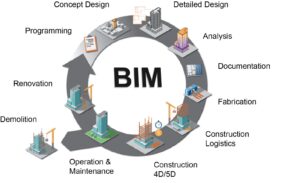
At the heart of this story is BIM, short for Building Information Modeling. BIM has changed how buildings are designed, built, and operated. It creates a digital version of a project that brings together architects, engineers, contractors, and owners in one shared space. Everyone can see how their work connects, which reduces guesswork and improves decision-making.
Stalkie describes BIM as a process rather than a product. It brings information into a 3D environment where teams can coordinate designs, spot conflicts before construction starts, and capture data that continues to be useful after the building is complete. When sensors and live data are added, BIM naturally evolves into a digital twin, giving owners a tool to manage assets more effectively.
A key part of making BIM work is consistency. Frameworks like ISO 19650 provide guidance for how project information should be organized and delivered. Stalkie notes that several members of Digital Built Ontario were involved in the committee that reviewed and recommended ISO 19650 for use in Canada. “Having a consistent framework for organizing information across all project types and owners will increase confidence in industry about what is expected in terms of delivery,” he says.
Why the Merger Made Sense
Before the merger, both dbNCR and tBIMc were hosting events and discussions that often overlapped in scope. Each was doing valuable work but mostly within its own circle. By joining forces, they could extend that impact across Ontario, bringing people together who might never have crossed paths otherwise.
“An organization at this scale can reduce fragmentation across the province while aligning with national goals and local nuance,” says Stalkie. That balance between national coordination and regional action is what Digital Built Ontario hopes will make the difference.
The new structure allows them to translate broad, strategic conversations into something tangible. Instead of keeping discussions at a high level, they want to connect them to real projects, real owners, and real outcomes. The provincial approach makes space for those local realities.
Making Collaboration Practical
Digital Built Ontario is focused on making collaboration easier, not theoretical. The group plans to host workshops, panels, and informal gatherings that help people exchange practical experiences.
“We believe collaboration is key to making progress in our industry,” says Stalkie. “If we can bring owners, designers, builders, operators, and regulators together to understand each other’s challenges on a deeper level, we can discover solutions that build up a better industry.”
These events are open and accessible. The organization runs on volunteers, and costs are kept low through sponsorships and donated spaces. Carleton University and HH Angus & Associates, for example, are among the early partners offering venues for upcoming events. The goal is to make knowledge sharing easier for everyone, from students entering the field to experienced professionals.
The People Behind the Progress
Digital Built Ontario’s model is a reminder that progress doesn’t always depend on large budgets or formal programs. Sometimes it starts with people who care about their craft and are willing to share what they know. The organization’s team includes professionals from across design, engineering, and construction who volunteer their time to help strengthen the community.
Education is also part of the picture. Colleges such as Algonquin and George Brown have been integrating BIM into their architecture and construction programs, preparing a new generation of professionals who see digital delivery as standard practice rather than a niche skill. This link between education and practice is something Digital Built Ontario values and hopes to encourage.
BIM and GIS: Two Worlds Coming Together
The relationship between the BIM and GIS communities is becoming more important. While BIM focuses on individual buildings or infrastructure projects, GIS brings the larger spatial context. Connecting the two opens doors for smarter city planning, better resource management, and the development of true digital twins that operate across scales.
Building Smart Canada, GeoIgnite have already been creating opportunities for these communities to work side by side. Digital Built Ontario wants to continue that spirit of collaboration, helping professionals understand how their work fits into a bigger digital ecosystem.
A Shared Vision for Ontario
For Stalkie and his team, success is measured by engagement and shared learning rather than growth for its own sake. “Success for Digital Built Ontario means providing new knowledge and valuable perspectives to our industry,” he says. “If we grow engagement, expand to more regions across the province, and become a trusted member of industry that helps Ontario accelerate its pace of digitalization, that would be a major success.”
The focus now is on creating events that feel relevant to real work. Discussions on project delivery, data management, and owner requirements will continue, but with a stronger link to daily practice. The organization wants every participant to leave with something they can apply directly.
Digital Built Ontario represents a natural next step in how Ontario’s design and construction community collaborates. BIM laid the groundwork for better coordination, and now this provincial network aims to connect people and ideas in a way that keeps that progress moving forward.
The group’s volunteer spirit and focus on open collaboration are already attracting interest. As events roll out and conversations deepen, Digital Built Ontario could become a key meeting point for professionals who want to learn, share, and shape the next chapter of digital delivery in the province.




Be the first to comment