
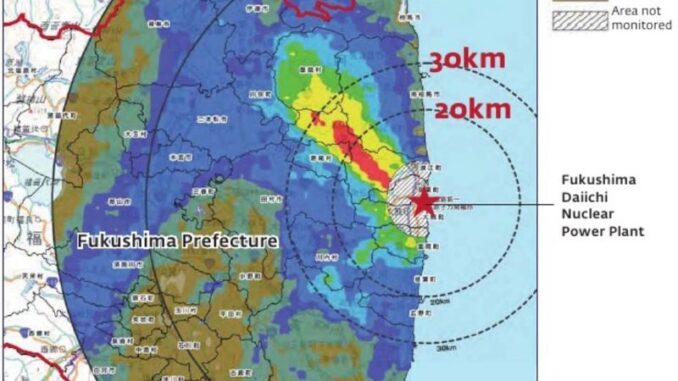
As readers of this blog might remember, I began following the Fukushima Daiichi and Daiini events as they unfolded starting on March 11, 2011. The disaster at Fukushima Daiichi occurred because of the lack of external power to the plant to keep cooling processes operating. While external power was restored to Fukushima Daiini within hours preventing a major disaster at that plant, it took weeks to restore external power to Fukushima Daiichi.
Microgrids might be a way to help prevent this kind of disaster in the future. Navigant Research has just released a report on what it calls Community Resilience Microgrids (CRMs) which Navigant defines as microgrids that provide emergency power services to communities rather than private sector end users, national security critical infrastructure assets such as military bases, or for overall grid reliability. The focus in the Navigant report is on microgrids for resilence and community. Another differentiator is that the CRM segment is being stimulated by specific government programs that are providing funding and regulatory support. The Navigant research is centered on recent programs and projects specifically linked to resilience in communities in light of recent natural and man-made disasters such as Hurricane Sandy in the United States and the Fukushima Daiichi disaster in Japan.
CRMs are an interesting segment of the microgrid market. Navigant’s perspective is that CRMs represents an emerging market opportunity, but that there are important challenges including regulatory inhibitors and an uncertain business model. Communities are interested in CRMs because for energy resilience they represent an alternative to their local utility. Utilities may perceive CRMs as a threat because they potentially could mean losing customers and revenue.
Navigant forecasts that the CRM “implementation revenue”, which will amount to about $160 million in 2015, will reach $1.4 billion by 2024. The United States currently leads in terms of policy and technology innovation, but Navigant projects that the Asia Pacific region will become the largest market share due to government programs in place in Japan and China. By 2024 Asia Pacific is projected to be roughly half of the total CRM market.

Be the first to comment