
Collectively Built and Shared
I have recently been thinking about the large number of free and open digital resources I use in my daily life. I frequently use tools like QGIS, rely on knowledge resources like Wikipedia and access public datasets shared by governments, non-profits and other organizations. Furthermore, none of these resources would be available without the internet, which itself is built largely on the back of publicly funded infrastructure and open-source projects like OpenSSL and the Apache HTTP Server Project. In many ways, our modern digital life is built on these and other projects created in the digital commons.
In simple terms, the digital commons is a mode of digital production emphasizing collective ownership, collaboration and democratic norms. Creators in the digital commons build resources for the public to use, share and manipulate, largely without restriction. Within the digital commons, there are a variety of license conditions ranging from effectively unrestrained open-source resources to projects with commercial restrictions and attribution requirements.
An interesting way to frame the digital commons is within the context of the Comedy of the Commons. First coined by legal scholar Carol M. Rose, the Comedy is the inverse of the well known Tragedy of the Commons. It describes a situation in which increased participation or shared use leads to improved outcomes for the community as a whole. In the geospatial world, this can best be seen in the tools, datasets and resources collectively built and shared – often for free – within our community. While it may be something of a cliche, we are standing on the shoulders of giants, relying heavily on the works and ideas of those who came before us. It is within this tradition of collaborative creation that we can locate GlobalBuildingAtlas.
What is GlobalBuildingAtlas?
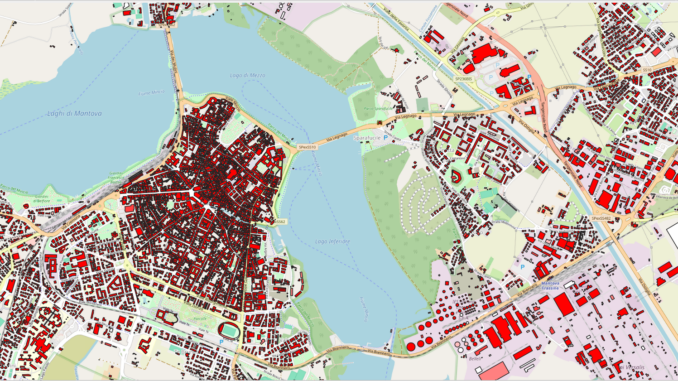
GlobalBuildingAtlas is a massive dataset containing most, if not all, of humanity’s buildings as of 2019. GlobalBuildingAtlas was created as a collaboration between the Technical University of Munich (TUM) and the Munich Centre for Machine Learning. The dataset was built through a sophisticated processing utilizing satellite imagery and existing building footprint data. GlobalBuildingAtlas contains an astonishing 2.75 billion building footprints, along with Level of Detail 1 (LoD1) data for more than 97% of structures.
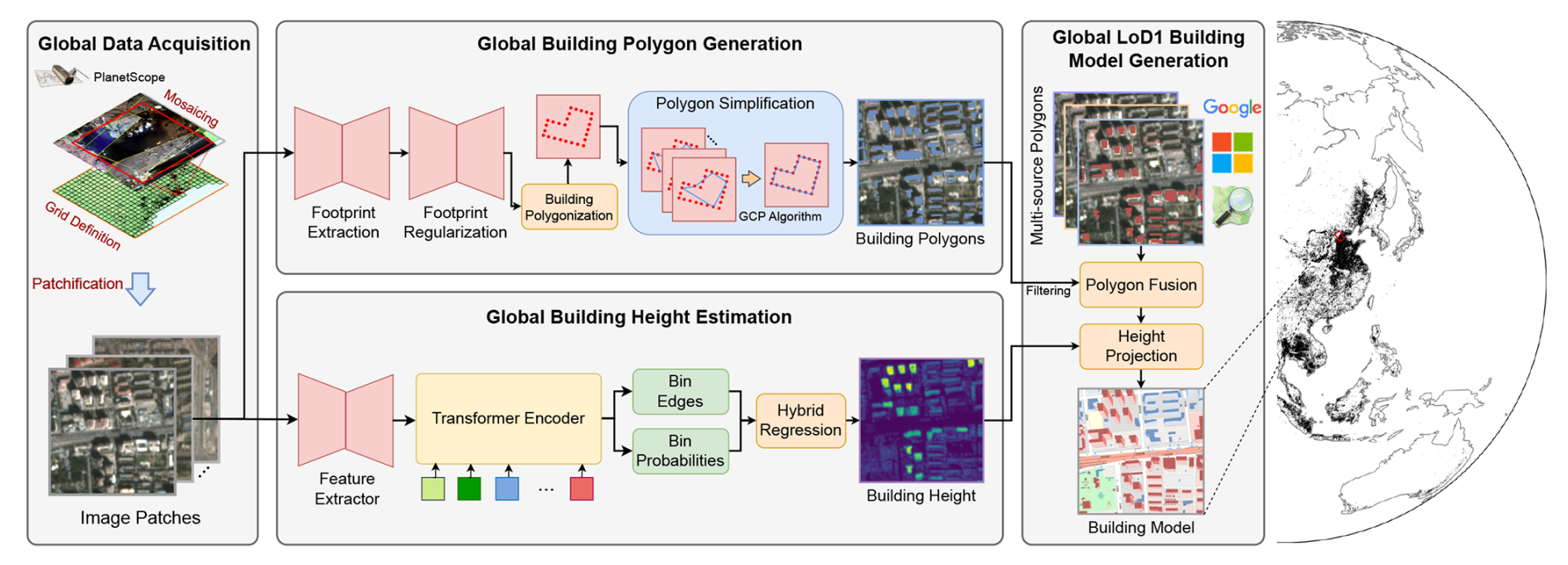
In a press release, the project development team outlined their vision for GlobalBuildingAtlas. GlobalBuildingAtlas is a powerful resource for public applications such as urban planning, disaster management and climate change adaptation. In particular, the development team emphasizes the role GlobalBuildingAtlas can serve in helping communities meet United Nations Sustainable Development Goals. The highly detailed data in GlobalBuildingAtlas is tailored towards precision planning decisions, ideally fostering more inclusive and resilient urban spaces.
Due to the size and scale of the project, there are many other applications for GlobalBuildingAtlas. Since GlobalBuildingAtlas contains data for all human communities, there is a significant opportunity for research and analytical work in human settlements. Additionally, there is potential for the use of GlobalBuildingAtlas in digital twin development and drone applications, although licensing requirements will need to be considered. Already, the German Aerospace Center has stated their intention to use GlobalBuildingAtlas in their International Charter: Space and Major Disasters.
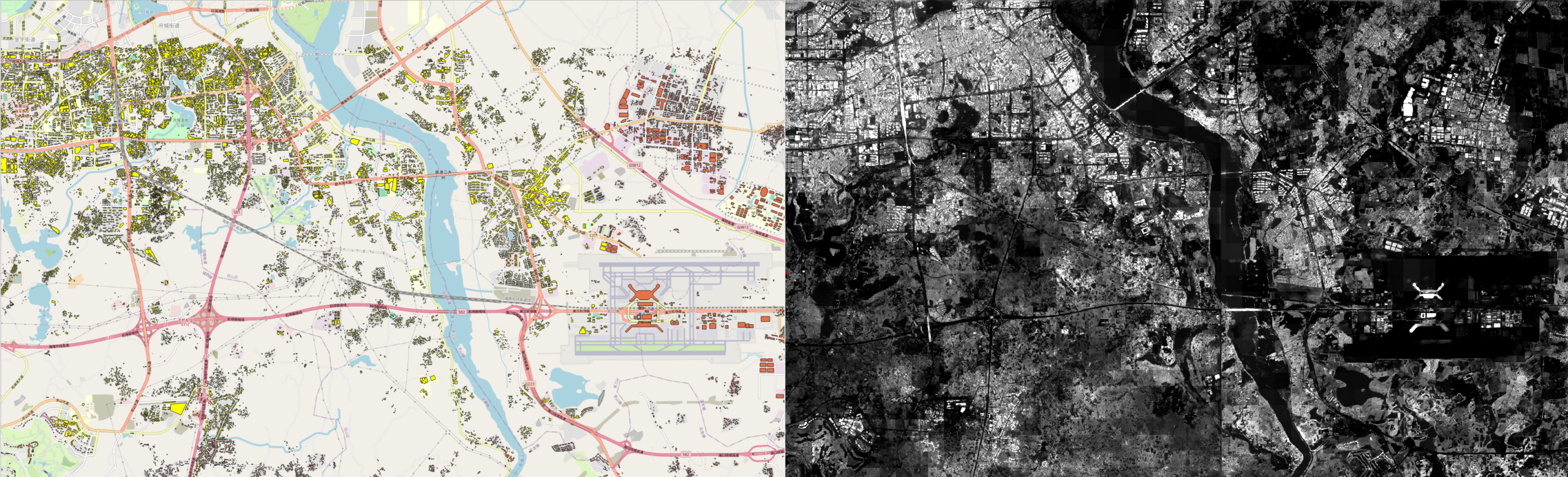
In an academic article published alongside their dataset, the GlobalBuildingAtlas development team discussed their methodology and rationale for the project. A major concern for the development team was the lack of consistent and complete global building data, particularly for communities in the Global South. Throughout their publication, the development team argues for the superiority of their dataset, which comes with both a larger sample size and higher spatial resolution than prior datasets.
One of the more interesting details within the GlobalBuildingAtlas team’s research is an argument against the United Nation’s 2019 estimate of 4 billion global buildings. The development team argues that this statistics is an over-estimation, with a more likely global building count nearer to their own calculation of 2.75 billion buildings (See 5.1 Dataset Overview).
A Truly Global Dataset
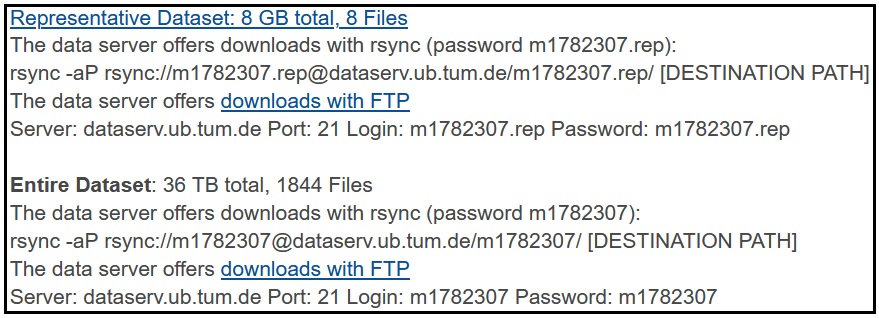
Due to separate licenses, GlobalBuildingAtlas is broken into several sections. Height map imagery can be accessed through mediaTUM, the online repository at the Technical University of Munich. There are two datasets available for download through mediaTUM. The first is a representative dataset containing example data and metadata files. This is useful for familiarizing oneself with the structure of GlobalBuildingAtlas and locating individual files within the full dataset. The second dataset contains the entirety of height map imagery in GeoTIFF format. Both of these datasets can be downloaded through an FTP server, requiring a FTP client and publicly available credentials. If you are unsure of a client, I suggest FileZilla, which is open-source and provides a step-by-step guide for users.
Building footprint and LoD1 data can be accessed through two separate datasets on Hugging Face, where data is available in GeoJSON and JSON formats. One dataset contains ODbL-licenced building polygons, while the second comes with all other building polygons and LoD1 building models. The licensing for GlobalBuildingAtlas is complex, so ensure you are following requirements found on mediaTUM and the within the project’s GitHub repo.
The Digital Commons and Sovereignty
While is there is much that can be said about the digital commons, there is nothing that feels more timely that the role that open projects can serve in digital sovereignty. Recently, digital sovereignty has become a popular topic in both the geospatial industry and the broader public. One of the major forces driving this interest is the oversized impact of American firms in digital services, which can be obligated to share data from foreign clients with the US Government. In Canada, both federal and provincial governments are beginning to take the issue seriously, while a number of European government agencies are beginning to move away from American digital services.While many companies and firms may be able to meet their needs through proprietary or closed-source software, there is also a role for projects like GlobalBuildingAtlas in digital sovereignty.
Since resources from the digital commons are free to use and generally come with limited restrictions, governments and other organizations can save money on subscription fees and other costs associated with proprietary software. Additionally, since products in the digital commons are collaborative by nature, governments and other organizations have the ability to adopt open-source software and manipulate it to meet their needs. There is also an interesting discussion about the digital commons and security. While it may seem intuitive that closed-sources systems are more secure due to their restricted and proprietary nature, there is a strong argument that open-source systems are actually more secure. Since open-source projects are public by design, they are likely to be viewed by more people than closed-source projects. When there are many people examining and editing code, there is a higher likelihood of bugs or other security flaws being discovered and fixed. This phenomenon is summarized well by Linus’s Law, which states “Given enough eyeballs, all bugs are shallow”.
In a time when a small group of American technology firms seem interested in capturing more of the internet and digital spaces, we are fortunate for projects like GlobalBuildingAtlas. Projects in the digital commons are frequently obscure and underfunded, yet they are crucial to the functioning of our digital world. Through projects like GlobalBuildingAtlas, we continue to expand our digital Comedy, building a space where all can share, create and work towards collective security and sovereignty.



Be the first to comment