
Last month, the World Meteorological Organization (WMO) released the report Early Warnings for All in Focus: Health Monitoring and Forecasting, outlining their contribution towards, and the progress of, the Early Warning for All (EW4All) initiative.
EW4All was launched in 2022 during COP27, with the goal of ensuring that every person on Earth is protected by an early warning system for extreme weather and related environmental events by the year 2027. EW4All is a partnership between a range of national and development-based stakeholders with major leadership from the WMO, the United Nations Office for Disaster Risk Reduction (UNDRR), the International Telecommunications Union (ITU) and the International Federation of Red Cross and Red Crescent Societies (IRFC).
Why EW4All?
Extreme weather events are becoming more frequent and severe, affecting millions of people each year through floods, droughts, heatwaves, and storms. Despite major advances in forecasting and monitoring technology, large parts of the world—particularly developing countries and small island nations—still lack timely, actionable early warnings that can save lives and protect infrastructure.
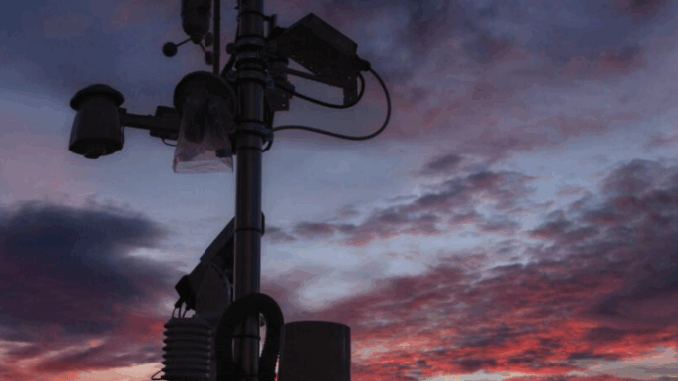
EW4All is a broad initiative, consisting of 4 pillars, with the WMO largely responsible for the second pillar, which focuses on the development of capacity in detection, observation, monitoring, analysis and forecasting. Under their co-leadership, the WMO is overseeing 60 projects worth more than 140 Million Swiss Francs (Can$296.2 million). These projects include the construction of physical observation infrastructure, as well as the development of forecasting capacity for events such as flooding, tropical storms and droughts.
What’s in the Report?
The report outlines key developments since the launch of EW4All, reflecting the WMO’s leadership in advancing global forecasting, data sharing, and early warning capacity:
-
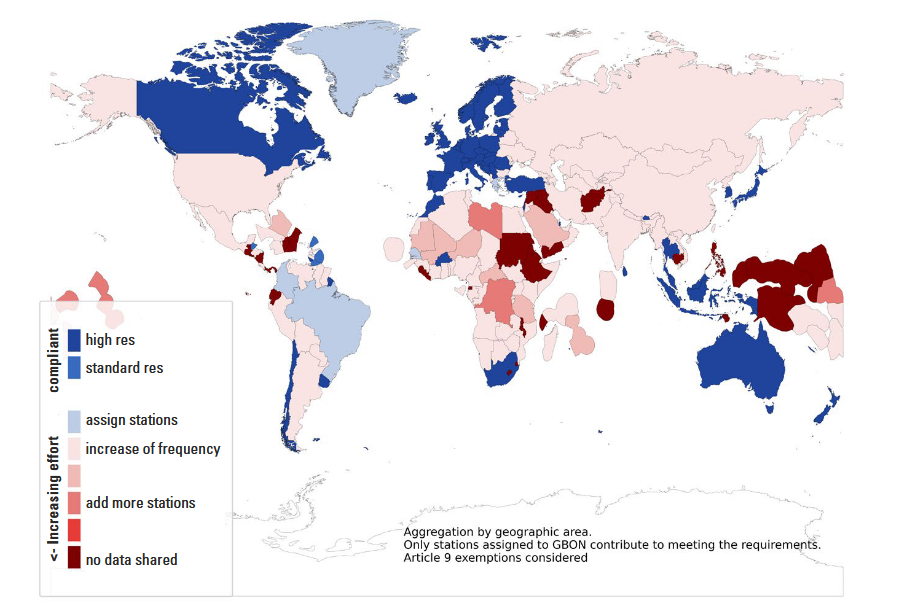
Strengthening Observations: Expansion of the Global Basic Observing Network (GBON), automation of national systems, and efforts to close data gaps in Least Developed Countries (LDCs) and Small Island Developing States (SIDS).
-
Transforming Data Exchange: Introduction of WMO Information System 2.0 (WIS 2.0) — a cloud-ready, open data-sharing framework connecting resource-constrained National Meteorological and Hydrological Services (NMHSs) worldwide.
-
Expanding Forecasting Capabilities: Through the WMO Integrated Processing and Prediction System (WIPPS), members can now access cutting-edge forecasts for tropical cyclones, floods, droughts, extreme heat, and dust storms, supported by advances in AI and digital innovation.
-
Delivering Impact-Based Early Warnings: The broader adoption of the Common Alerting Protocol (CAP) and platforms like ClimWeb, along with the WMO Coordination Mechanism (WCM), ensures that people-centred, actionable forecasts reach at-risk communities.
-
Building the Enabling Environment: Progress in governance, legislation, and financing is helping to ensure that national early warning systems are sustainable, trusted, and effectively coordinated.
Looking forward, the report highlights the need for strong governance initiatives and further financing, along with an expansion of open-data exchange and innovation within the observation and forecasting space.
Read more about EW4All


Be the first to comment