

Welcome to this week’s edition of the International Geospatial Digest, where we highlight significant developments in Earth observation, mapping, and space technology from around the globe.
-
Maps Reveal Greenland’s Critical Role as Arctic Temperatures Rise
-
Open Maps For Europe 2 Drives Adoption of Harmonized Pan-European Data
-
Congress Rejects Proposed Cuts, Securing NASA’s 2026 Budget
-
Vantor Slashes Satellite Imagery Delivery Times to 11 Minutes
-
Planet Signs 9-Figure Deal to Provide Sweden with Sovereign Space Capability
-
ISRO’s PSLV-C62 Mission Faces Anomaly During Anvesha Spy Satellite Launch
Maps Reveal Greenland’s Critical Role as Arctic Temperatures Rise
As the Arctic warms at nearly four times the global average, new maps from the National Oceanic and Atmospheric Administration (NOAA) highlight Greenland’s soaring strategic importance. The melting of the Greenland ice sheet is opening once-inaccessible sea routes, such as the Northwest Passage and the Northern Sea Route, which can reduce shipping times between Asia and Europe by up to 20 days. This geospatial shift has turned the island into a critical frontline for global superpowers, influencing defense strategies and the race for untapped natural resources exposed by the receding ice.

Open Maps For Europe 2 Drives Adoption of Harmonized Pan-European Data
The Open Maps For Europe 2 (OME2) project has successfully concluded its three-year mission, reporting a 450% increase in user engagement for its authoritative geospatial datasets. Since its launch in early 2023, the platform has facilitated over 96 million web service transactions, providing users with edge-matched, harmonized data across 10 European nations. By solving the complex challenge of delivering usable sovereign data through a single portal, OME2 establishes a foundational infrastructure for the European Strategy for Data.

Congress Rejects Proposed Cuts, Securing NASA’s 2026 Budget
In a decisive bipartisan move, the House and Senate Appropriations Committees have released a joint agreement for the FY2026 budget that wholesale rejects the deep cuts previously proposed for NASA. The agreement provides $24.44 billion for the agency, effectively safeguarding the Science and Earth Observation portfolios which had faced potential reductions of nearly 50%. This stability ensures that vital climate monitoring and geospatial missions remain active. Furthermore, the report firmly supports the continuation of the Space Launch System (SLS) and Orion programs, emphasizing that no funds be reallocated to commercial alternatives until they are flight-proven to meet or exceed current heavy-lift capabilities.

A coalition of 20 organizations led by The Planetary Society gather at the U.S. Capitol to advocate for NASA’s science programs, October 6, 2025. Credit: The Planetary Society.
Vantor Slashes Satellite Imagery Delivery Times to 11 Minutes
Vantor (formerly Maxar Intelligence) has announced a breakthrough in real-time geospatial intelligence, reducing the time from satellite tasking to imagery delivery from 90 minutes to just 11 minutes. This advancement is powered by the Vantor Hub, which integrates AI-powered analysis and automated tasking across its high-resolution constellation. The platform now offers 15 daily collection opportunities for any given location, enabling defense and disaster response teams to maintain an “AI-ready living globe” with unprecedented speed.
Read More.

Planet Signs 9-Figure Deal to Provide Sweden with Sovereign Space Capability
Planet Labs PBC has secured a multi-year, nine-figure agreement with the Swedish Armed Forces to deliver a dedicated suite of satellites and high-resolution data solutions. This contract marks Planet’s third major Satellite Services deal in twelve months, following similar agreements with Japan and Germany. Under the “sovereign-as-a-service” model, Sweden will own a portion of its space-based hardware, allowing for rapid deployment of intelligence solutions to support national security and regional allies without the overhead of building independent systems.
 Will Marshall is the Co-Founder and CEO of Planet.
ISRO’s PSLV-C62 Mission Faces Anomaly During Anvesha Spy Satellite Launch
India’s first space mission of 2026 encountered a setback as the PSLV-C62 rocket failed to place the Anvesha (EOS-N1) spy satellite into its intended orbit. Initial reports from ISRO indicate a technical disturbance during the third-stage burn of the Polar Satellite Launch Vehicle. Anvesha was designed as a high-end hyperspectral Earth observation system to boost India’s border surveillance and private space ecosystem. A failure analysis committee has been formed to investigate the anomaly and its impact on the year’s upcoming launch schedule.
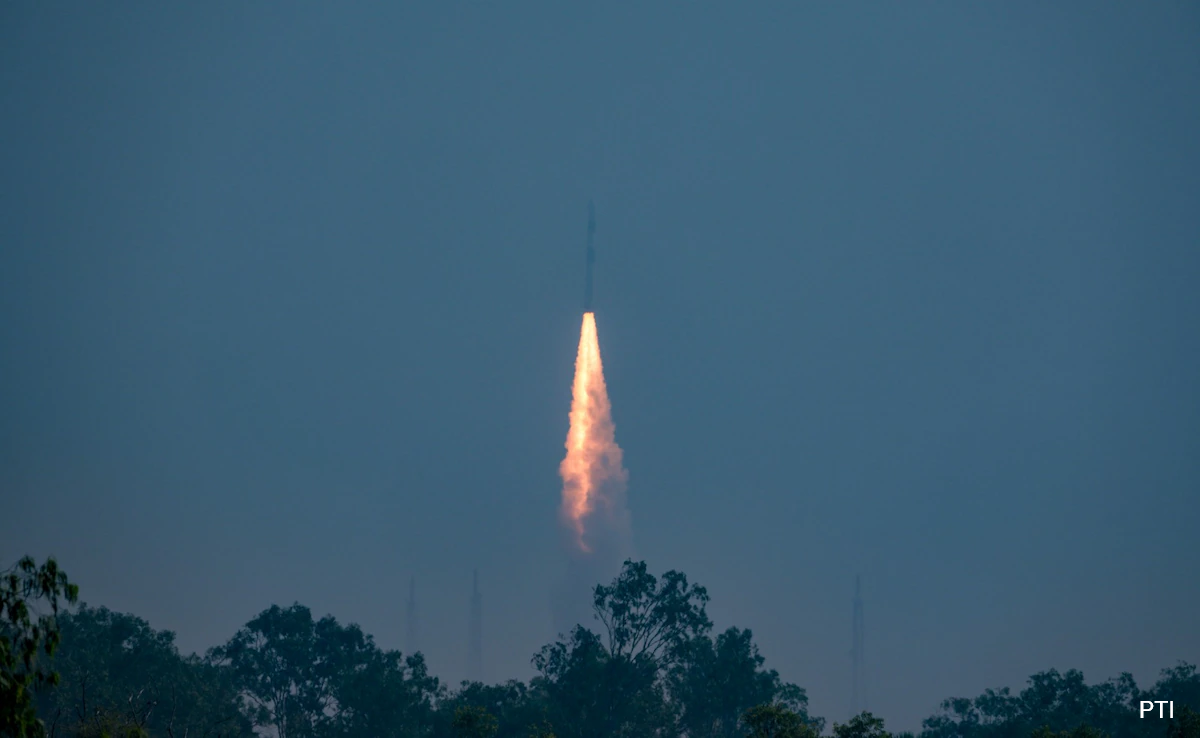 ISRO’s PSLV-C62 lifted off from the Satish Dhawan Space Centre in Sriharikota, Andhra Pradesh




Be the first to comment