
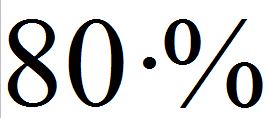
Everyone in the geospatial industry knows that 80% of data has a geospatial component, but I have never seen a reference or link to the research on which this is based. GIS Lounge has tried to track this assertion back to its original source The earliest mention that was found is an article written by Robert E. Williams in 1987 entitled “Selling a geographical information system to government policy makers.” At the time Williams was the Director of the Alachua County Regional Information Center. The article was published in “Papers from the 1987 Annual Conference of the Urban and Regional Information Systems Association” by URISA and contains the following paragraph:
“Automated mapping is probably an easier sell because, again, the policymakers are cognizant of the need for improved mapping capabilities. It has been estimated that approximately 80% of the informational needs of a local government policymaker is related to a geographical location. This information is usually supplied by a map rendering, e.g., maps showing the location of a parcel of land being considered for a rezoning petition.“
But there is no link or citation for the statement. So at this point the best guess is that the 80% rule came down from the mountain with Moses.
However GIS Lounge cites modern research in Germany that analyzed German Wikipedia articles and found that the actual number may lie in the 60-80% range.

Be the first to comment