
I have blogged on several occasions about the workforce challenges facing the utility sector. The world’s population is growing older and this has important implications for the workforce for utilities and other sectors. Japan is facing the greatest challenge. The Ministry of Health, Labour and Welfare has projected that by 2060, about 40% of the population of Japan will be of retirement age. But all contries in the OECD are facing similar challenges. In the U.S. the electric power generation, transmission,and distribution industry employs about 400,000 people. It is estimated that 30–40 percent of these workers will be eligible to retire by 2013.
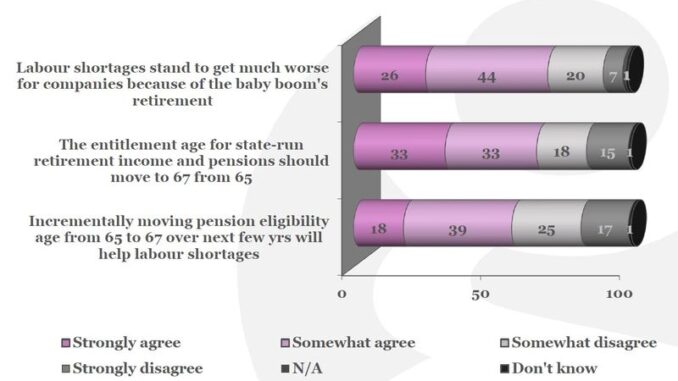
In Canada by 2030 over 20% of the Canadian population will be 65 or over. A recent survey found that most of the companies surveyed reporting difficulty in finding qualified employees. About a third report the labour shortage is preventing their company from growing. Even more said they increasingly have to look outside of Canada to fill specific jobs. Engineers, those with technical skills or trades people and some IT professionals are top mentions of positions or skills that are difficult to find. 70% said that labour shortages stand to get much worse for companies because of baby boomers’ retirement.
Workforce challenges in Canada’s oil and gas industry
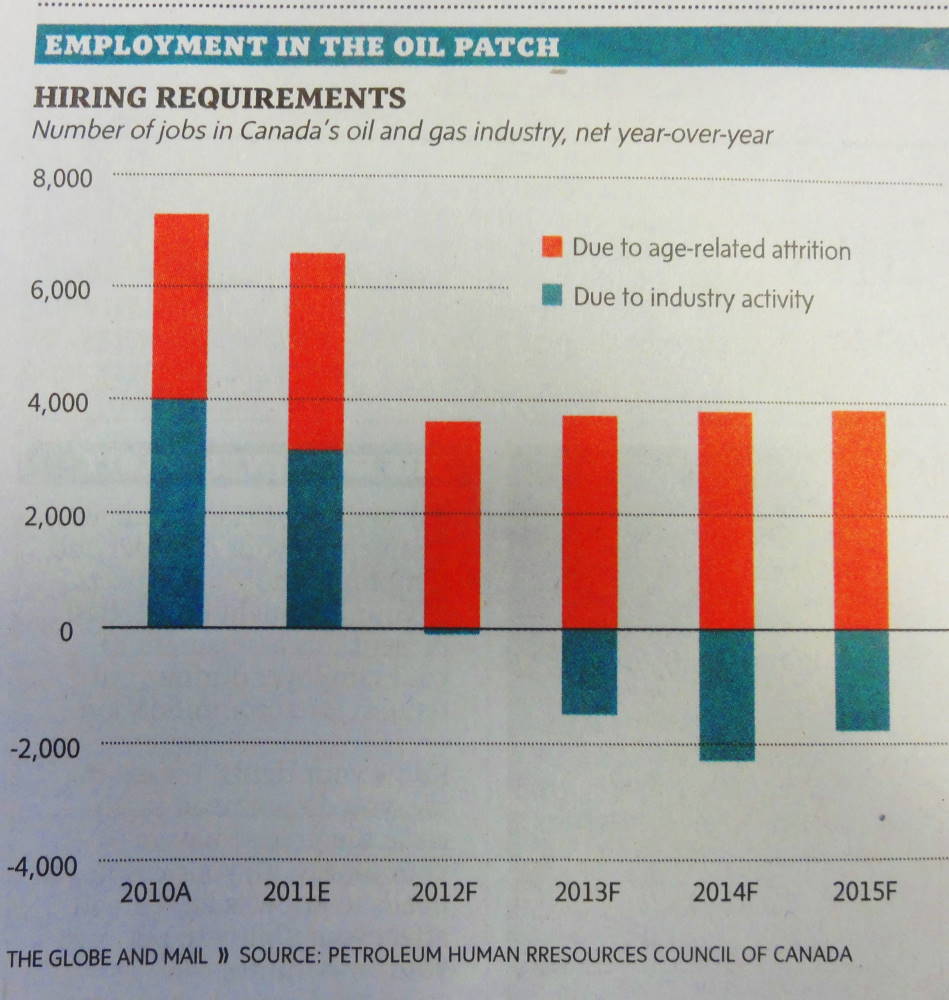 A recent report Canada’s Oil and Gas Labour Market Outlook to 2015 by the Petroleum Human Resources Council of Canada analyzes labour demand projections for 38 core occupations in Canada’s oil and gas industry, within four industry sectors (E&P, oil sands, oil and gas services and pipeline). It reports a high demand for and at the same time a reduced supply of skilled workers. Retirements are the greatest cause of this increasing skill and experience gap. A major challenge is that the technical capabilities and knowledge of retiring, experienced workers are not easily replaced by new entrants. By 2015, employment in the oil sands sector is projected to increase by 29 per cent over 2011 levels. That’s about 5,850 jobs. The pipeline sector is expected to add about 530 jobs over the same period. Both sectors also expect that they will need to do significant hiring to replace retiring workers.
According to the Globe and Mail, the industry will need to fill at least 9,500 jobs by 2015, and between 50,000 and 130,000 positions by 2020. Demand is so high that traditional labour pools, such as Canada’s east coast labour market, are not deep enough to meet demand and gives as an example a program to reach injured and retired veterans from Canada and the United States.
Be the first to comment