
One of the major challenges facing the world’s utilities is one of data management, optimizng information flows that involve multiple divisions within a utility. I have blogged about this challenge on multiple occasions (here, here, here and here).
The basic process for designing, building and operating and maintaining a utilities network is essentially the same the world over and involves a cumbersome, inefficient, paper-based process. Designers or planners create the initial design, called a construction drawing. Construction crews, often comprised of sub-contractors, build the facilities using paper construction drawings. During construction, the drawing may be marked up or redlined to reflect changes in the original design. After construction is completed, the construction drawing, now referred to as an “as-built”, is forwarded to the records department. The records department redrafts the as-built into the permanent records database, which is maintained as the company’s record of its network infrastructure.
The records database is used for a variety of activities such as reports about the network requested by the regulator or by management. For work relating to connecting or disconnecting customers to the network, adding new services, repairing or replacing network facilities, the records department is responsible for preparing facilities maps to assist field staff. The symptoms associated with this process are as-built backlogs stretching from months to years, high error rates, and data quality. Inaccurate and out-of-date records reduce the productivity of field staff and even impact safety, the primary concern of all gas and electric utilities.
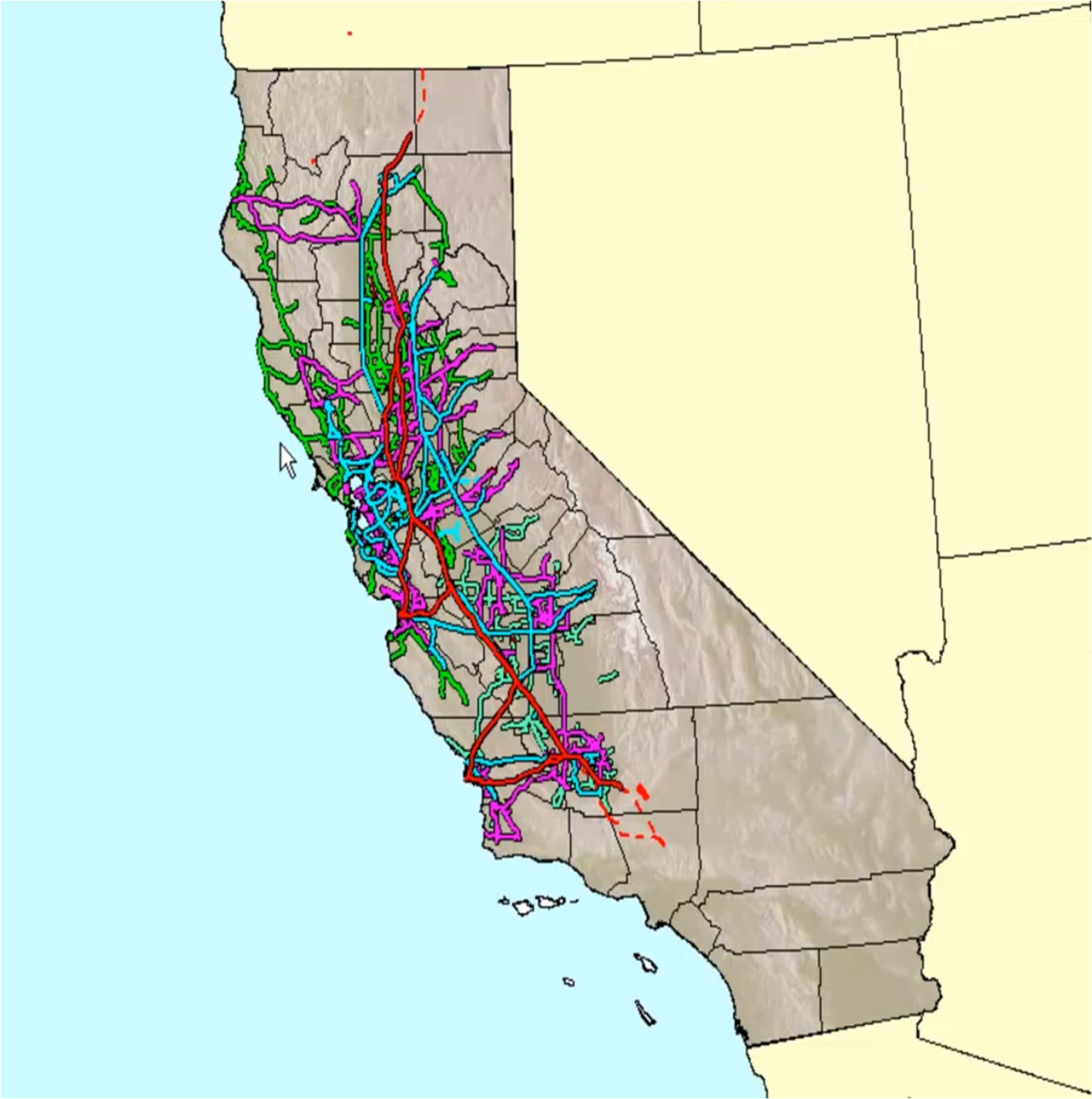 Pacific Gas and Electric
Pacific Gas and Electric Company (PG&E) is one of the largest combined natural gas an electric utilities in the U.S. PG&E is based in San Francisco and serves 15 million people, about half of California’s population.
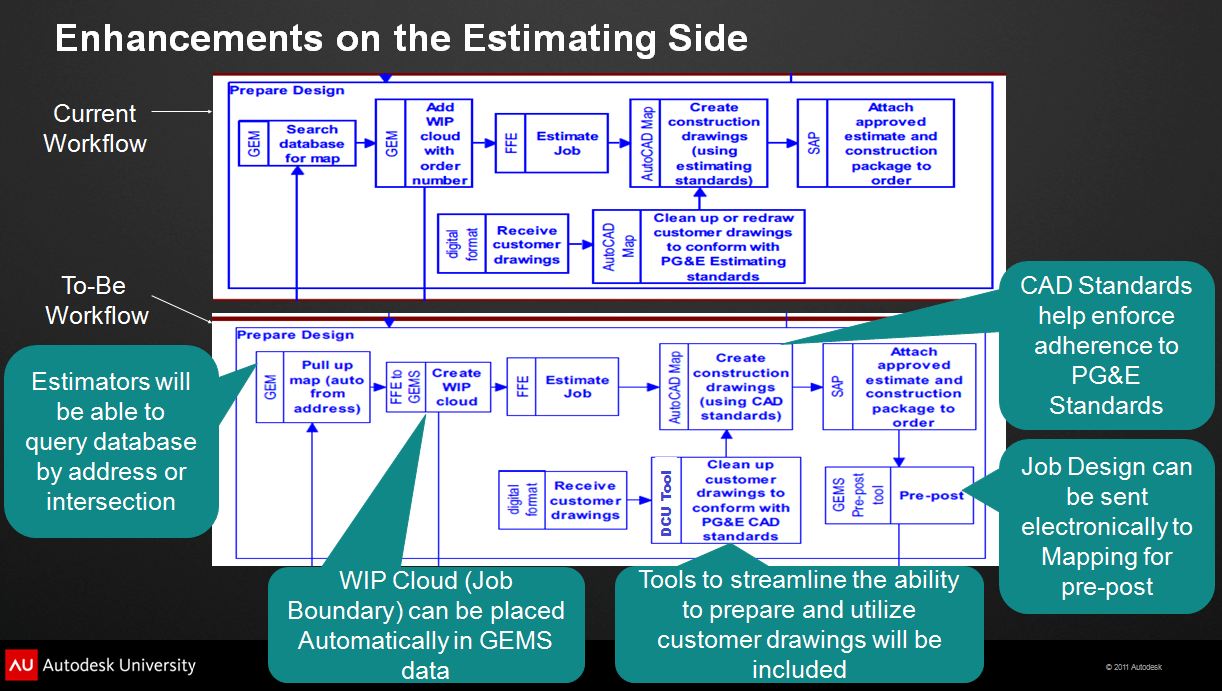
Steve Parker, EO Mapping Manager at PG&E, gave an insightful presentation at Autodesk University about the information flow challenge that PG&E is working to resolve, optimizing the flow of information from designers (Estimating), through the people who build the facilities (Construction) to records (Mapping). As Steve expressed it their goal was to minimize the effort required to capture the true representation of the final installed assets by capturing the pertinent data into PG&E systems as early in the workflow as possible, in other words, to make it easier to share graphical information between Estimating, Construction, and Mapping. Complicating issues include the lack of defined and enforced standards for network documentation (records). Though it sounds simple, changing this process is an incredibly difficult undertaking because it affects a lot of people and involves changing business processes that date from Thomas Edison. As Steve said, “We are going to make history”.
Eliminating redrafting
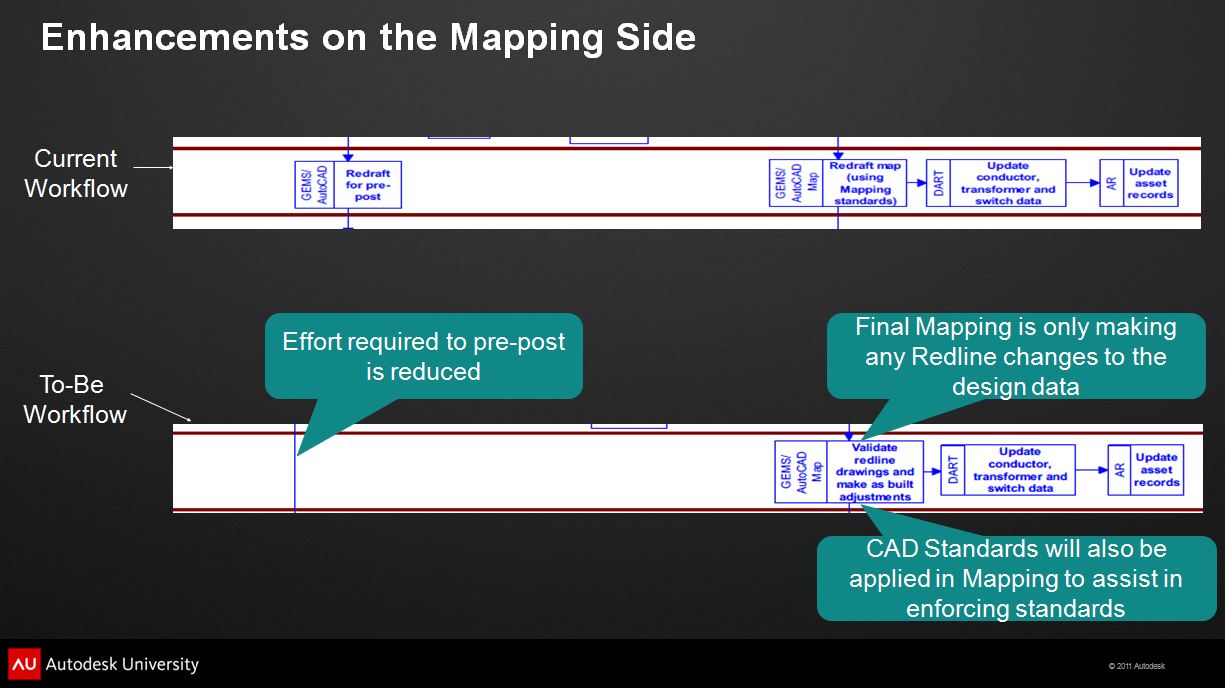
The most critical business process improvment is pre-posting designs directly into the records database, rather than redrafting the information from paper as-builts. If as-builts come back from the field with redlines, all that needs to be entered into the records database are the redlines.
The direct benefit is eliminating the as-built backlog, with the important benefit that the records database is more uptodate. Another benefit is fewer errors, because data is captured electronically rather than being manually redrafted from paper as-builts.
 Aging workforce and productivity
Another major benefit is improved efficiency and productivity. PG&E, like many other utilities, is facing the challenge of an aging workforce. For example, Steve said that half of PG&E’s mappers are eligible to retire right now. Streamlining information flows by eliminating paper helps both designers and mappers to be more efficient and takes a lot of repetiive drudgery out of the process.
Eliminating paper maps
Another important benefit is that it enables PG&E to get away from paper maps. An advantage of electornic maps is that they can provide information in real-time. Secondly, it means that printing 80,000 maps periodically is no longer necessary with savings of upto $8 million per year.

Be the first to comment