
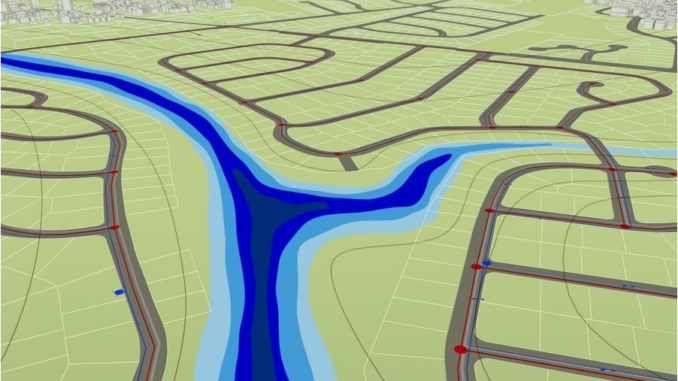
I have blogged previously about the challenges that municipalities are facing relating to reducing combined sewer overflows (CSOs) and sanitary sewer overflows (SSOs).
One of the presentations I have been looking forward to at Autodesk University is the one given by Tanya West on storm water and sanitary sewer planning. Cities and counties in the US are required to develop stormwater and sewer master plans for their systems specifying the extent, adequacy, sizing, staging, and other characteristics of their facilities so that they are in compliance with environmental regulations. In her presentation demonstrated how storm and sanitary analysis (SSA) – there is a recent white paper on SSA – can be used to model a sewer network for planning purposes. She provided a guide to common workflows and the tools that can be used to prepare a sewer master plan including documenting existing systems, assessing different flow levels, evaluating capacity and projected capacity needs, assessing pump station capacity and conditions, and capital improvements planning (CIP).
Most municipalities today have repositories of data that they can access for information on sewers, parcels, property taxes, zoning, as well aerial imagery. Open source FDO technology provides a mechanism to connect to geospatial and engineering data sources without making copies. Tanya showed how to use FDO to access a variety of data sources. She also showed how to identify pipes that have zero or negative slope, incorrect flow directions, or missing attribute information such as diameter.
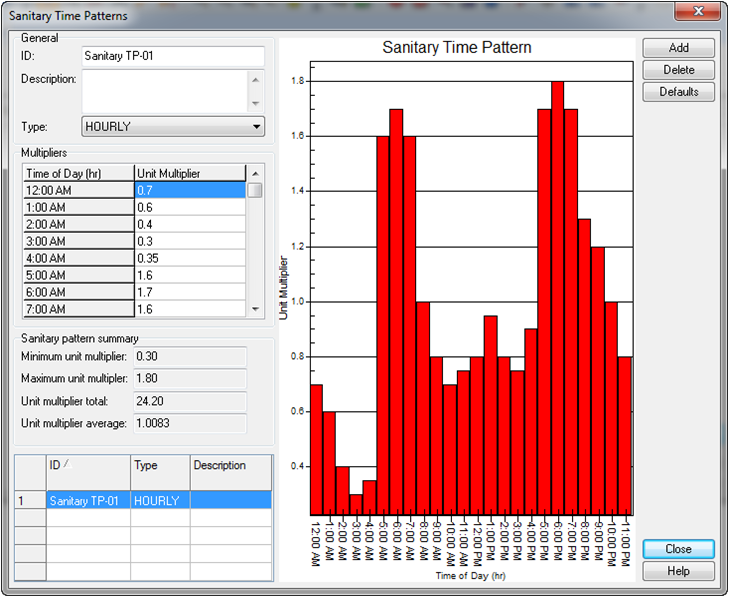 She then showed how to add flows to represent dry weather loadings to the nodes in the system. For stormwater systems, storm data can be defined using historical weather data. For sanitary systems, the amount of flow assigned to a given node is typically dependent on the type of property or land use. Examples are single family residential flows, commercial and industrial areas.
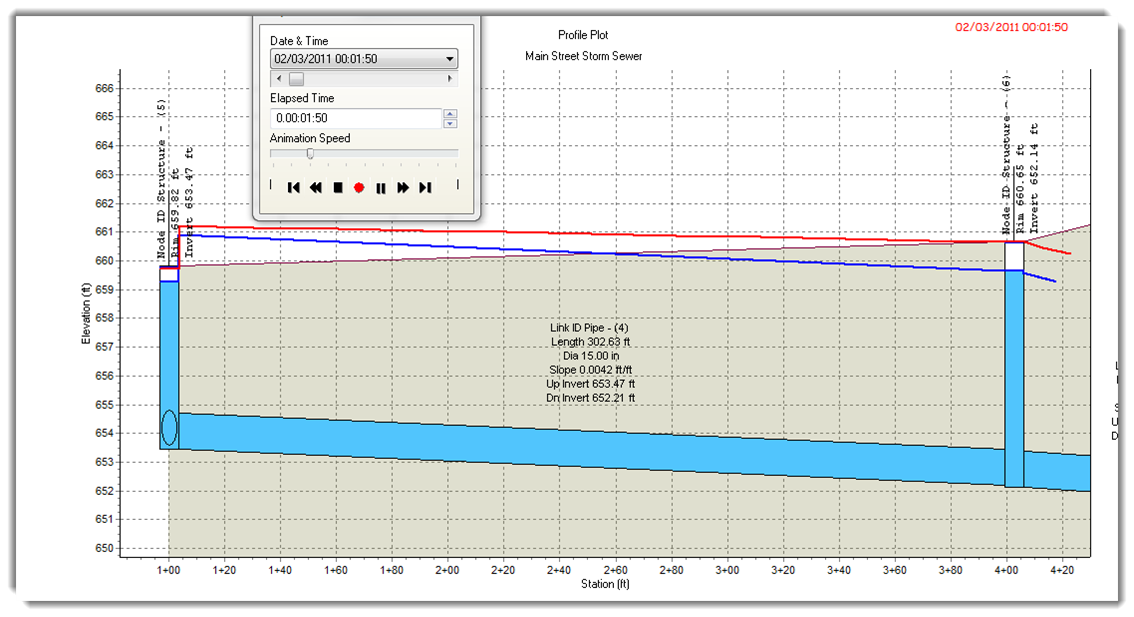
After creating the sewer network and generating the loads, the data is loaded into the SSA package for analysis. To prepare for running an analysis for stormwater systems you model storm events using historical weather data. After running an analysis one of the most important results is a map of the entire system that highlights areas of flooding and manholes/nodes and pipes that have some restrictions or surcharging. You can drill down to see exactly what the problems are for each component. One of the most convenient ways to view the results, especially in areas of concern, is by creating a profile plot. You can also visualize the results of the analysis as videos that show the flow and loading on selected components of the system over the duration of the simulation. The results can be published to the web for sharing with stakeholders.
 SSA has a robust hydraulic modeling capability that can be used to simulate a wide variety of components including storm sewers, sanitary sewers, combined sewers, open channels, streams, bridges and culverts, roadway storm drain inlets, detention ponds, force mains, and flood overflow routing. It can apply external flows and water quality inputs from surface runoff, groundwater interflow, rainfall-dependent infiltration/inflow (RDII), dry weather sanitary flow, and user-defined inflows. SSA can analyze both simple and complex sanitary and combined sewer systems including model looped networks, flow splits, combines, overflows, and storage capacity, find sewer bottlenecks, optimize control rules, and help reduce overflow occurrences, regulate flow to treatment facilities by determining storage within the sewer system, and perform CSO and SSO mitigation studies. You can also use SSA to model the impact of pollution inflows at multiple nodes such as from a petroleum or chemical spill.

Be the first to comment