
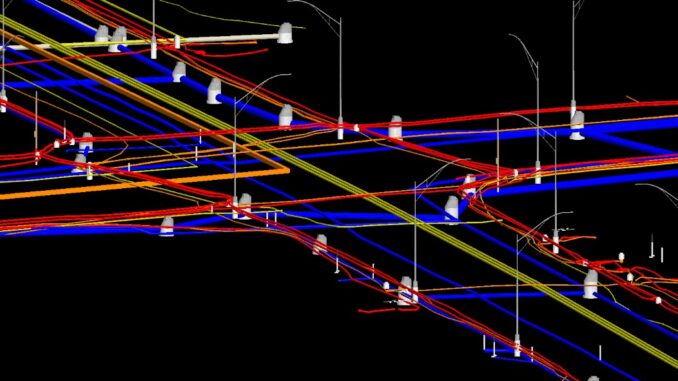
The location of existing underground utility infrastructure is more often than not poorly known which creates significant risk for infrastructure and highway construction projects. In a gas line construction project which Utility Mapping Services (UMS) submitted for a Be Inspired Award, UMS diverged from normal construction practice by first creating a 3D model of the existing underground and above ground infrastructure. During construction there were no utility strikes and as a result there were no change orders and the construction project was completed in 7 instead of the expected 10 weeks.
I had a chance to chat with Donald Haines, Senior Engineer, and Cameron Greer, Project Engineer at UMS. The project involved constructing an eight inch high pressure natural gas pipeline along a major highway SR510. The customer was Puget Sound Energy which is responsible for electricity and gas in the Puget Sound area. The Washington DOT was also involved in the project because the new pipeline runs within the SR510 right of way.
A major risk was that the project corridor includes complex utility infrastructure woven through dense commercial and residential areas with limited right-of-way and heavy traffic congestion. Because of the complexity of the underground utility infrastructure it was decided at the beginning of the project to develop a 3D model of the existing underground infrastructure. The model enabled the design team to adjust the pipe elevation and horizontal alignment to avoid potential utility conflicts during the design phase. The 3d model of existing utility infrastructure avoided unnecessary utility relocations and the associated construction delays and contractor change orders. It also allowed for tighter contractor bid estimates by providing a more accurate design to the contractors. 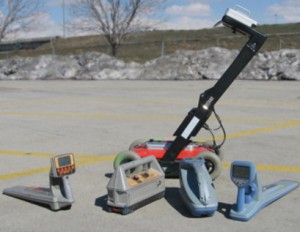
UMS’ subsurface utility engineering (SUE) services group were familiar with new remote sensing technology such as ground penetrating radar (GPR) and electromagnetic detection (SPAR300) which allowed them to acquire 3-D location data for underground utility infrastructure. Application of new SUE technology created much greater value for the customer because UMS can now clearly convey to the client the issues presented by existing infrastructure and work with their design and construction teams and the utility infrastructure owners to minimize utility relocations and avoid surprises from buried unknowns.
Starting with a 2D basemap, the underground survey was conducting using several technologies, including  SPAR300 and GPR, and potholing for validation. In addition to the expected utility infrastructure, the survey detected undocumented abandoned utility lines which highlights an important advantage of the new remote sensing technologies. The data was captured and integrated to create a 3D model using Trimble software. The 3D model formed the basis for the design for the new gas pipeline. The 3D model detected 170 conflicts, points of intersection of the design for the new pipeline with other utilities. Several alternative routes were assessed and the costs and benefits of each were computed and compared in order to determine the optimal routing for the new pipeline. 3D visualization of the alternative routes helped the designers show Puget Sound Energy and the Washington DOT the advantages of alternative routes and allowed changes to be made to the design live in front of the customer. One interesting wrinkle is that the design had to avoid conflicting with new sewer line which had not been built yet. One of the existing sewer lines was scheduled to be replaced by a significantly larger one in the near future.
A major advantage of the 3D model is that it reduces the risk of utility strikes during construction. On projects where automated construction is used, exclusion zones can be created from the underground 3D model that prevent the machinery from striking utility infrastructure.
The 3D model helped in other ways. The project required two variances from the Washington DOT which were granted in record time because the 3D model showed so clearly why and where they were required. The 3D model helped to minimize highway disruptions to the public. Most critically from a safety as well as cost perspective, there were no utility strikes on the project. As a result the 3D model is credited with reducing construction time from 10 to 7 weeks. Most importantly from a budget perspective, there were no change orders and the total cost of the project came in at 10-15% less than estimated in the absence of a 3D model.

Be the first to comment