
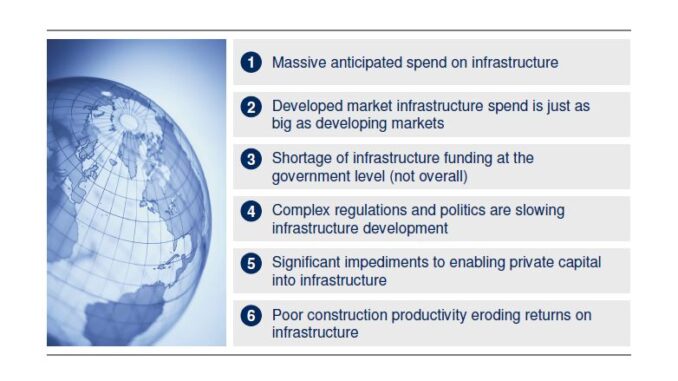
A massive spend on infrastructure, globally about $50 trillion, is expected over the next two decades. It is anticipated that the infrastructure spend in the developing countries market is just as large as in the developed countries market. But infrastructure spending growth is significantly higher in the developing countries market. In many countries there is a shortage of infrastructure funding from governments. This set the stage for greater private investment. But there are significant impediments preventing private capital from playing a greater role in funding infrastructure. Complex regulations and politics which slow infrastructure development and poor construction productivity are important factors in eroding returns on infrastructure and making infrastructure less attractive for private investment.
 Brazil’s government has announced a stimulus package designed to attract up to R$133 billion (US$66 billion) from the private sector for road and rail projects. The government plans to take the lead on the project. A new state-run company will be created to manage infrastructure planning and the BNDES development bank will provide subsidized loans for the projects. The government hopes to attract investments for major highway projects as well as to add 10,000 kilometers to Brazil’s rail network.
As in the case of the UK’s National Infrastructure Plan, the government will have to find ways to make infrastructure projects attractive to private investors through concessions such as loan guarantees and low cost loans.
Transportation infrastructure in Brazil detracts from economic growth (as anyone who has tried to get between Congonhas and Guarulhos airports in Sao Paulo on a Friday afternoon will know). Reportedly goods take at least twice as long to move the same distance as they do in China and other more efficient markets.

Be the first to comment