
In my last blog post I mentioned that the US has no no explicit federal policy to reduce green house gas (GHG) emissions like the EU’s objective that 20 percent of energy should be produced from renewable fuels by 2020.
The US Energy Information Administration (EIA) publishes annually usually in March an Annual Energy Outlook, where the EIA projects annual energy production, consumption and green house gas (GHG) emissions for the US. This year because this is a period of rapid change in the energy industry the EIA published in December an Annual Energy Outlook Early Release Overview where the EIA updated what the EIA calls the AEO2010 reference case and what I’m calling the “business as usual” scenario for energy. This projection takes into account all existing legislation including
- Corporate average fuel economy (CAFE) standards

- Energy Independence and Security Act of 2007 (EISA2007)
- Energy Improvement and Extension Act of 2008 (EIEA2008)
- American Recovery and Reinvestment Act (ARRA) of 2009
- Renewables portfolio standards (RPS) that over half of the states have enacted
as well as projected future oil, coal, and other energy price, new technologies such as CTL (coal-to-liquid), and so on. Specifically the projection assumes no explicit Federal policy to reduce GHG emissions.
Electricity Consumption
Total electricity consumption is assumed to grow an average annual rate of 1.0 percent from 3,873 billion kWh in 2008 to 5,021 billion kWh in 2035.
Electricity Generation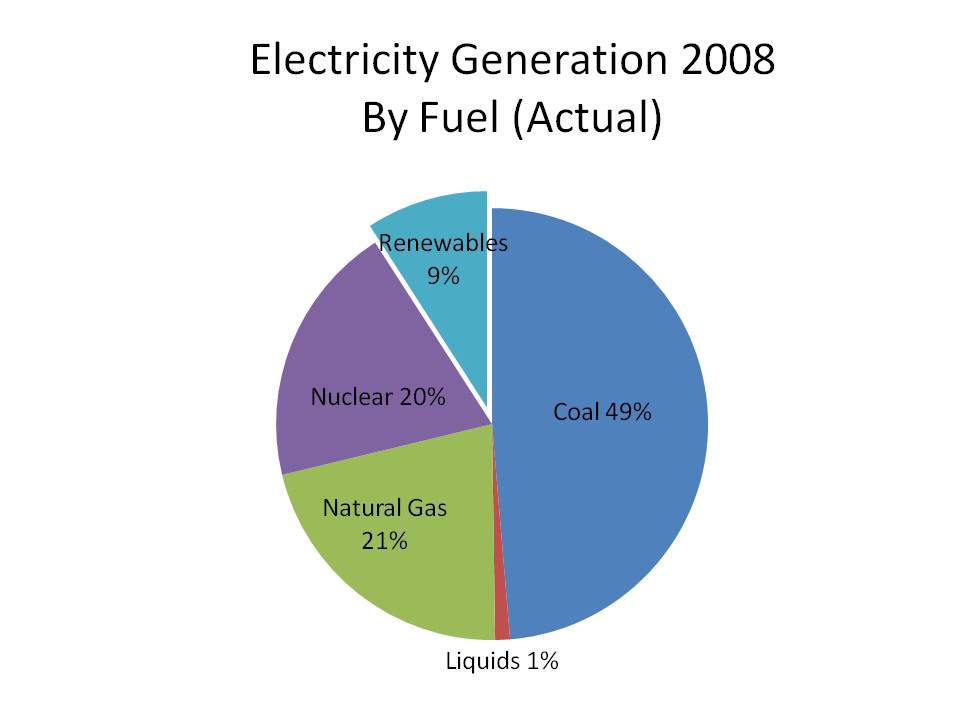
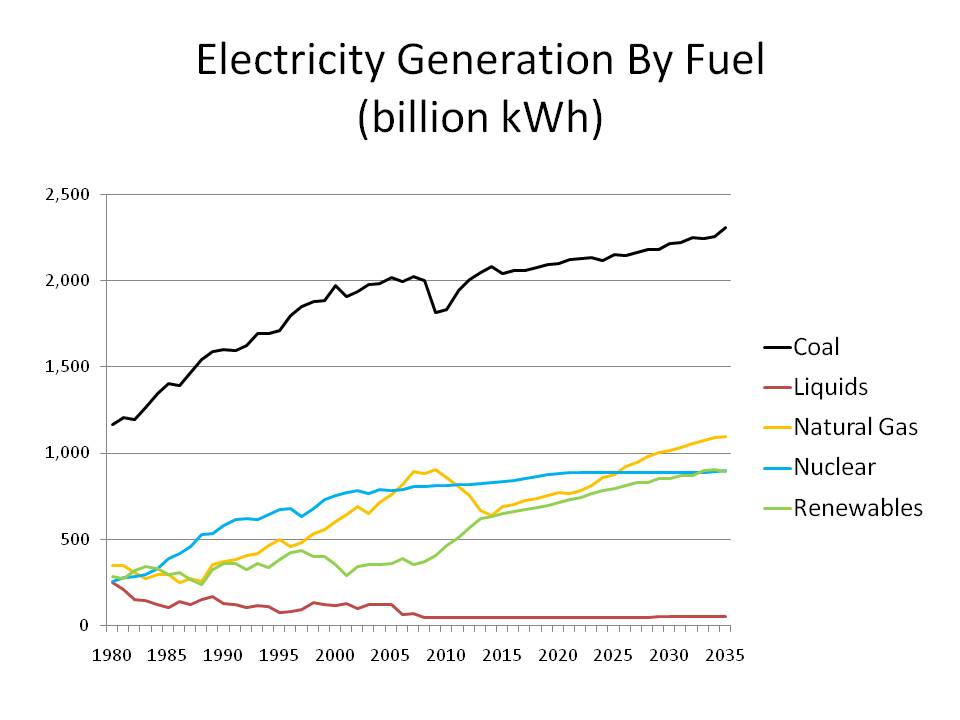
In the absence of an explicit Federal policy to reduce GHG emissions, it is projected that new coal-fired plants continue to be constructed, though at a slower rate as alternative fuels become more attractive, and coal remains the primary source of electric power though 2035.
Natural gas generation is projected to increase because natural-gas-fired plants are much cheaper to build than new renewable or nuclear plants and the lower carbon content of natural gas reduces CO2 emissions.
Nuclear generating capacity is projected to increase from
100.6 GW in 2008 to 112.9 GW in 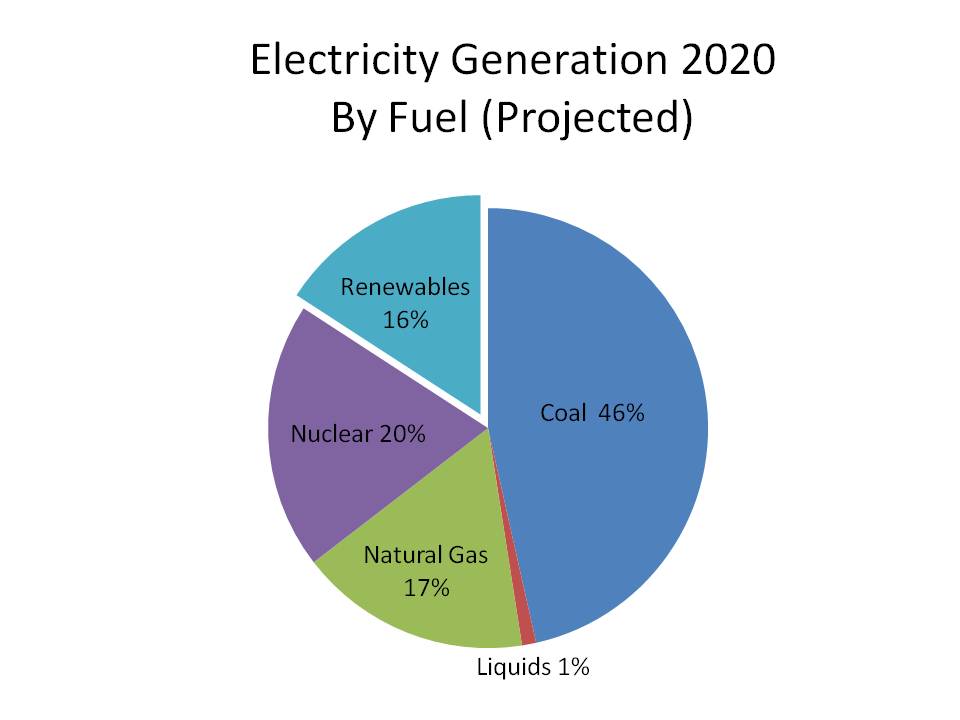 2035 which includes 8.4 GW of new capacity and 4.0 GW from upgrading existing plants. No nuclear plant
retirements are projected through 2035.
Renewable generation is projected to increase as a result of Federal tax credits, the loan guarantee program in the ARRA, and State RPS requirements. Renewable generation grows from 9 percent in 2008 to 16 percent in 2020. Assuming Federal subsidies for renewable generation expire as enacted, new renewable generation slows subsequent to 2020.
CO2 Emissions
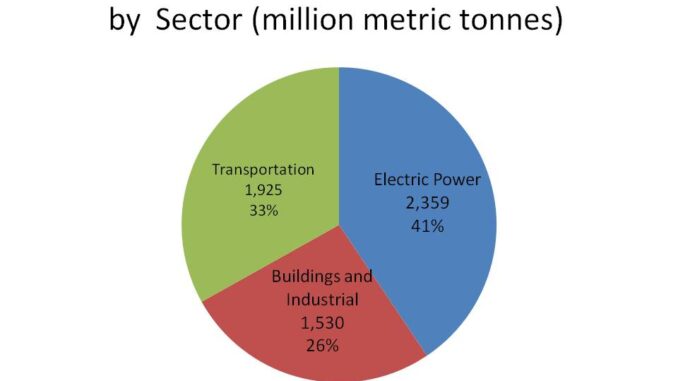
In 2008 electric power generation is the single biggest source of GHG emissions, accounting for 41% of CO2 emissions. CO2 emissions depend significantly on electricity demand and specifically on the use of coal for power generation. With slower electricity demand growth and increased use of renewable generation, electricity-related CO2 emissions are projected to grow 12 percent or 0.4 percent per year from 2008 to 2035.

Be the first to comment