
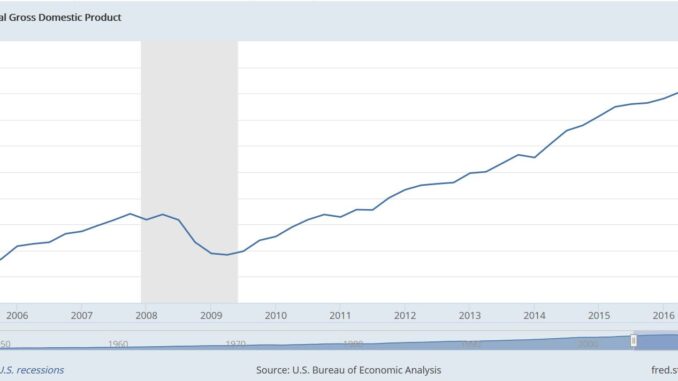
As a rule of thumb increasing electric power generation is closely coupled with economic expansion. Between 2005 and 2017 the U.S. economy as measured by real GDP expanded by about 20 % from $15 trillion to $18 trillion. New data from the U.S. Energy Information administration (EIA) reveals that over this same period, emissions from power generation dropped primarily because of flat demand which is evidence of a decoupling between economic growth and power generation.
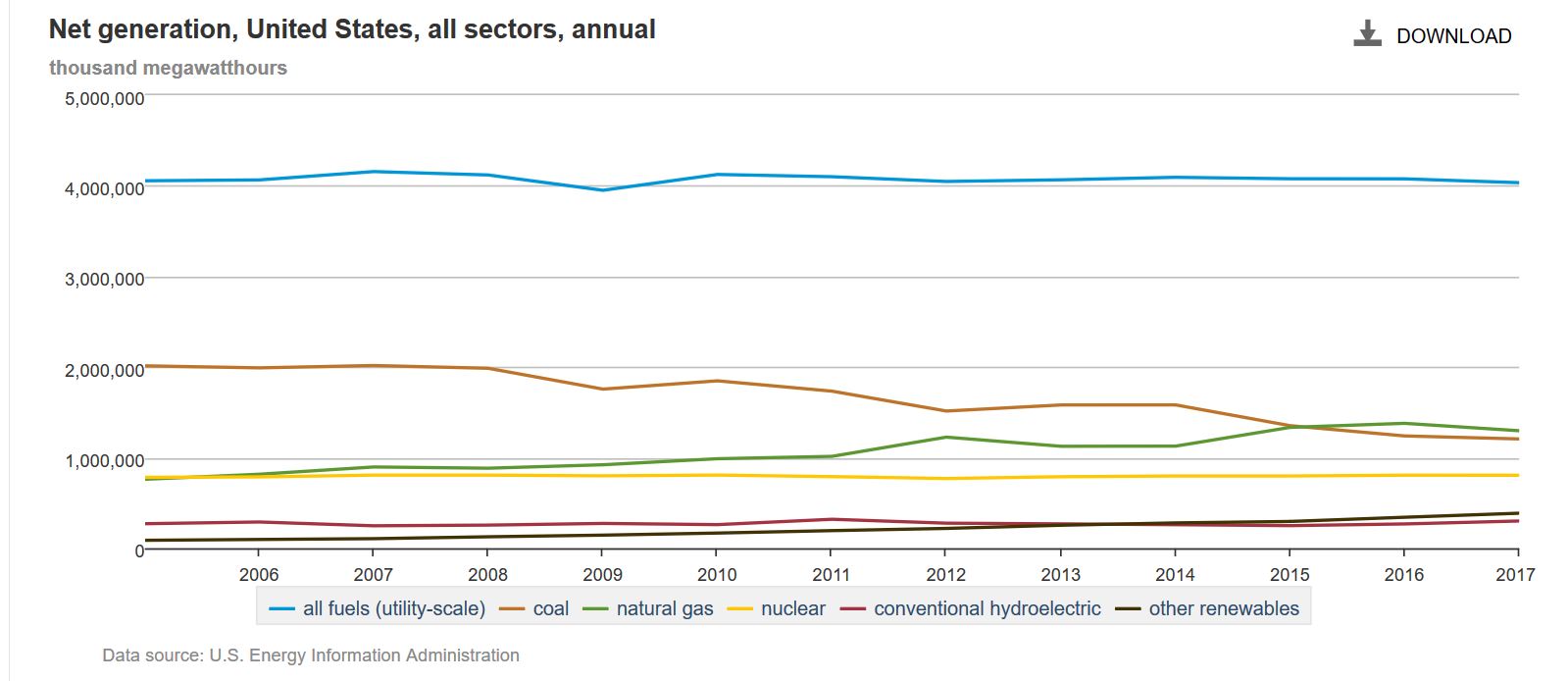 Data from the EIA reveals that during this time US power generation remained flat, but the makeup of U.S. power generation changed significantly. Generation from natural gas now exceeds that from coal and generation from wind, solar and other renewable sources now exceeds hydroelectric generation.
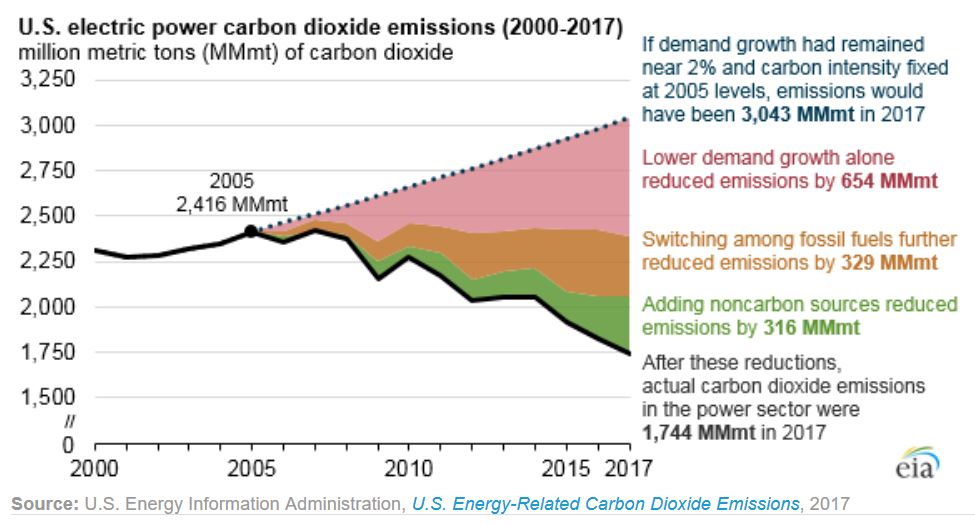 With respect to emissions the change is even more impressive. In a business as usual scenario assuming that demand continued to increase as it had prior to 2005, energy intensity (the energy required to produce a dollar of GDP) had remained at its 2005 value, and the energy mix had remained at its 2005 value, the expected emissions from electric power generation would have been about 3,043 MMmt (million metric tonnes). In 2017 actual emissions were much less, about 1,744 MMmt. About half of the drop in emissions in 2017 compared to the projected business as usual emissions was due to less demand (654 MMmt). Since the economy expanded over this time this is attributable to a drop in energy intensity and is evidence of decoupling of economic growth from power generation. The other important factors were switching among fuels, primarily switching from coal to natural gas (329 MMmt) and replacing fossil fuels with non-hydro renewables (316 MMmt).
In 2017 actual emissions from power generation were 43% less than that projected in the business as usual scenario and 28% below 2005 emissions. This is important progress toward the Paris accord targets (which the U.S. has dropped out of) since emissions from electricity generation are about 28% of U.S. total emissions.
Be the first to comment