
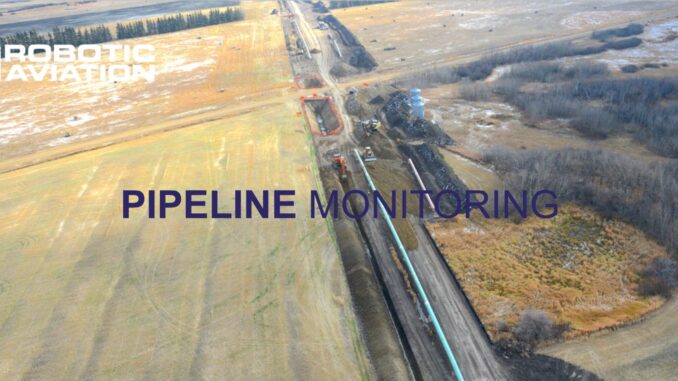
In general the operation of unmanned aerial vehicles (UAV) for commercial purposes is illegal in the U.S. although this is changing. In Canada regulation of UAVs is different. You can fly a UAV that weighs less than 25 kg for work or research without permission. However, there are severe restrictions. You must have at least $100,000 liability insurance, keep your UAV in direct line of sight, always fly during daylight and in good weather (no clouds, snow or icy conditions), avoid flying close to airports, in populated areas or near moving vehicles, and fly below 90 meters. The operator must be trained to understand airspace classification and structure, weather and notice to airmen (NOTAM) reporting services, aeronautical charts and relevant sections of the Canadian Aviation Regulations. To relax any of these restrictions, you will have to apply to Transport Canada for a Special Flight Operations Certificate which will require 20 working days to be issued. Transport Canada has issued thousands of these since 2000.
But this is changing. Today Ian Glenn, founder and CEO/CTO of ING Robotic Aviation, gave an extremely knowledgeable talk about commercial UAV operation in Canada current and future. He expects that within the next 12 months, legislation will be introduced that will significantly relax the current restrictive regulation of the commercial operation of UAVs without a Special Flight Operations Certificate.
The next step will be relaxing the line-of-sight restriction. Ian’s perspective is that the key to commercial beyond-line-of-sight UAV operation will be equipping UAVs with automatic dependent surveillance – broadcast (ADS–B). An aircraft equipped ADS–B determines its position via satellite navigation and periodically broadcasts it, so that it can be tracked. The information can be received by air traffic control ground stations and by other aircraft, which provides situational awareness and allows self separation without ground control intervention. ADS–B is automatic – it requires no pilot or external input – so it can be included on a UAV. The cost of equipping an aircraft with ADS-B has come down and is currently on the order of $1000. This could mean that commercial operation of UAVs equipped with ADS-B will come to Canada sooner because Canada is already using ADS-B for Air Traffic Control. (It is part of the US Next Generation Air Transportation System (NextGen)). Ian suggested that we could see commercial beyond-line-of-sight operation of UAVs equipped with ADS-B within Canada in the next few years. That will dramatically open up the range of applications for commercial UAVs.

Be the first to comment