
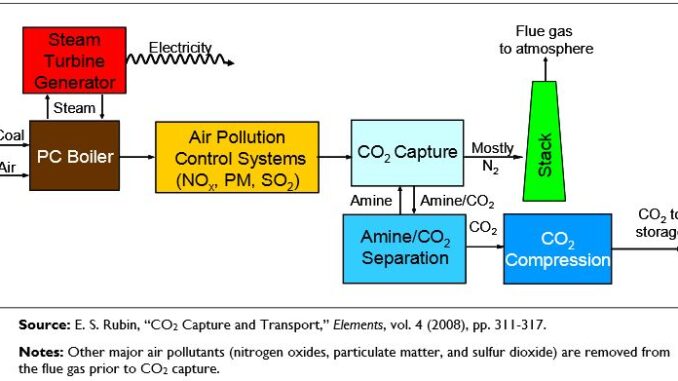
About 37% of U.S. electric power generation is from coal-fired power plants. New EPA regulations scheduled to come into effect July 1, 2015 will restrict CO2 emissions from power plants. Coal-fired power plants will have to implement some form of carbon capture and sequestration (CCS) , convert to natural gas or some other cleaner fuel, or shut down. CCS takes two forms, pre-combustion or post-combustion. I blogged about a pre-combustion commercial CCS implementation in Kentucky that began operation earlier this year.
Construction of the first U.S. commercial-scale post-combustion carbon capture and sequestration (CCS) retrofit has begun. Post-combustion CCS technology will be installed at the coal-fired 240 MW Parish Generating Station in Houston, Texas.
The Petra Nova project will capture 90 % of the plant’s CO2 emissions through an advanced amine-based process. The process was piloted in a three-year project in Alabama. The CO2 capture rate will result in lower greenhouse gas emissions than from a traditional natural gas-fired power plant. The process involves scrubbing the flue gases with an amine solution, to form an amine–CO2 complex, which is then decomposed by heat to release high purity CO2. The regenerated amine is recycled to be reused in the capture process. The CO2 capture and compression system will be powered by a cogeneration plant comprised of a combustion turbine and heat recovery boiler. The oil field will be monitored to verify that the CO2 remains underground.
The captured CO2 will be compressed and transported via an 80-mile pipeline to increase oil output from an oil field with declining production. After sseparation from the oil, the CO2 will be injected underground for permanent sequestration.

Be the first to comment