

About a decade ago Dave Sonnen, Global Analyst for Spatial Information at IDC, projected that the locationaware market for geospatial services would exceed the traditional GIS market in 2005/2006. The release of Google Earth in June 2005 transformed the geospatial services ecosystem. Today, location-aware technologies have blown past the traditional GIS space in terms of number of users and number of deployed apps.
In sectors such as construction, transportation, utilities and municipal infrastructure, geospatial services are playing an increasingly important role even though it is often not obvious. At a recent Distributech conference, the largest electric power distribution conference in North America, of the 400-plus presentations, only a handful mentioned GIS or geospatial in their title or abstract. But of the 18 companies that we interacted with, only two said they were not using geospatial technology in the organisation. Even those that said they weren’t using GIS, were in all probability using Google Maps for market analysis, recruitment or other applications.
To put this in context, the annual global construction spend is estimated to be $7 trillion, about 10% of world GDP. Of this, transportation construction accounts for $1 trillion, utilities $2 trillion, and buildings $2.5 trillion. It has been estimated that between 2013 and 2030, $57 trillion in infrastructure investment will be required simply to keep up with projected global GDP growth. Th is includes investment required for transport (road, rail, ports, airports), power, water, and telecommunications. This is nearly 60% more than the $36 trillion spent globally on infrastructure over the past 18 years.
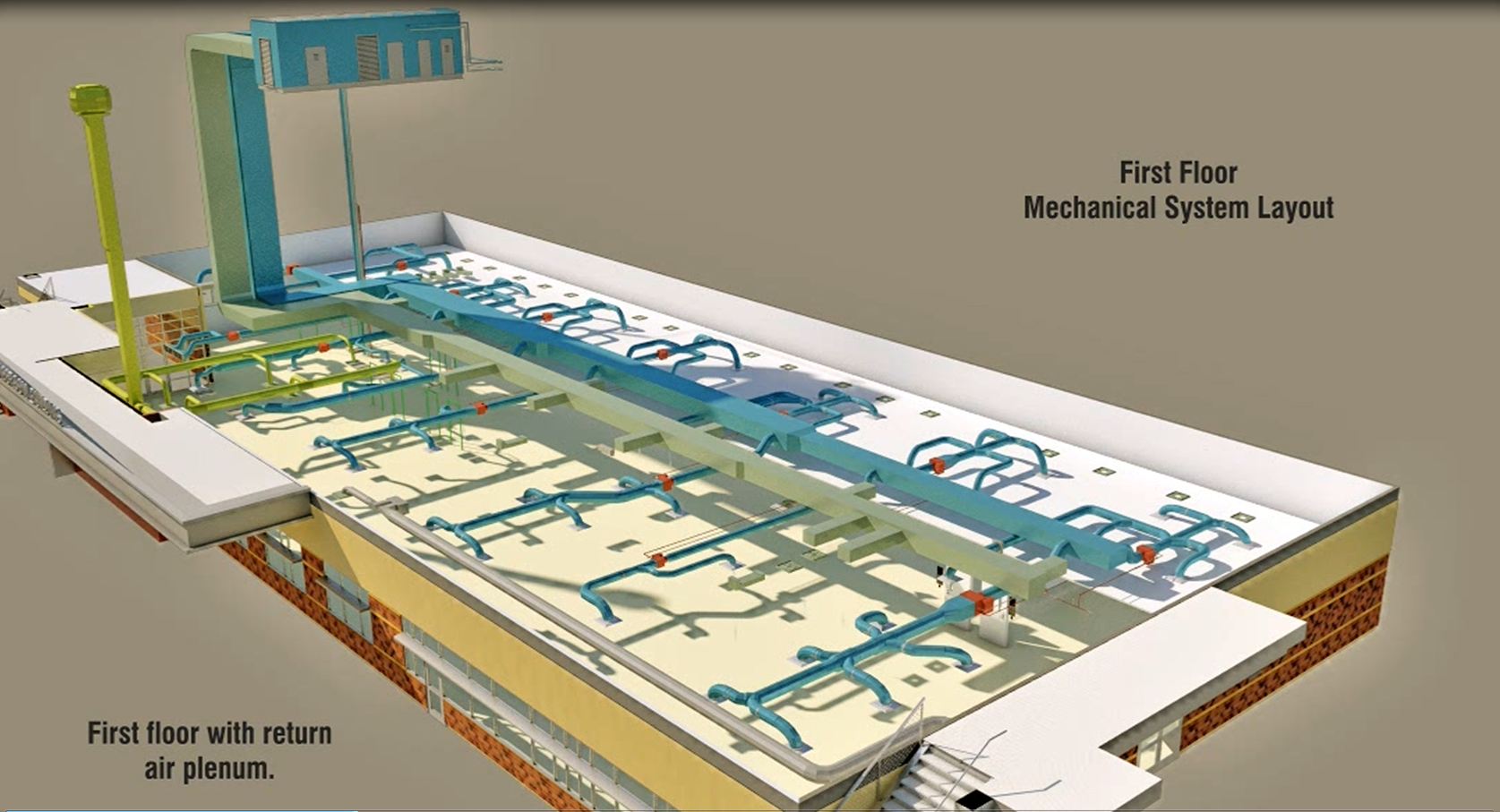 Over half of the world’s 7-billion population lives in cities and this
is expected to increase as we move toward 9 billion by 2050. In the
future, it is projected that there will be many more and larger mega
cities like Tokyo, Mumbai, Mexico City, and Moscow. Cities around the
world are beginning to realise that the power that lights up their homes
and offi ces comes from the convergence of modern information
technology, including BIM, geospatial/ GIS, intelligent (connected)
network models for electric power, telecommunications, water and
wastewater, transportation, and other infrastructure, real-time data
management systems, and 3D visualisation.
Buildings use about 40% of global energy, 25% of global water, 40% of
global resources, and they emit approximately one-third of global GHG
emissions. Faced with rising environmental issues, many governments are
mandating energy conservation measures, especially targeting near-zero
energy buildings, an industry that is projected to grow by 43% per year
to reach $690 billion by 2020.
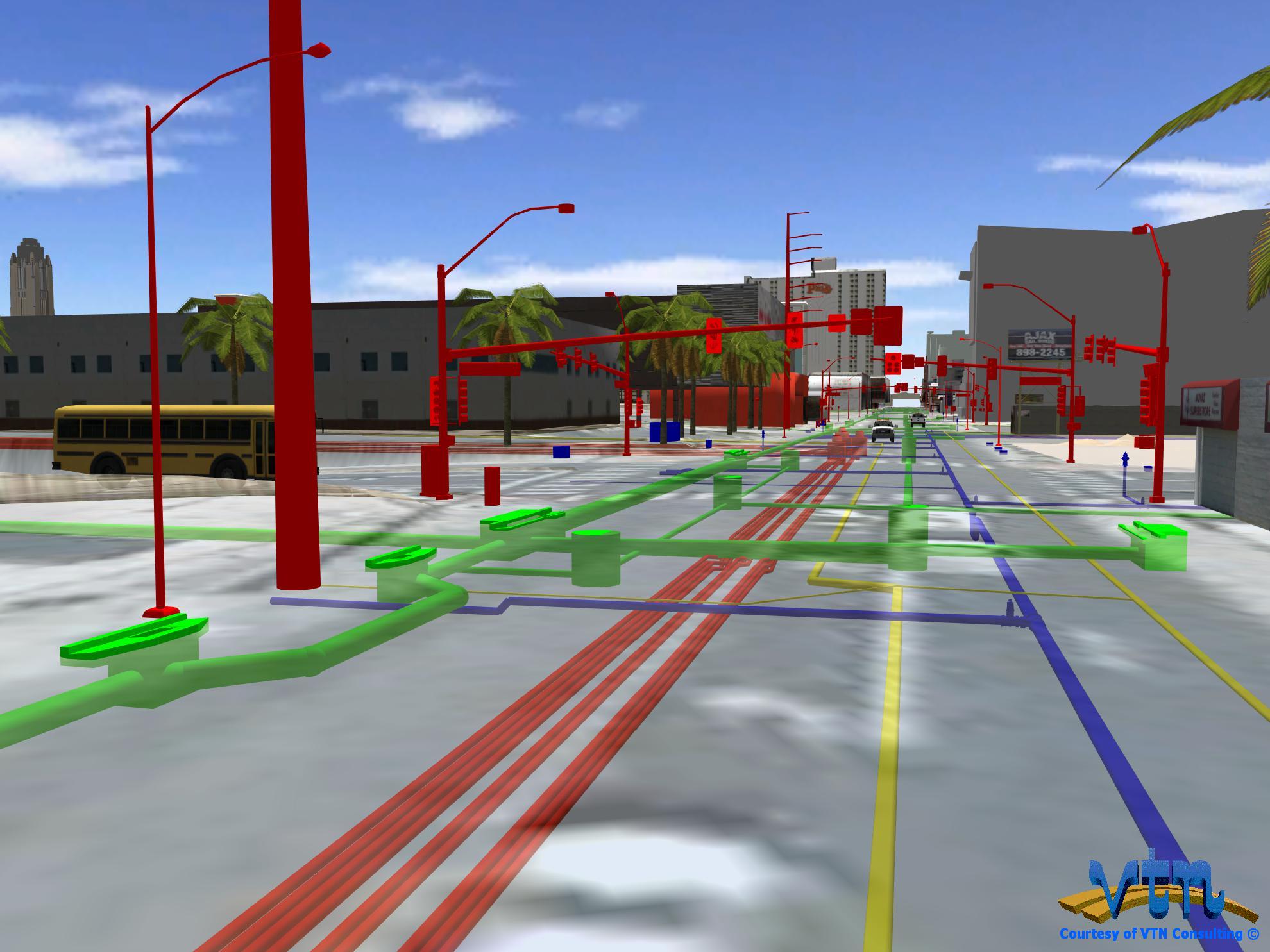 Building information modeling
(BIM) and geospatial technology have central roles to play in improving
the energy efficiency of buildings. Several years ago, in an
awardwinning paper at a conference organised by Britain’s Association
for Geographic Information (AGI), Ann Kemp, then head of GIS at Atkins
Global, the design and engineering firm, asked the question ‘BIM isn’t
geospatial — or is it?’ and then argued that integration of geospatial
and BIM was essential to address the challenges of the 21st century. The need to integrate
geospatial and BIM has been gaining traction for some time now and
government mandated energy efficiency for buildings is a major driver of
BIM/geospatial convergence.
Construction, power, transportation and municipal infrastructure are important sectors of the world economy. Over the next two decades these will see a massive infusion of investment, motivated by economic development and environmental concerns. In addition, as governments find they have less and less money for capital infrastructure projects, a greater proportion of the investment in infrastructure will come from the private sector, which will drive an increased focus on productivity to improve returns on investment. Th at in turn is driving a transformation of the construction industry which is reflected in accelerating adoption of integrated BIM, geospatial, and 3D visualisation, geospatially enabled data management, and vertical applications based on these technologies.
Excerpted from a recent article.
Graphics courtesy of e7 Architecture Studio and VNT Consulting.

Be the first to comment