
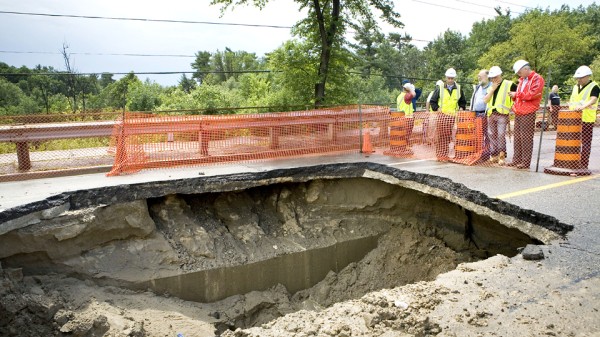
According to the Globe and Mail, two sinkholes shut down traffic on a major artery in Toronto. One sinkhole is five metres wide and 14 metres deep. It is suspected that a 60-year-old, 18-inch corrugated metal storm water pipe about 10-12 metres below the surface collapsed. A recent article points out that this type of thing happens more often then we think. (Photo Jennifer Roberts/Globe and Mail)
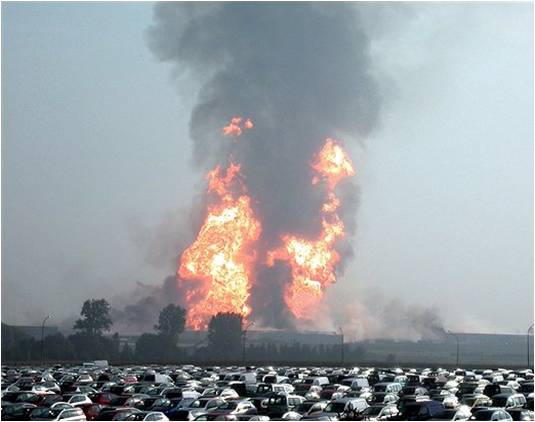 There are usually two dimensions to this type of infrastructure failure. One is that the pipe, transformer, or other piece of equipment may be beyond its expected life. The other is that in the case of underground facilities more often than not we don’t know where they are. During presentations I often show a photo of an explosion in Belgium in 2004, that caused fatalities and occurred when a crew doing a routine road excavation hit a gas main they weren’t expecting. When I was in Brazil recently I showed this picture, and someone in the audience piped up and said, oh yes, we had two incidents like that in Sao Paulo last week. That we don’t know where underground infrastructure not only seriously inconveniences the public and leads to deaths and injuries, but is also expensive. All utilities and telcos have dedicated “call before you dig” teams that are dispatched to construction sites before digging begins to determine if any of their facilities lie within the proposed excavation area. Even for a medium sized utility this can cost hundreds of thousands to millions of dollars annually.
I blogged some time ago about some places in the world where there is relatively good information about underground facilities which shows that it is not impossible.

Be the first to comment