
At HxGNLive in Las Vegas this week I attended a session on using Leica technology to locate underground assets presented by Brett Black, GIS Solutions, Simon Pedley, Utility Detection Solutions and Mike Baker, G/Technology Product Manager. This presentation covered the type of utility detection solutions that are widely used in the industry and provided a good introduction into the equipment that is industry standard for utility detection.
The Leica DIGiSYSTEM is an easy to use electromagnetic detection wand that can be combined with a signal generator to detect conductive pipes and cables. It uses several frequencies to detect shallow and deep infrastructure, but is basically a 2D locator. The Leica ULTRA is also a wand but is much more configurable. It can use any frequency between 50 Hz and 200 kHz and has a selectable antenna configuration.
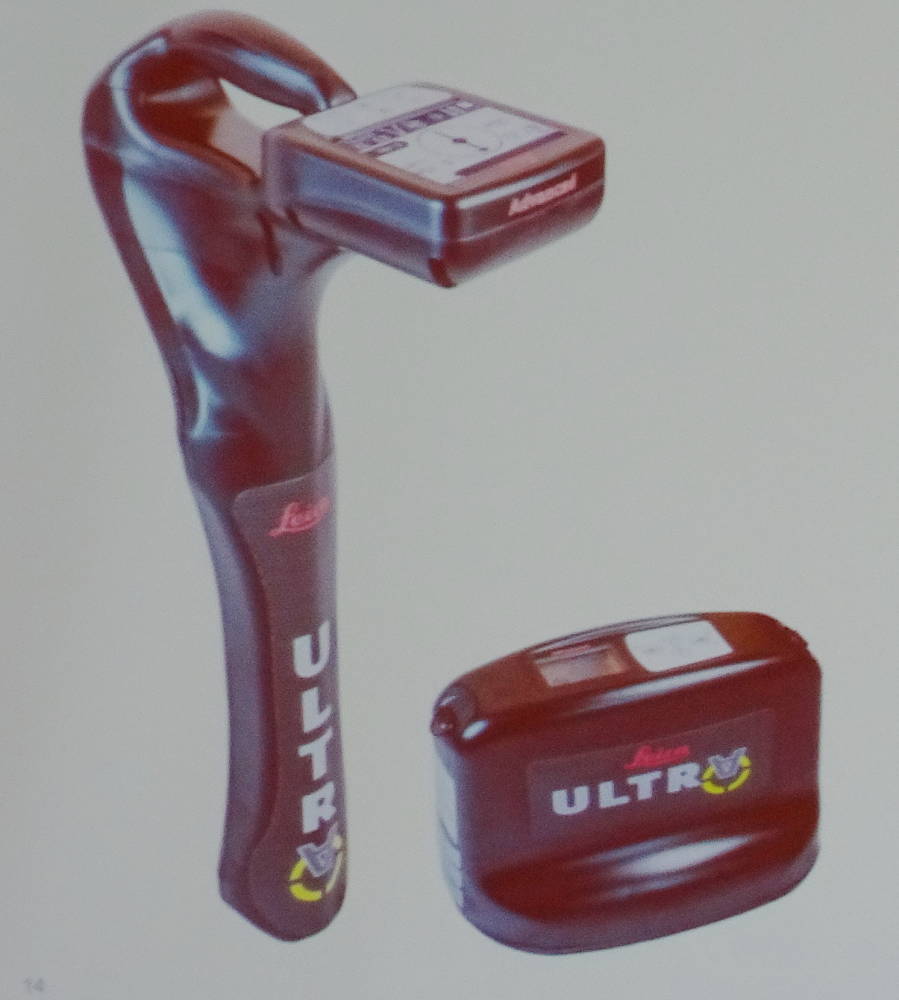 The Leica ULTRA signal generator can be controlled remotely and the wand supports Bluetooth. The DIGiSYSTEM and ULTRA are fine as long as the underground infrastructure is conductive.
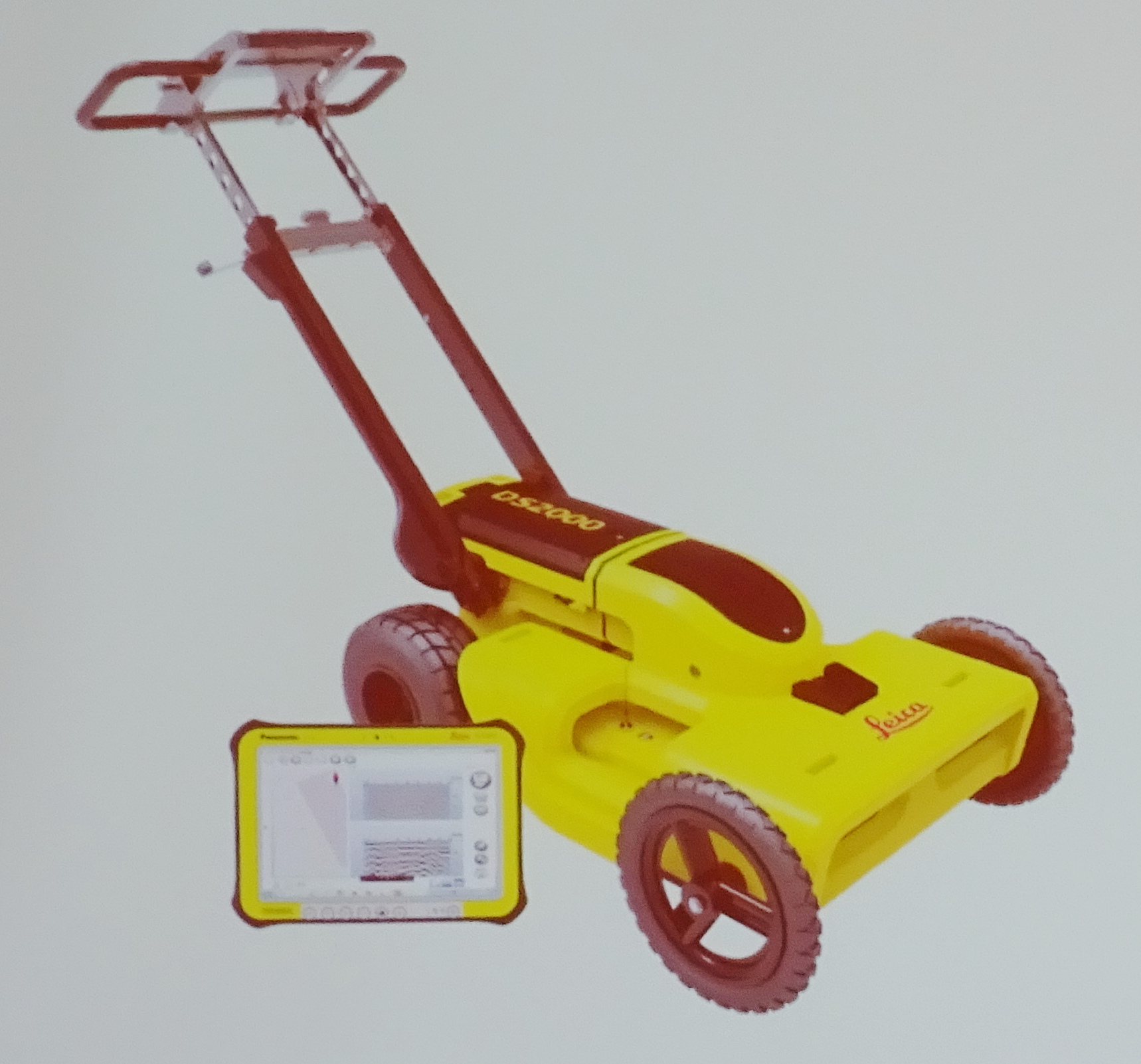 For non-conductive infrastructure such as plastic pipes and fiber optics the Leica DS2000 uses ground penetrating radar (GPR) which finds the location in 3D about underground infrastructure. In principle GPR is a superior tool for mapping underground features because unlike traditional electromagnetic detection it can pick up non-metallic objects and can detect utility infrastructure that cannot be accessed by a signal generator. This makes the use of GPR almost mandatory in an industry that is increasing its use of plastic piping (GPR is not particularly good at detecting the plastic pipe itself, it detects the contents of the pipe such as water). However, GPR does have drawbacks. It requires a trained surveyor to interpret the scans. It is unable to accurately identify utility type and in some soil types such as aggregate and clay it does not perform well.
When combined with Leica GNSS locators (Leica Zeno 20 or Leica GG04 Smart Antenna) this equipment can determine accurate location of underground infrastructure in 2D and 3D. But these devices are intended to be used at a walking pace which limits their use to very localized applications such as locating underground utilities to avoid incidents on construction projects.
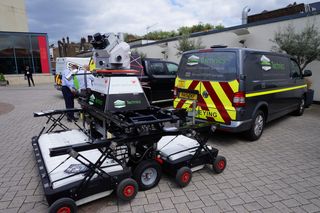 Underground utility mapping requires a different level of equipment. I blogged previously about Hexagon’s investment in GeoRadar technology from IDS (Ingegneria dei Sistemi) in Italy. The towable Pegasus: Stream array combines above and below surface multi-sensor scanning. It includes a Leica Pegasus: Two scanner for above ground features and a Stream EM ground penetrating radar (GPR) array for below ground objects and can be used to create 3D models of above ground and below ground facilities. The combined multi-sensor scanner can be towed at up to 12.5 miles an hour (about 15 km/hour), although 5-10 miles an hour is more typical. The towed GPR arrays combined with LiDAR have more mapping uses than just mapping utilities. They can also be used for pavement, bridge, and roadway inspection, for example.

Be the first to comment