
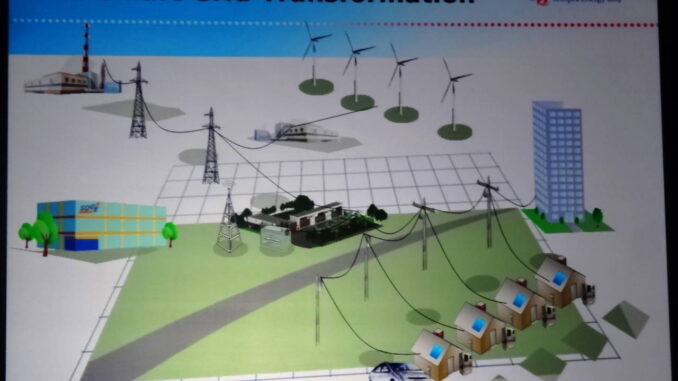
If there was one consistent message at Distributech this year, it was that smart grid has become mainstream – every utilty is doing something related to smart grid.
A very good example of some the things that utilities are abe to do because of their investment in smart grid technology is the keynote given by Michael Niggli, COO and President of San Diego Gas and Electric Company (SDGE). SDG&E is a regulated public utility with 3.4 million customers and 1.4 million electric meters and more than 840,000 natural gas meters in San Diego and southern Orange counties.
Smart grid
According to Mr. Niggli smart grid is accelerating like never before. SDG&E has deployed 2.3 million smart meters to electric and gas consumers. And there are other smart-grid related initiatives that SDG&E has undertaken including distributed generation, primarily solar photvoltaic (PV), plug-in electric vehicles (PEVs), and a new outage management system that leverages real-time data from smart meters..
Social networking and customer engagement
Having smart meters has helped in a way that SDG&E probably didn’t originally project. When SDG&E had to take the San Onofre nuclear plant, which represents 20% of their generation capacity, off-line in January 2012, they had to look for ways to dramatically reduce load. SDG&E leveraged their smart meter network to help reduce power demand. I have blogged before about utilities using social networking to communicate with the public. In this case one of the ways that SDG&E took advantage of their AMI network was to use social networking to help reduce load. The smart meter network (AMI) allowed them to compare different schools’ power usage so they used social gaming to create a competition among schools to see who could reduce their energy usage the most.
 Green button
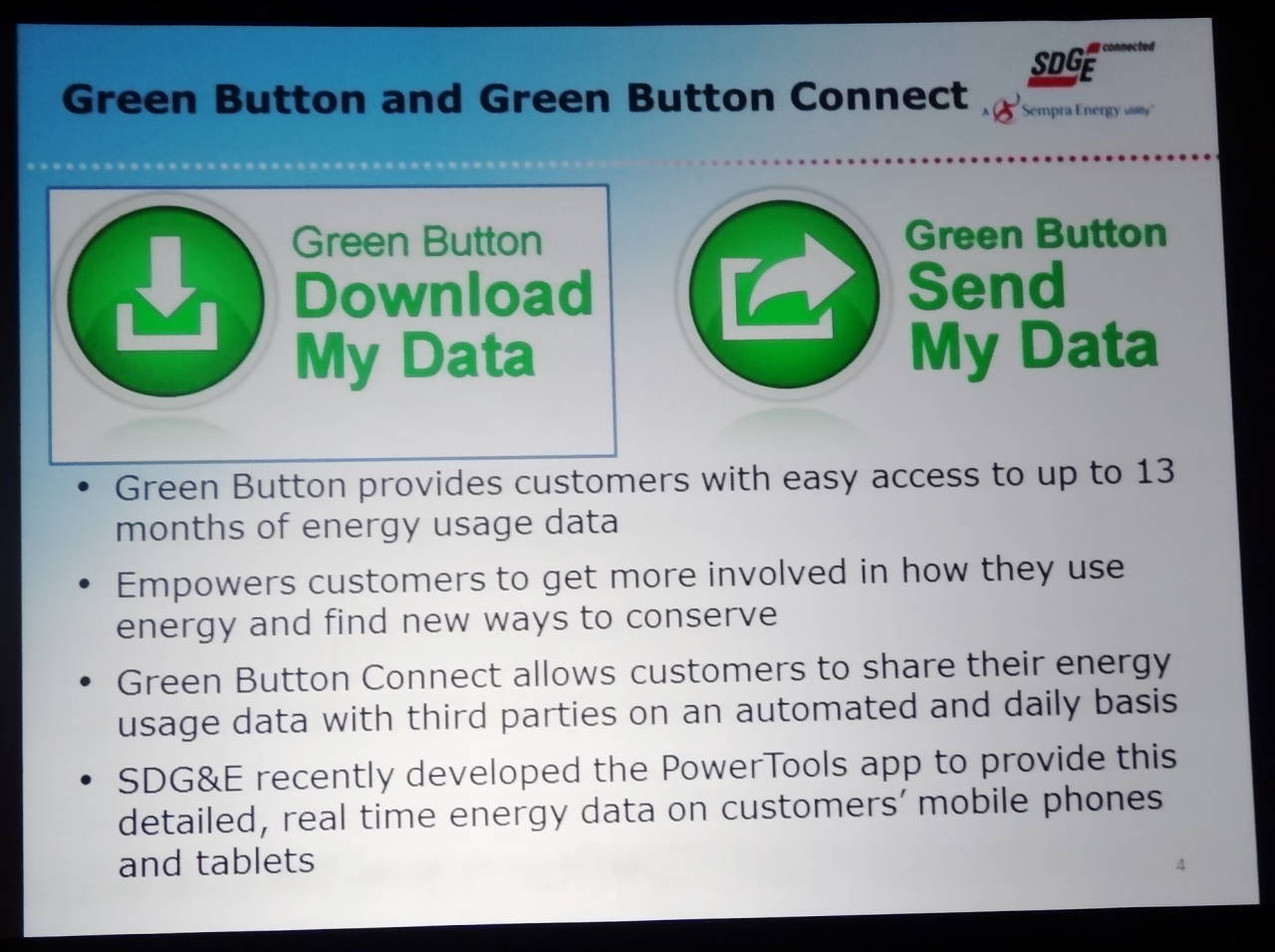
Another area where SDGE and a number of other utilities are helping consumers become more energy consciousus is the Green Button program, originally modeled on Veteran Affairs’ Blue Button program. SDGE’s Green Button program not only allows users to access their own usage data, but also to make it available to 3rd parties, typically companies who analyze consumers’ historical usage to help them reduce their power usage. Across the country about 16 million consumers have access to their electric usage data via a Green Button program and another 30 mllion are exptected to get access soon.
 Distributed generation
California is leading the country in clean energy. California has mandated 33% renewable energy by 2020, and has also mandated reducing emissions to 1990 levels, by about 30% from current levels, in the same timeframe. In addition new federal regulations targeting 54.5 miles per gallon in all new vehicles by 2025 is dramatically changing the energy landscape in California. And as Mr. Niggli and other speakers emphasized, what is happening to utilities in Califiornia will happen to utilities in the rest of the country.
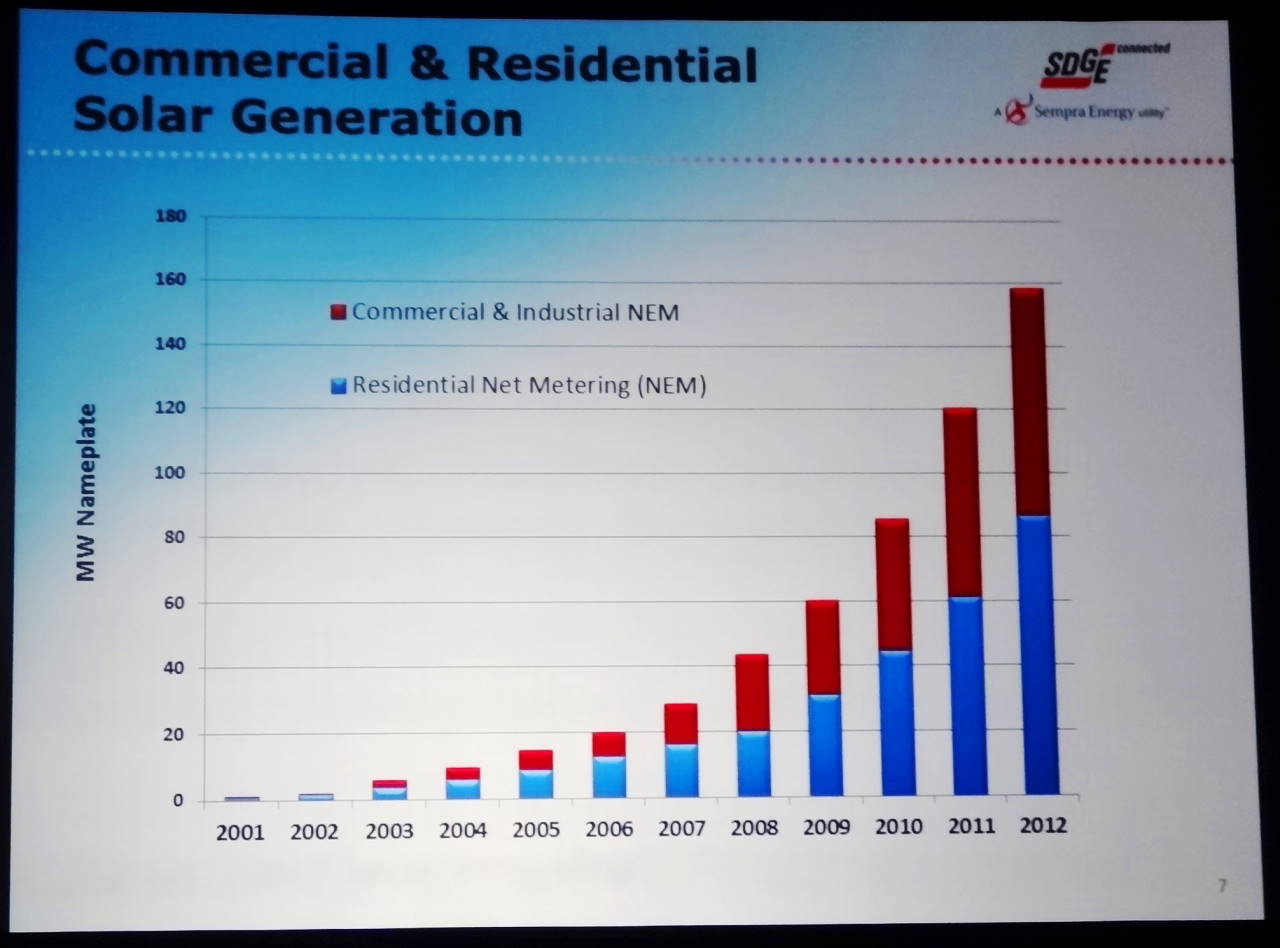
Distributed generation is an important source of renewable energy for SDGE. According to Mr. Niggli In SDG&E’s service territory there are 21’000 rooftop PV installations with a capacity of 160 MW. New rooftop PV installations are increasing at a rate of 3% per month.
 Plug-in electric vehicles
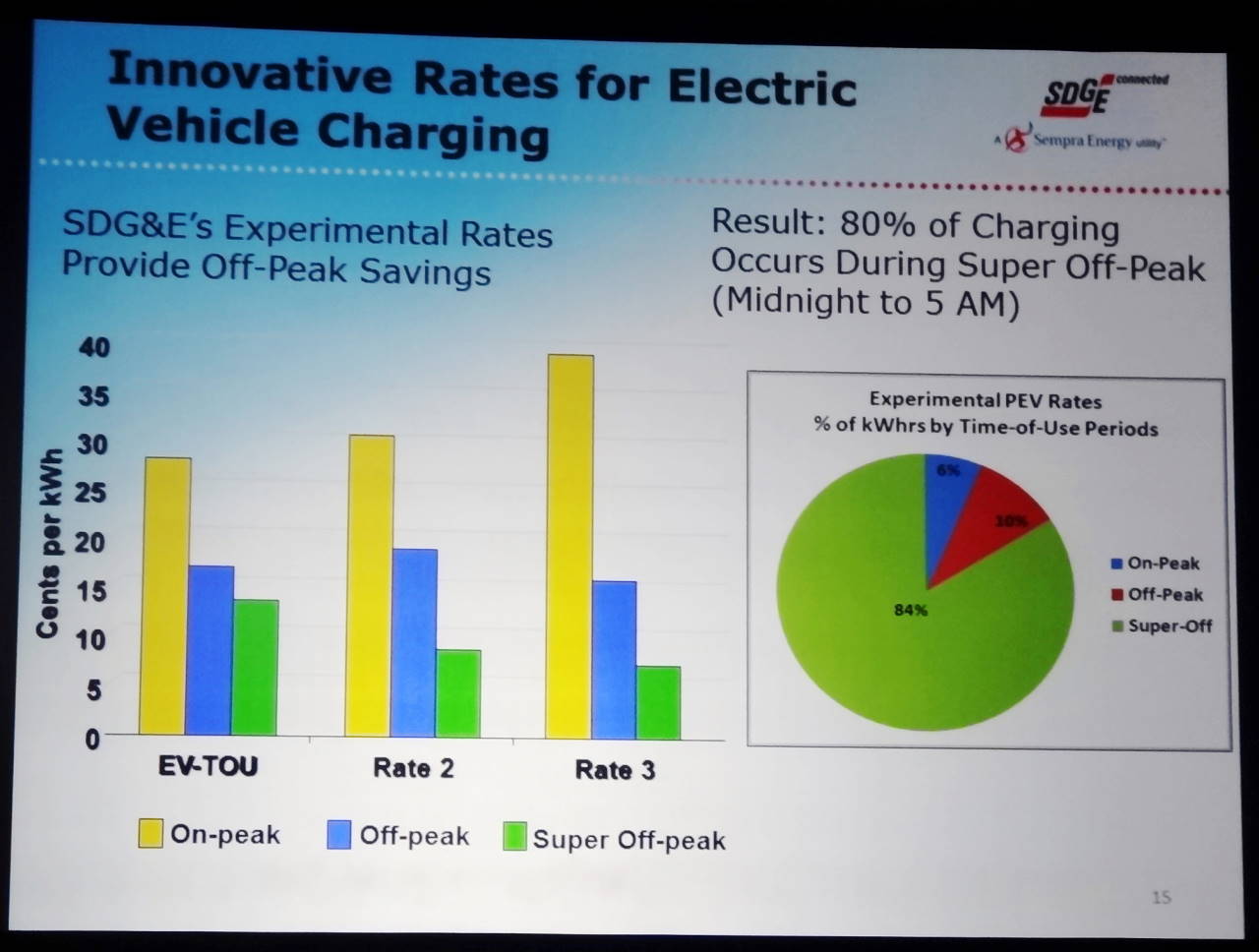
Presently there are 2’500 plug-in electric vehicles in San Diego currently and SDGE is projecting that this could rise to 200’000 by 2020. SDGE has used time of use pricing to motivate PEV owners to charge at super off peak when electricity is at a very low rate. As a result 84% of vehicle charging is occuring between 12 midnight and 5am.
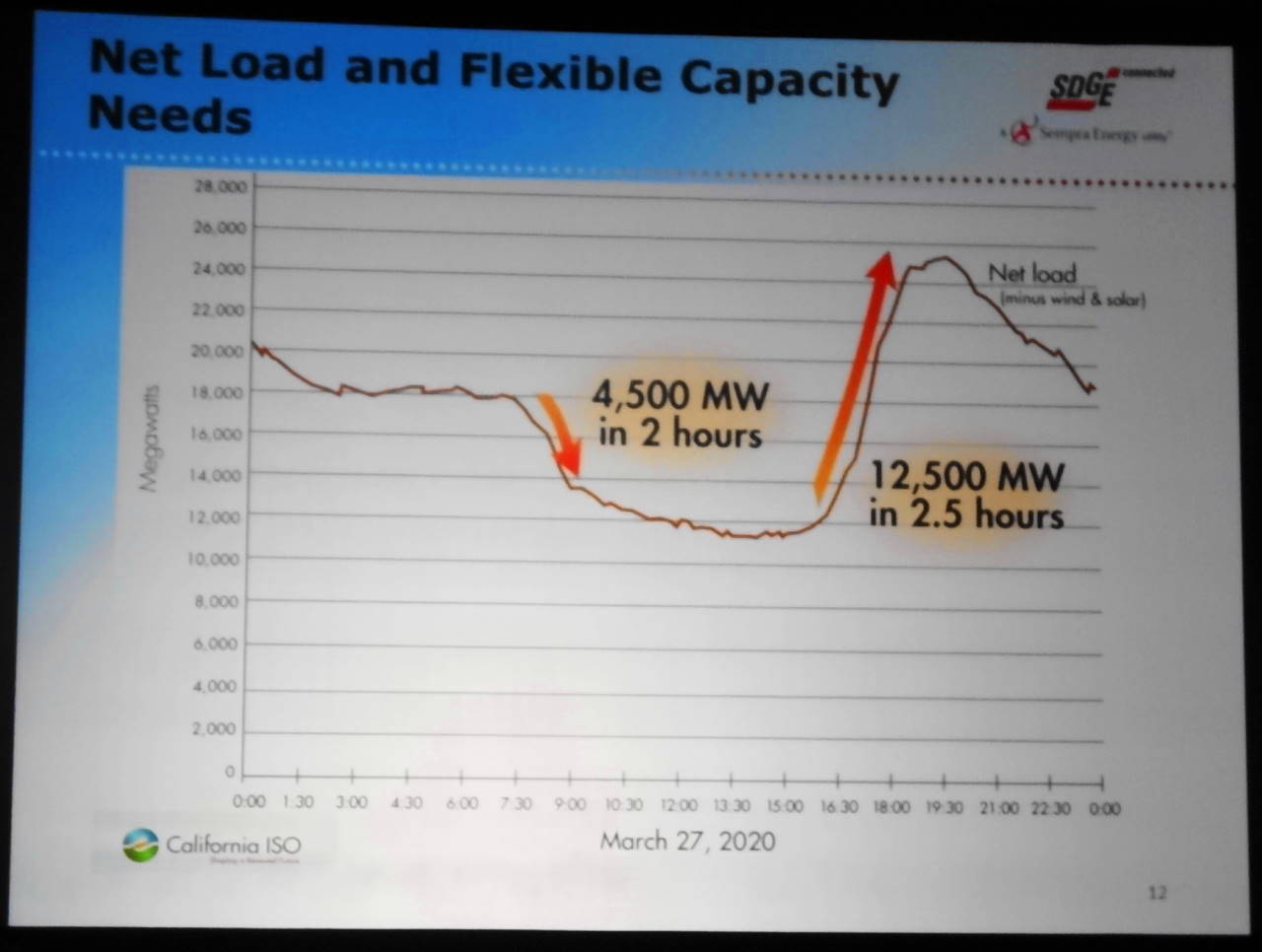 Wind and solar intermittent energy sources changes the daily demand profile
When intermiitent sources like wind and solar generation contribute more than about 20%, they begin to significantly impact the daily generation profile. On the demand side, plug-in electric vehicles and increasing customer awareness of electric usage are changing daily load profiles. The difference between the two is critically important to SDGE because they need to provide generation capacity to fill the gap. Mr. Niggli gave two examples from the Californi ISO where generation dropped by 4’500 MW in 2 hrs, and then ramped up by 12’500 MW in 2.5 hrs, as a result of wind and solar generation.
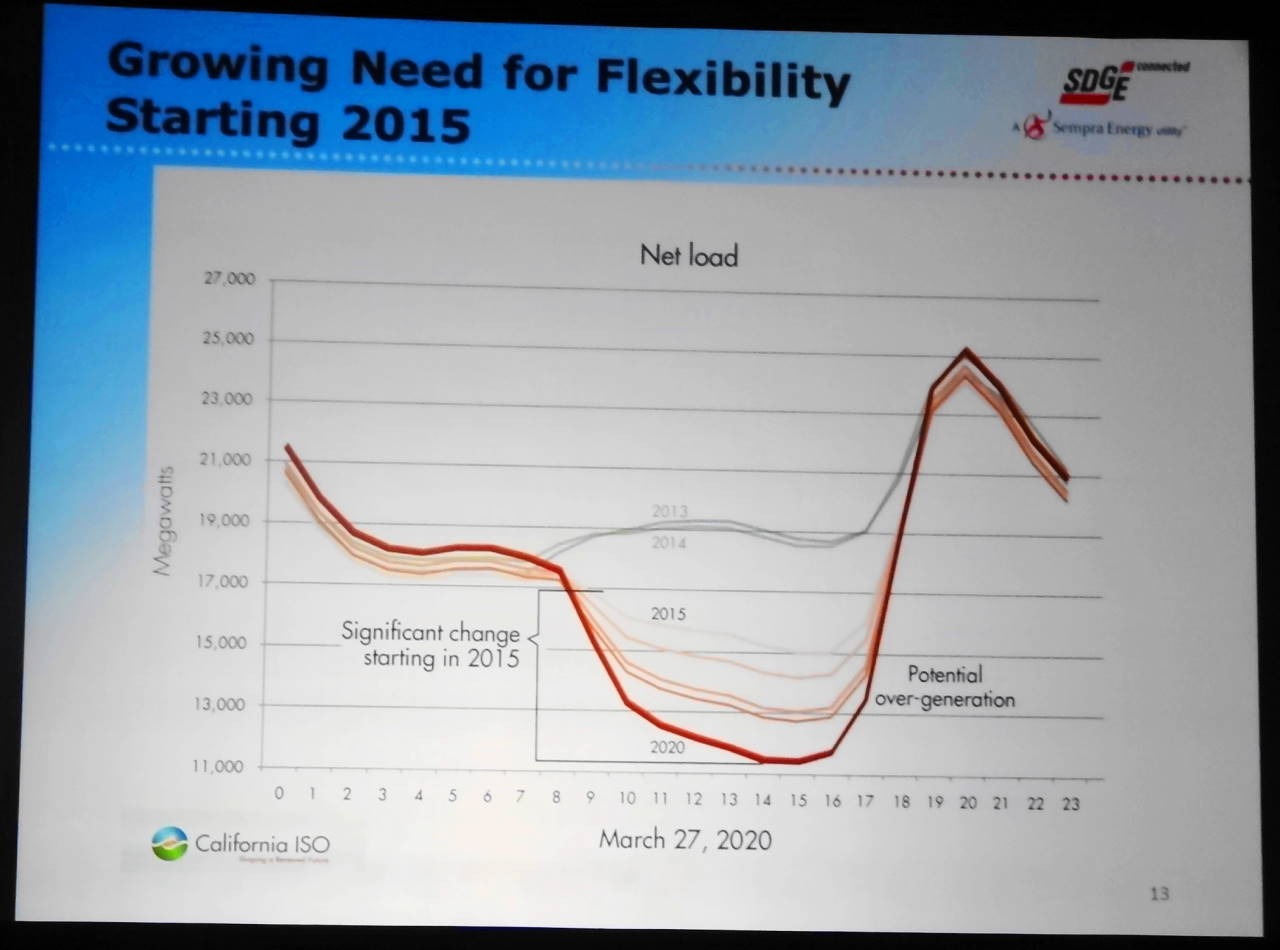 SDG&E expects to start seeing the impact of the new daily power profile in 2015 and is working now to find dispatchable energy sources that can ramp up and down rapidly. To put this in context, it takes months to ramp up nuclear, weeks for coal-fired plants, minutes for hyroelectric and natural-gas turbines, and microseconds for batteries.
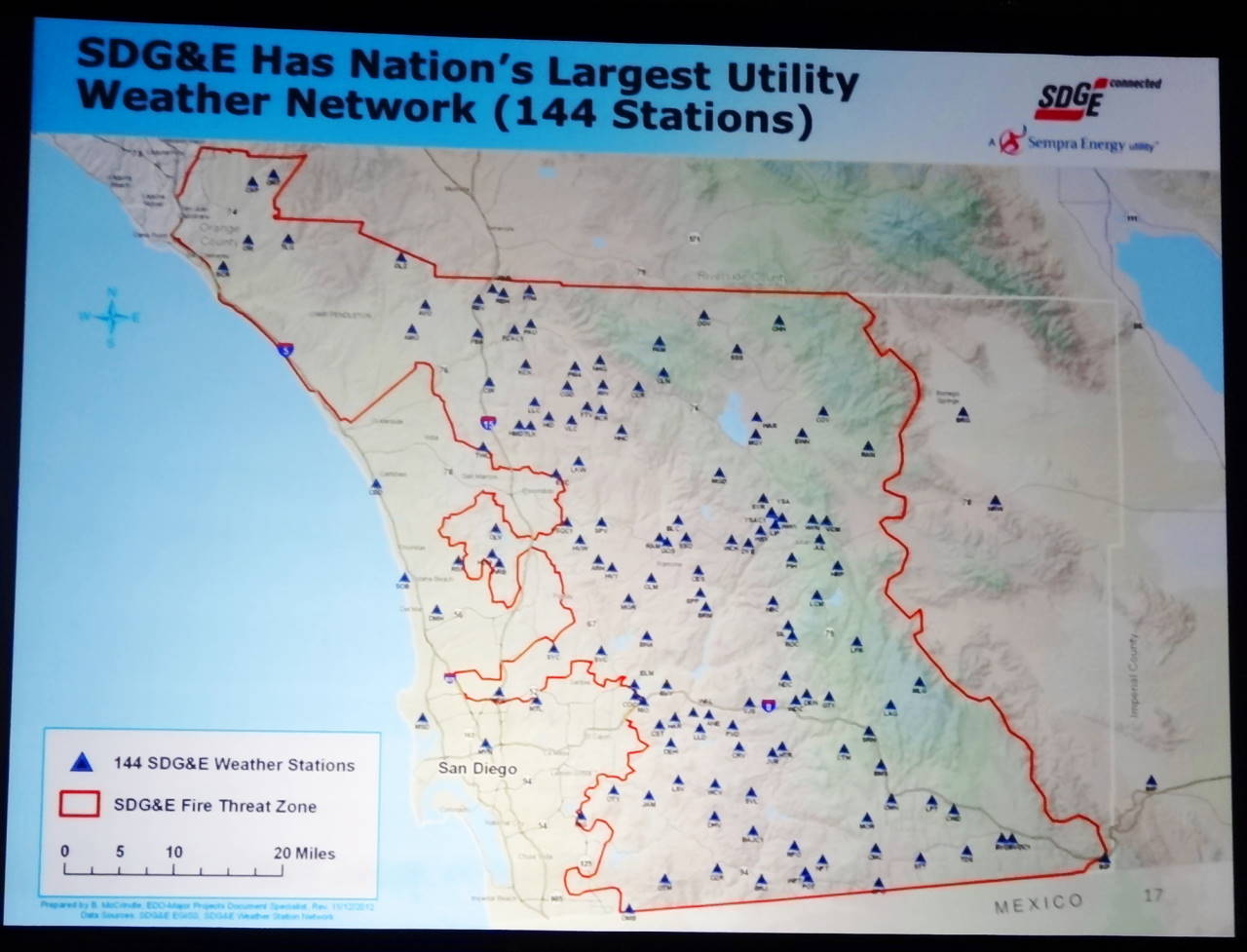 Wild fires
Wild fires are a big problem for SDG&E because that makes SDGE liable for damage caused by fires started by SDGE equipment, for example, by poles being blown over.
SDGE has implemented 144 weather stations to monitor local weather conditions in their service territory. If winds get too high in an area increasign the risk of dmage to poles and other equipment, SDG&E will proactively shut down part of the network. They have also put cameras on transmission lines and nstalled software that can automatically detect fires on transmission lines.
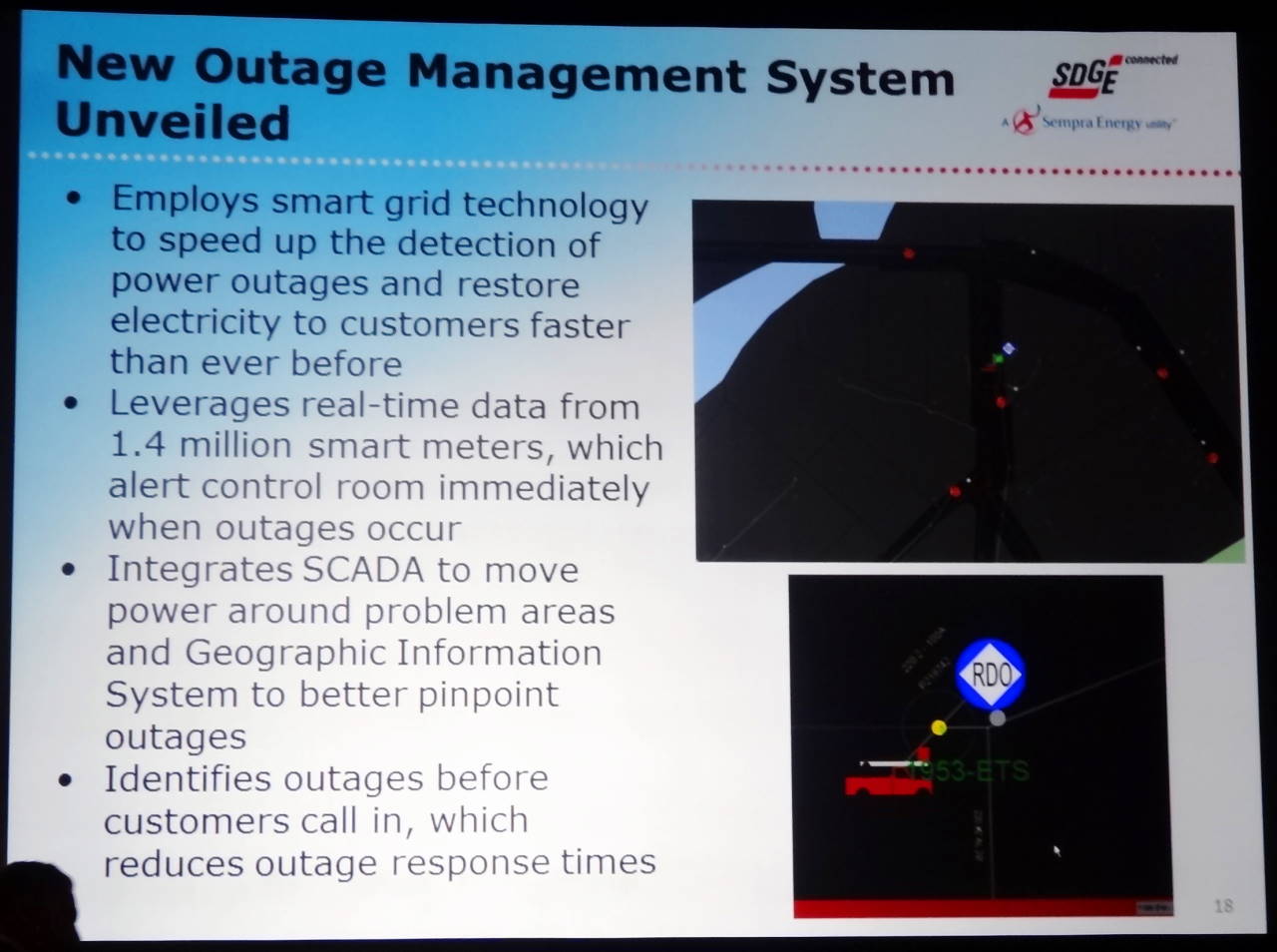 Outage management leveraging smart meters
SDG&E has installed a new outage management system that leverages their 2.3 million smart meters. The major advantage that the new system provides is that they can detect an outage before the first customer calls in. They can also differentiate without rolling a truck between outages due to customer problems and those caused by their own network. The net effect is that it reduces the number of outages that SDG&E needs to respond to and reduces the average outage time (CAIDI and SAIDI).

Be the first to comment