
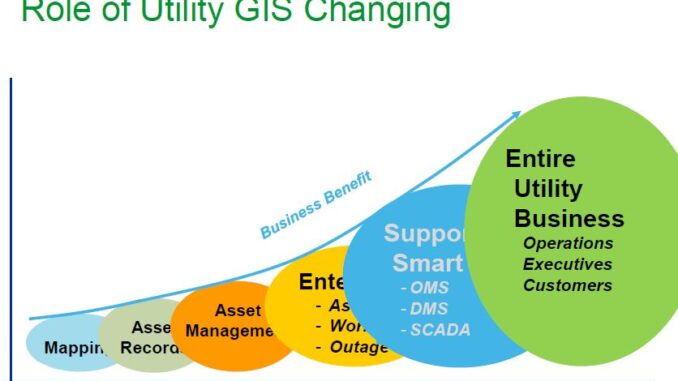
Utilities have been using geospatial data and technology for many years for mapping and asset management. But GIS is now being used in many other areas from network design to marketing to outage management to energy conservation. With the rise of the smart grid utilities are combining GIS and AMI to monitor transformer loading, identify and reduce theft and for disaster management. Many people in the industry expect that under the impetus of the smart grid the expanding role of geospatial technology will accelerate and that geospatial will become a foundational technology for the electric power industry. At Distributech, Danny Petrecca, Director of Geospatial Product Management at Schneider Electric made the case that the role of utility GIS is touching every aspect of a utilties business, affecting customers, operations and management.
 Disaster management
As an example Danny gave an overview of how GIS, weather data, and the integration of weather data and GIS are helping utilities prepare for and deal with extreme weather events. The frequency and severity of extreme weather events is increasing so disaster management has become a priority with most utilities. With GIS and weather services utilities are able to plan crew resources and network assets, reduce restoration time and costs, ensure crew and public safety, optimize damage assessment, and keep the public informed during storms.
Hurricane Sandy severely impacted New Jersey Natural Gas (NJNG) infrastructure, 30,000 homes and over 275 miles of main were damaged. NJNG found that the biggest reason that they were able to restore service so quickly was their ability to analyze and manage the restoration process using their utility GIS system. That they had been using GIS for a decade prior to Sandy meant that they were better prepared for such an extreme weather event than they had expected. The GIS enabled engineers to view the network in the context of the damage caused by the storm and it enabled them to identify critical valves and shut off gas service in a matter of hours. It helped them restore over 255 miles of pipeline in under two months. It helped them resectionalize their network into smaller sections which they were able to repressurize in one day. A very important benefit of the GIS was that NJNG were able to provide timely and accurate information to the public on the status of the network including estimated time of service restoration.
 Weather services
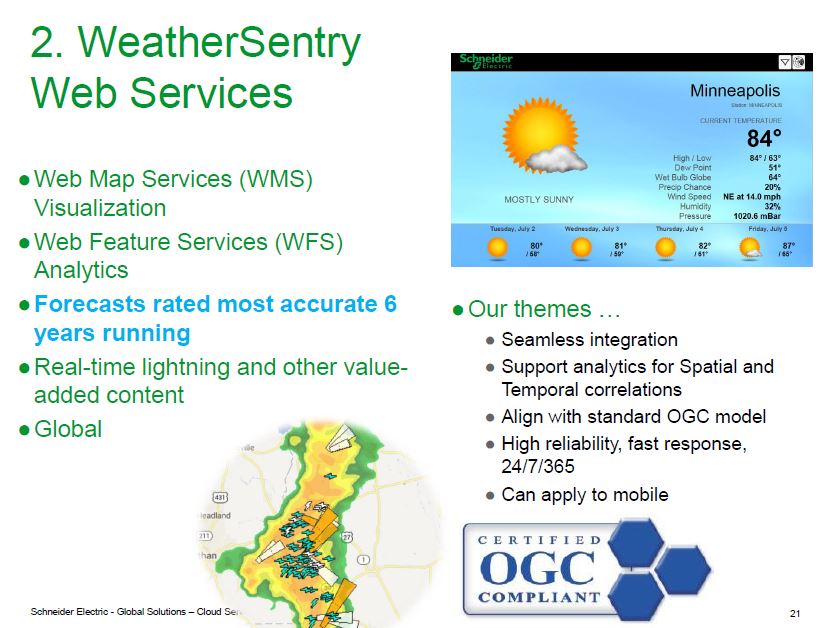
Weather services can provide information, (historical, current and forecasts), about lightning strikes, wind, temperature and humidity, ice and snow, and storms. They can predict precisely when and where a storm will hit in a utility’s service territory. This enables a utility to schedule crews on-call, holdover, and dispatching and the type of equipment that will be required.
Before a storm weather services can provide Before:high quality forecasts, expert meteorological consultation, and real time alerting. When a storm hits, weather services provide real-time lightning strike information (where and when), nowcasting tools, and current situational awareness. And after the storm weather services can help with post-storm inspection and assessment. Weather data is available in digital form and some provide it as a web service compliant with the Open Geospatial Consortium’s (OGC) web services standards such as WMS.
 Integrated utility GIS and weather services
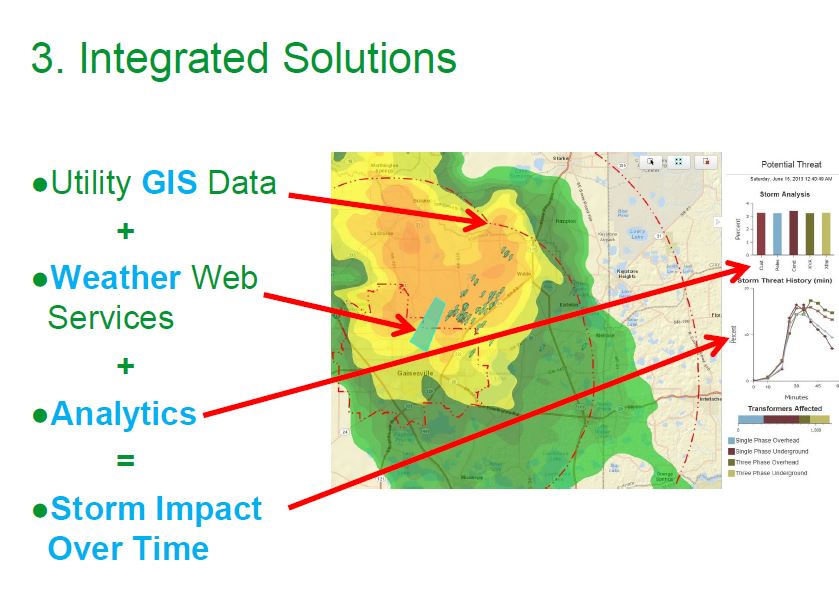
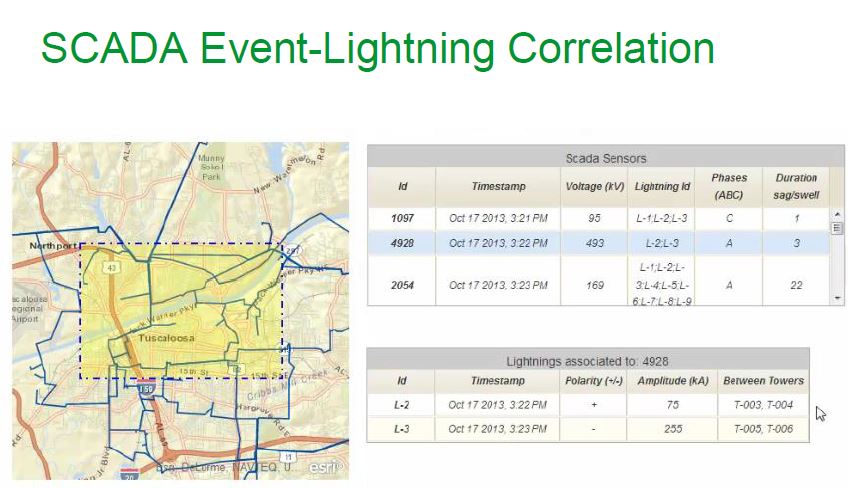
By integrating weather services and utility GIS allows you to do even more interesting things, like quantitatively monitoring storm impact on infrastructure like transformers in real-time, using geofences to setup alerts for lightning strikes, and correlating storm and outage events to be able to predict where issues can be expected as a storm moves across the utility’ service territory.

Be the first to comment