
Yesterday at Distributech Utility University John D McDonald, currently with GE, presented the perspective a very experienced electric power industry veteran, but also of a visonary and a pioneer, on substation automation and managing the data generated by the equipment in substations.
Substations are a ciritcal part of the electric power grid everywhere we use electricity. In the US there are about 14 000 transmission substations and 48 000 distribution substations.
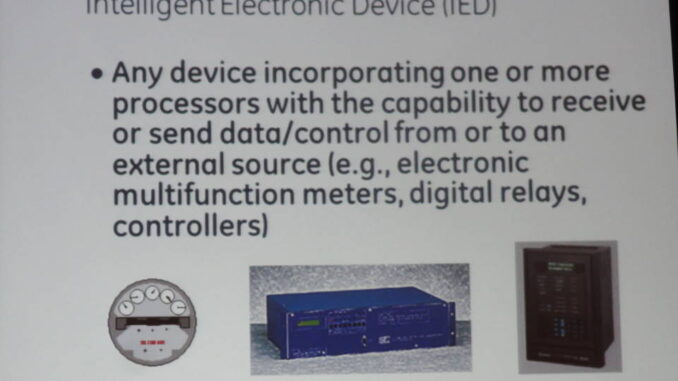
Intelligent electronic device
The fundamental building block of substation automation is the intelligent electronic device (IED). An IED incoporates two key elements in addtion to its electric power function (control, protection, data acquisition), a digital processor and the ability to communicate digitally with the external world. A little over half of all substation have IEDs, but they need to be integrated into a communications network and an enterprise data management system, to be able to provide the full benefits of which they are capable. Most utiltiies are only realizing 20% of the benefits of their IEDs.
 Operational and non-operational data
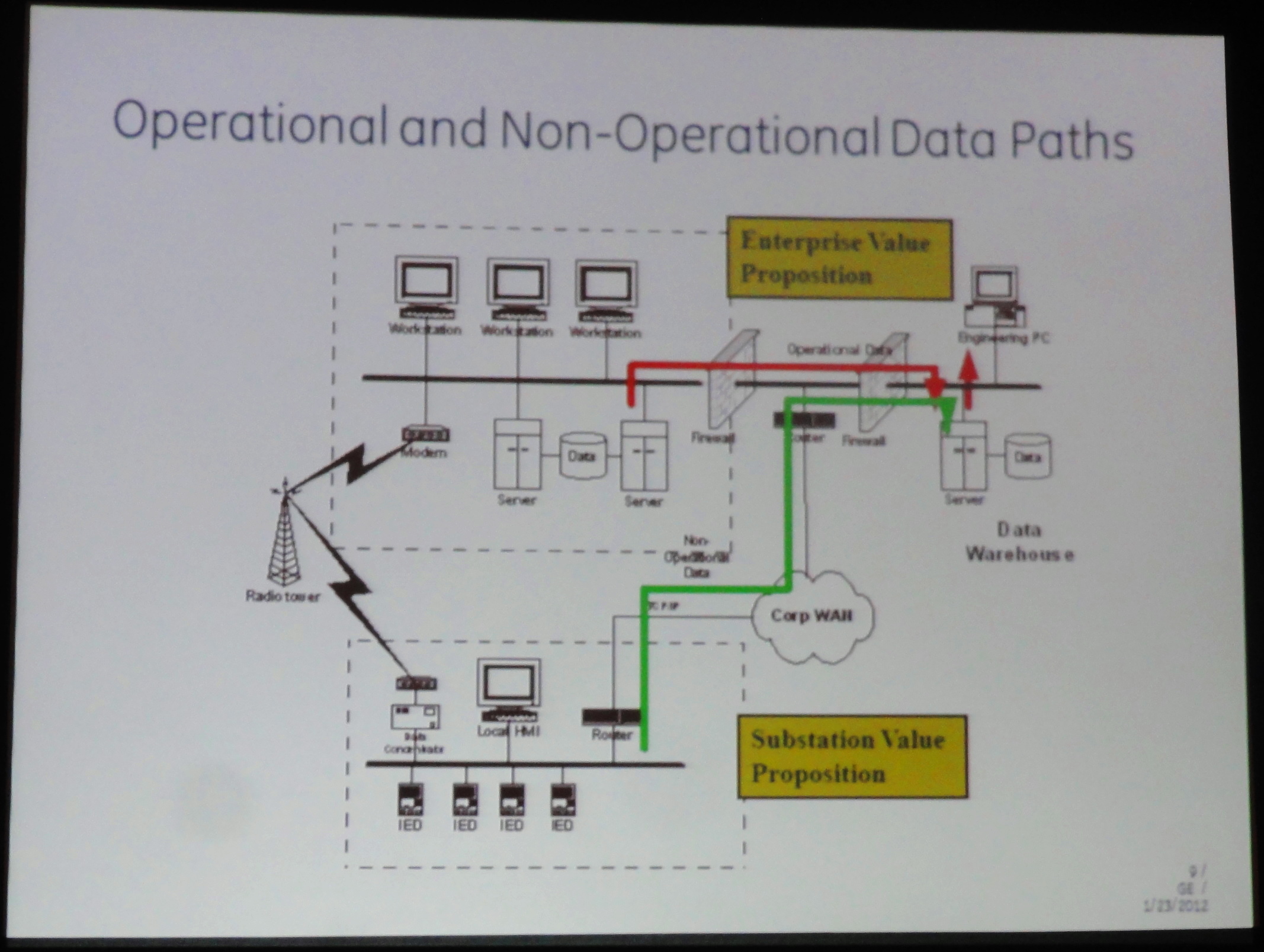
There are two types of data that are generated by IEDs. Operational data is data that is used by the control center. Typically a data point is recorded every 2 seconds by each IED and in North America DNP3 is the standard protocol used to communicate this information to the control center. Non-operational data is not used for real-time operation of the grid. It is available on demand or may be triggered by an event and is extracted by proprietary commands. It can be point data or a file.
These two types of data are managed in different ways and follows different pathways through the organization. IEDs communicate with data concentrators which replace the older RTUs. From the data concentrators the data follows different paths depending on whether it is operational or non-operational data. Operational data goes directly to the control center, which often uses a SCADA system. Non-operational data goes to a corporate enterprise data management system, typically a data mart, where the data may be used by 20-25 different groups within the utility.
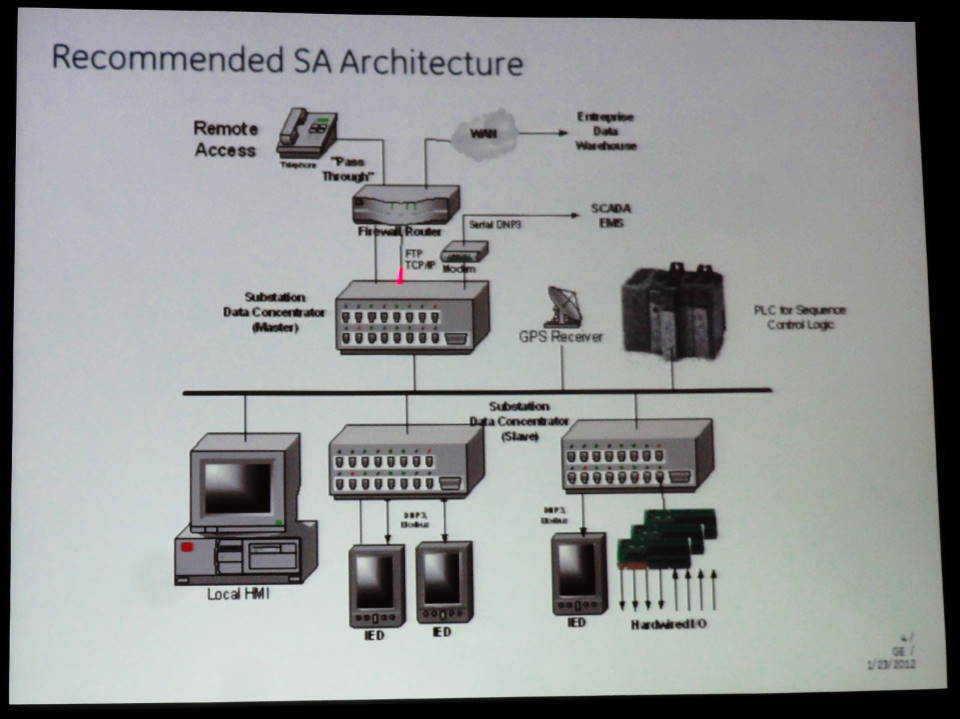 The communications to and from devices in substations is typically serial, not ethernet. There are organizational reasons which have made it difficult to implement LANs in substations. Typically this is becasue LANs are the responsibility of the IT group, not operations.
55% of substations with IEDs (29% of all substations) have no integration with enterprise data management systems and no automation. The remainder (24% of the total) have some integration. After retrofit of older substations 97% will have IEDs, and of these 42% will include IED integration and automation. Virtually all new substations have IEDs, and most also have IED integration and automation.
The motivation for installing IEDs and the associated integration and automation is motivated by deregulation and competition and an enterprise-wide interest in information from IEDs.
- Improved power quality and service reliability (SAIDI and SAIFI)
- New energy-related services and business areas
- Lower cost of service
- Better decision making
In the past these have provided sufficient motivation for forward looking utilities to invest in substation automation, but as the statistics on IED deployement and integration indicate, many utilities have not taken advantage of the opportunity,
Substation automation and the smart grid
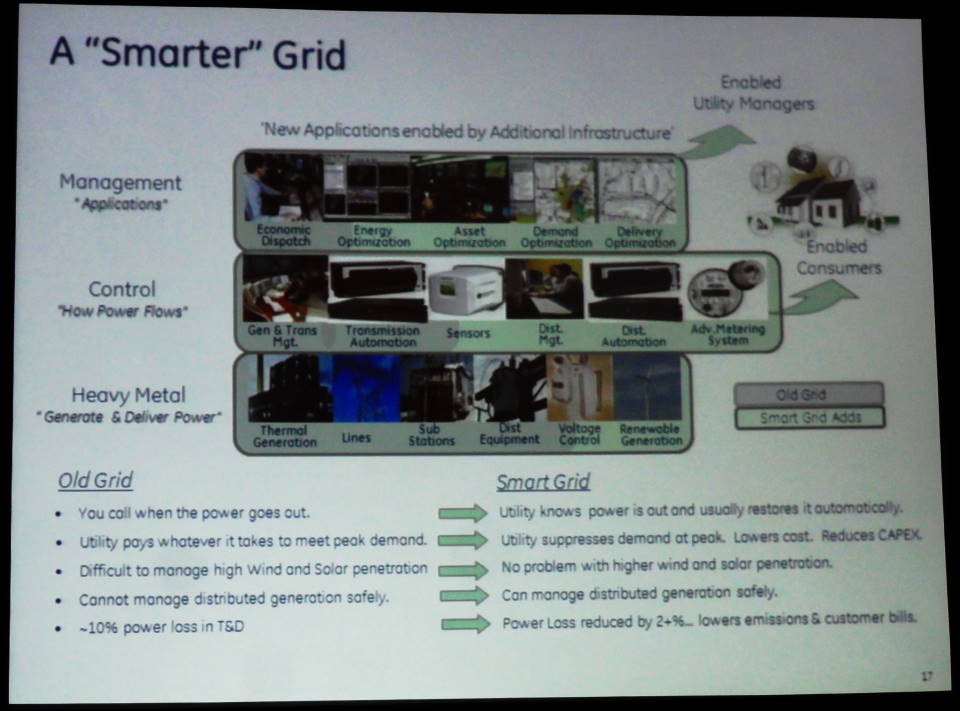 The smart grid provides a major business driver for substation automation, as a result of which the rate of substation automation is expected to go up dramatically. The term that John McDonald prefers to use is the “smarter grid”, because the grid has always had some level on intelligence. But what he sees as happening is that because of IEDs and similar intelligent devices in distribution ann transmission networks, and in generating plants, the grid is moving from the old grid characterized by
- You call when the power goes out
- The utility pays whatever it takes to meet peak demand
- Difficult to manage high wind and solar penetration
- Cannot manage distributed generation safely
- ~10 % of power is wasted in transmission and distribution
to the smarter grid where
- The utility knows the power is out and usually restores it automatically
- The utility suppresses demand at peak, lowering cost and reducing CAPEX
- No problem with higher wind and solar penetration
- Can manage distributed generation safely
- Power loss is reduced by 2+ %, lowering emissions and customer bills
Substation automation is a ciritical part of making the smarter grid happen.
Be the first to comment