
Today at DistribuTECH2016, three very distinguished, experienced people in the technology business, Zarko Sumic, Distinguised Analyst at Gartner; Chandu Visweswariah, IBM Fellow; and Sharon Allan, CEO of the Smart Grid Interoperability Panel (SGIP), each presented their perspective on the utility sector of the future. What emerged appeared to be the same remarkable animal but from three different perspectives.
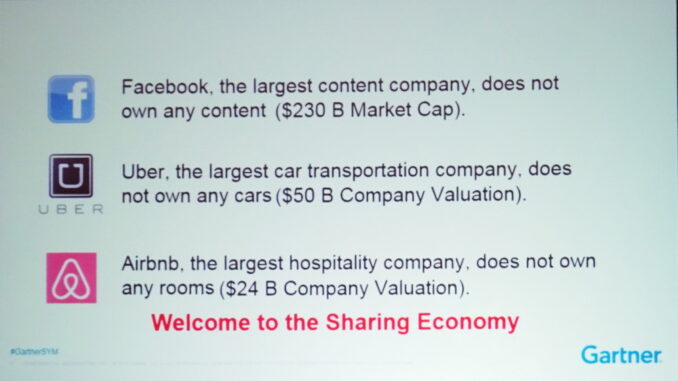
Zarko started by pointing out the extraordinary coincidence that Facebook (market cap $230b), Uber (est value $50 B), and Airbnb (est value $24 B) are the largest (or the second largest in the case of Airbnb) companies in their line of business, but significantly none of them own content, cars or rooms. Zarko and Gartner call this phenomenon the sharing economy. A sharing economy uses IT to distribute, share and reuse excess capacity in goods and services. Information is the fuel and the digital platform is the engine. The sharing economy operates in a market with customers and sellers and the value of the goods and services shared is determined by the network effect (Metcalfe’s law) and increases as the square of the number of nodes (customers and sellers).
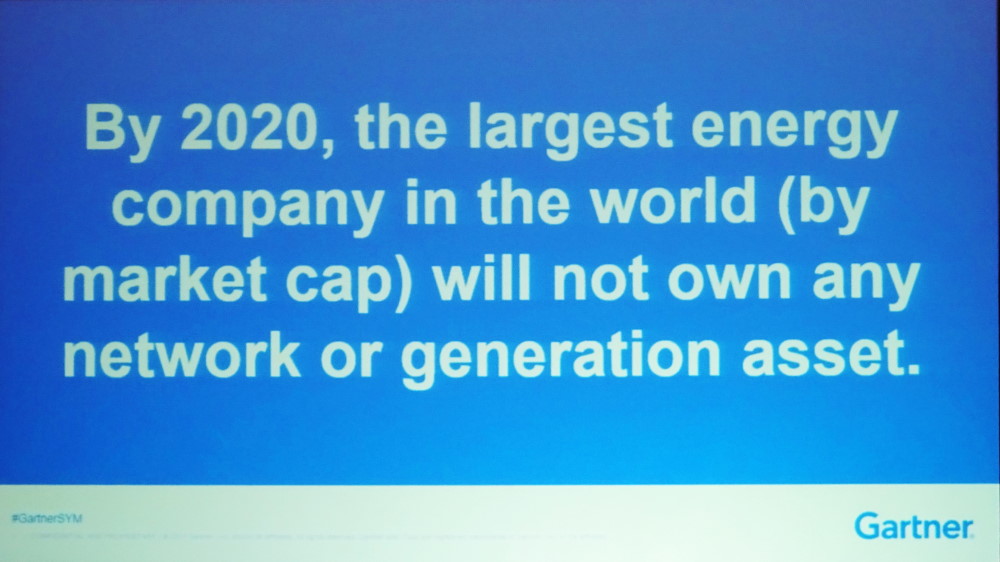 Zarko sees an analogy with the electric power industry today, as we move toward a world where energy flows are increasingly determined by market forces (referred to as transactive energy). Based on the analogy with Facebook, Uber, and Airbnb Zarko predicts that by 2020, the largest energy company in the world (by market cap) will not own any network (grid) or generation assets. It will manage information about energy sources and consumers. He does not see any technical barriers to this vision. The only thing standing in the way at the moment is current regulation.
The utility digital distribution platform creates new value by enabling an open energy market which brings together those who have energy with those who want it. It requires a network operator who manages and ensures the reliability of the grid (similar to the role of Network Rail in the UK) and a sharing energy economy platform operator (like Facebook, Uber and Airbnb) who brings together energy providers and buyers including prosumers, and calculates transaction and delivery costs.
Chandu put it this way, “energy is getting digitized“. His perspective is that renewable energy, whether wind or solar, introduces a major element of variability into power networks which is seven times greater than in our current networks where most of the variability is due to demand. Weather is the source of most of the variability. Predicting when the wind will blow and with what force and cloud cover are critical for managing future power networks in addition to predicting and managing demand with techniques such as demand response. IBM has two major projects based on predicting these external factors, Deep Thunder for weather prediction and Opus for a power project whose first implementation is in Vermont. In Chandu’s view time of use pricing, demand response, and other programs are practical examples of capabilities that utilities have already implemented and that are required to support transactive energy that underpins all three’s vision. Transactive energy means fundamentally that market forces control the flow of energy. It requires price signals from the energy supplier and demand signals from the buyer.
Sharon shares a similar long term vision of the energy sector and also sees transactive energy as the future toward which the sector is heading. It is the consumer that is driving the industry. As Jon Wellinghof, ex-chairman of FERC put itthis way
“Advances in technology and the desire we are seeing at the consumer level to have control and the ability to know that they can ensure the reliability of their system within their home, business, microgrid or their community. People are going to continue to drive towards having these kinds of technologies available to them. And once that happens through the technologies and the entrepreneurial spirit we are seeing with these companies coming in, I just don’t see how we can continue with the same model we have had for the last 100 or 150 years.”
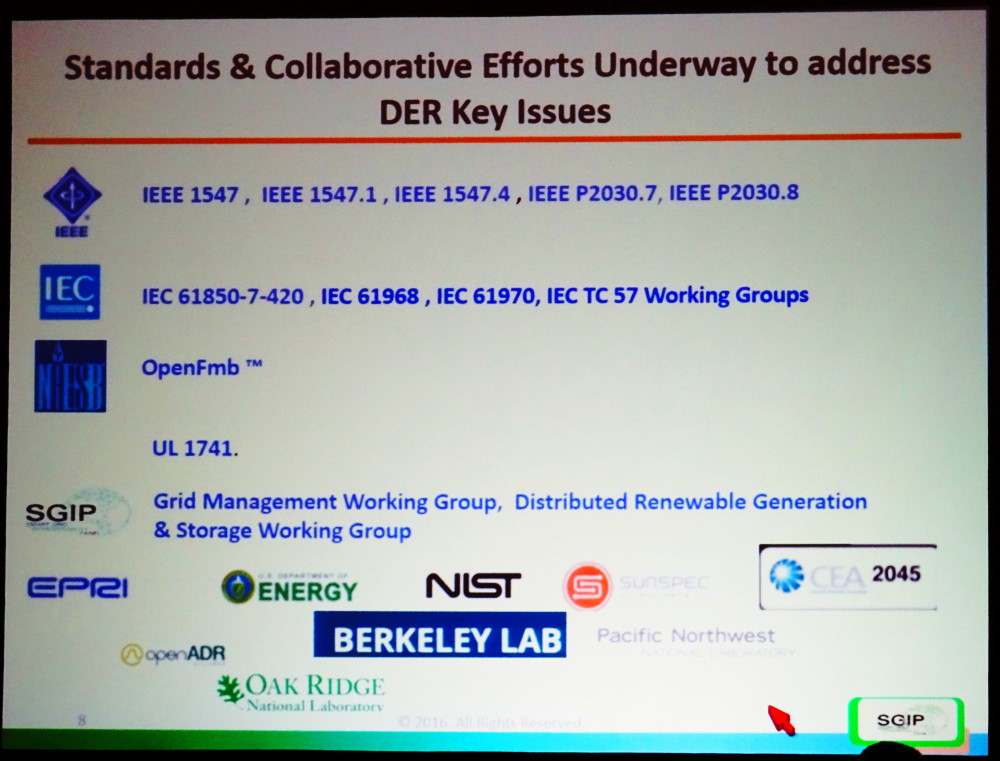 She gave a number of examples of how interoperability standards from IEEE, IEC, and SGIP; programs from government agencies such as the Department of Energy, ARPA-E and Pacific NW National Lab (PNNL); and industry organizations such as EPRI are moving toward a common vision of the utility of the future. Sharon put it very strongly in front of a room filled with utility employees and vendors and consultants, “get ready for transactive energy, this is real, this is not hype.”
Be the first to comment