
I have blogged numerous times about the challenge of accurately geolocating underground utilities.For example, I blogged about the estimated ROI for investment in improving the geolocation and other information about underground utilities and the remarkable project of the City of Las Vegas to create a 3D model of its underground utilities.
.
One-Call in the Netherlands (KLIC)
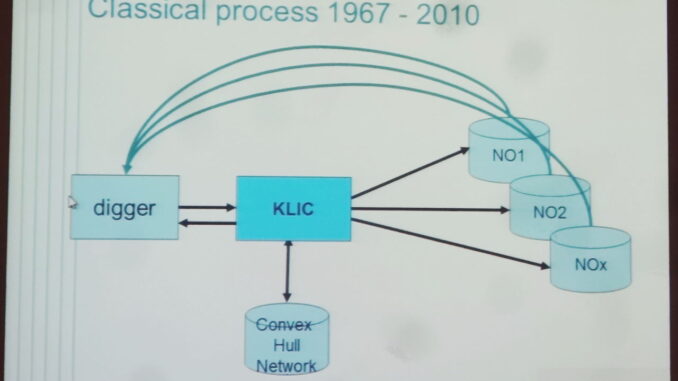
I blogged previously about the Dutch KLIC system which implements what is called in North America a One-Call or Call-Before-You-Dig system and has been in place since 1967. The objective of the system is to prevent damages to the utility network and to ensure the safety of excavators during excavations.

Anyone planning an excavation would call the One-Call telephone number and communicate the location, duration, and other information about the planned excavation. The One-Call center would contact the relevant utilities (network operators) who would then send maps of their network infrastructure to the excavator. (In North America the utilities would more typically send vans and staff with equipment to try to locate underground facilities.) The Dutch service was free of charge for excavators and funded by the network operators. It took about three working days to provide the required information including maps to the excavator.
.
KLIC-Online
In 2010 the Netherlands switched to a digital information system (KLIC-Online) that works in a similar way except that everything could be done online. With KLIC-Online the turnaround time was reduced to hours. Both the manual and KLIC-Online One-Call systems were initially voluntary. ON July 1, 2008 the Sub soil Cables and Pipelines Information Exchange Act (WION) came into effect. WION made KLIC mandatory for both network operators and excavators with severe penalties for excavators who circumvented the system. There is a charge of € 29.50 for every excavation request.
KLIC-WIN
At Geospatial World Forum 2014 in Geneva this year as part of the GeoEnergy track, Ad van Houtum of the Dutch Kadaster, Land Registry and Mapping Agency, gave an overview of KLIC-WIN, which is an adaptation of KLIC-Online to meet the future needs of the industry a as well as to be compliant with the national WION legislation and the European INSPIRE Directive.
One of the 34 themes of the INSPIRE standards initiative concerns Utility Services (INSPIRE-US), which obligates public network operators to make their data available online through viewing and download services. INSPIRE-US (Annex III Sub-theme 6a Utility Services) is obligatory for 80% of Dutch network operators. There is a strict roadmap for implementing the directive.
- Metadata published (2013)
- Webservices exposing existing data (OGC WMS/WFS) (2013)
- Data harmonized (2020)
There are also requirements for responsiveness and availability,
- 24×7 availability
- 99% uptime
- View service < 5 seconds
- Start download < 20 seconds
- Support for 20 or more concurrent users
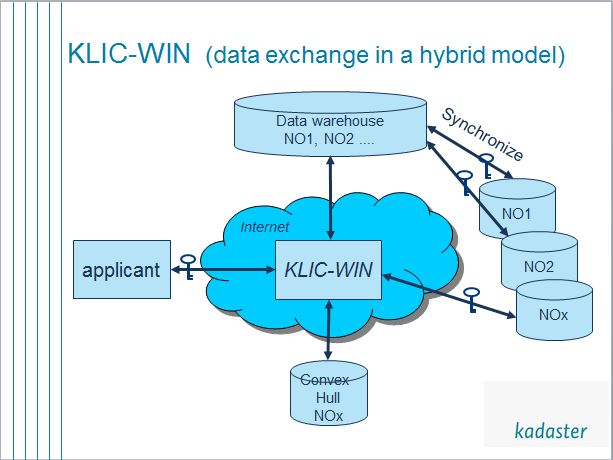 The stakeholders (ministries, Kadaster, network operators, and excavators) have agreed and decided to adapt the existing KLIC-Online system to satisfy both WION and the INSPIRE-US requirements. There are some challenges including authentication, authorization, and accounting (A3), how to include the private sector, specifically telecom, and the IT architecture. Different architectures have been proposed including centralized, distributed, and a hybrid model.
An outline of the KLIC-WIN development program is expected to be completed by Spring 2014. It will be based on a concrete use case of INSPIRE-US.

Be the first to comment