
August 30 in a letter to the Speaker of the House, President Obama identified seven new government regulations that would cost the economy more than $1 billion each a year including four proposed Environmental Protection Agency (EPA) rules and three Department of Transportation (DOT) rules estimated to cost in excess of $1 billion. The four EPA rules and estimated primary cost include
- Ozone National Ambient Air Quality Standards – $19-$90 Billion
- National Emission Standards for Hazardous Air Pollutants for Coal- and Oil-Fired Electric Utility Steam Generating Units – $10 Billion
- National Emission Standards for Hazardous Air Pollutants for Major Source Industrial, Commercial & Institutional Boilers and Process Heaters – $3 Billion
- Standards for the Management of Coal Combustion Residuals Generated by Commercial Electric Power Producers – $0.6-$1.5 Billion
According to the EPA, the avoided health care costs as a result of the regulations may be greater than the upfront costs.
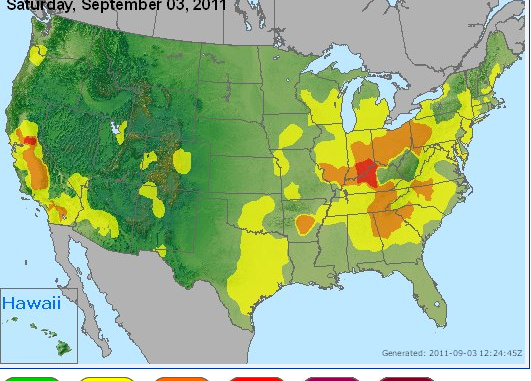
September 2, President Obama withdrew the most expensive of the proposed regulations, the Ozone National Ambient Air Quality Standards. Ground-level ozone is a major component of smog, which causes respiratory diseases. The EPA’s analysis concluded that imposing a standard of 0.70 parts per million would have a net positive impact on the economy, as health benefits outweighed the costs to industry.
The same day as President Obama’s announcement EPA Administrator Lisa P. Jackson issued a statement saying that the EPA will return to the regulation of ground-level ozone (in 2013).
“Since day one, under President Obama’s leadership, EPA has worked to ensure health protections for the American people, and has made tremendous progress to ensure that Clean Air Act standards protect all Americans by reducing our exposures to harmful air pollution like mercury, arsenic and carbon dioxide. This Administration has put in place some of the most important standards and safeguards for clean air in U.S. history: the most significant reduction of sulfur dioxide and nitrogen oxide air pollution across state borders; a long-overdue proposal to finally cut mercury pollution from power plants; and the first-ever carbon pollution standards for cars and trucks. We will revisit the ozone standard, in compliance with the Clean Air Act.”

Be the first to comment