
EPA releases plan for study of impact of fracking on drinking water

I’ve blogged previously about the incredible impact that hydraulic fracturing technology and the nearly half a million natural gas wells that have been drilled in the US have had on the US energy industry, the potential in Europe and some of the environmental issues that have been raised.

The U.S. Environmental Protection Agency (EPA) was mandated by Congress to undertake a study of the impact of hydraulic fracturing on drinking water in the U.S.  The EPA has just released its Plan to Study the Potential Impacts of Hydraulic Fracturing on Drinking Water Resources, referred to as the HF study.

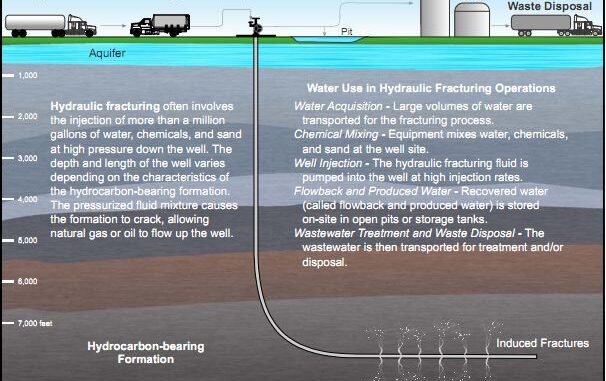
The HF study is intended to assess the impact of hydraulic fracturing on drinking water resources primarily focussing on HF in shale formations.  The HF study intends to answer five questions about the impact of HF on drinking water resources.

  1. Water Acquisition: What are the impacts of large volume water withdrawals from ground and surface waters ?
  2. Chemical Mixing: What are the impacts of surface spills resulting from hydraulic fracturing fluids ?
  3. Well Injection: What are the impacts of the injection and fracturing process ?
  4. Flowback and Produced Water: What are the impacts of surface spills of flowback and produced water ?
  5. Wastewater Treatment and Waste Disposal: What are the impacts of inadequate treatment of HF wastewaters ? 

The HF study will be conducted by a multidisciplinary teams of EPA researchers, in collaboration with outside experts from the public and private sector.

EPA says that it recognizes that HF impacts may affect other aspects of the environment in addition to drinking water resources, for example, air, ecology, seismic, public safety, and occupational risks, but says that these are outside the scope of the HF study.

Geoff Zeiss

Geoff Zeiss

Geoff Zeiss has more than 20 years experience in the geospatial software industry and 15 years experience developing enterprise geospatial solutions for the utilities, communications, and public works industries. His particular interests include the convergence of BIM, CAD, geospatial, and 3D. In recognition of his efforts to evangelize geospatial in vertical industries such as utilities and construction, Geoff received the Geospatial Ambassador Award at Geospatial World Forum 2014. Currently Geoff is Principal at Between the Poles, a thought leadership consulting firm. From 2001 to 2012 Geoff was Director of Utility Industry Program at Autodesk Inc, where he was responsible for thought leadership for the utility industry program. From 1999 to 2001 he was Director of Enterprise Software Development at Autodesk. He received one of ten annual global technology awards in 2004 from Oracle Corporation for technical innovation and leadership in the use of Oracle. Prior to Autodesk Geoff was Director of Product Development at VISION* Solutions. VISION* Solutions is credited with pioneering relational spatial data management, CAD/GIS integration, and long transactions (data versioning) in the utility, communications, and public works industries. Geoff is a frequent speaker at geospatial and utility events around the world including Geospatial World Forum, Where 2.0, MundoGeo Connect (Brazil), Middle East Spatial Geospatial Forum, India Geospatial Forum, Location Intelligence, Asia Geospatial Forum, and GITA events in US, Japan and Australia. Geoff received Speaker Excellence Awards at GITA 2007-2009.

View article by Geoff Zeiss

Be the first to comment

Leave a Reply

Your email address will not be published.


*