
The recent rule-setting by the EPA for atmospheric mercury and carbon dioxide pollution suggests it would be interesting to look at the EPA’s Acid Rain Program which was initiated in 1990.
The SO2 Acid Rain Program was implemented through an set of rules that were designed to create an active allowance trading scheme. The allowance trading system created rules of exchange that were designed to minimize government intrusion and make allowance trading a viable compliance strategy for reducing SO2.
Allowance trading scheme
Utility units are allocated allowances based on their historic fuel consumption and a specific emissions rate. Each allowance permits a unit to emit 1 ton of SO2 during or after a specified year. For each ton of SO2 emitted in a given year, one allowance is expired. Allowances may be bought, sold, or banked. Anyone may acquire allowances and participate in the trading system. Currently there is a permanent cap of 8.95 million allowances issues to utilities annually. EPA holds an allowance auction annually. The auctions help to send the market an allowance price signal, as well as furnish utilities with an additional avenue for purchasing needed allowances. There is also an Opt-in Program that expands the program to include sources not required to participate in the Acid Rain Program. The Opt-in Program offers a combustion source a financial incentive to voluntarily reduce its SO2 emissions. By reducing emissions below its allowance allocation, an opt-in source will have unused allowances, which it can sell in the SO2 allowance market.
SO2
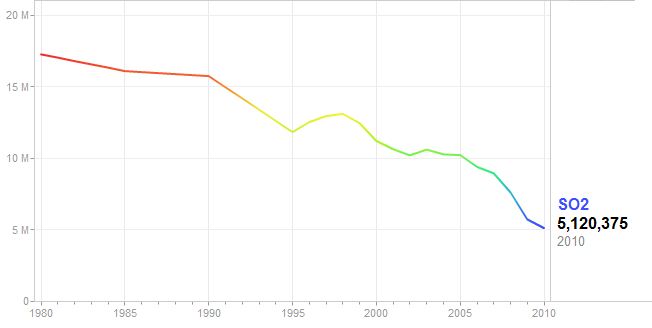
Title IV of the Clean Air Act as amended in 1990 set the objective of the program to reduce annual SO2 emissions by 10 million tons below 1980 levels. This was achieved in two phases.
SO2 Phase 1
This phase started in 1995 and affected major emitters, initally 263 units at 110 coal-burning electric utility plants located in the East and Midwest. Utimately the total number of units affected increased to 445. Emissions data shws that the program was effective in reducing SO2 emissions by this group by 40 percent below the target.
SO2 Phase 2
Phase 2 began in the year 2000 and imposed tighter emissions limits on the major emitters, and also set restrictions on smaller plants fired by coal, oil, and gas with an output capacity of 25 MW or more and all new plants. It included over 2,000 units.
By 2010 annual SO2 emissions were down by 12 million tons or 70% compared to 1980 levels.
 NOx
NOx
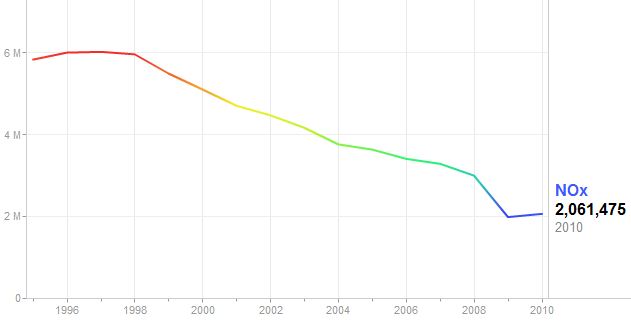
The Clean Air Act also specified a 2 million ton reduction in NOx emissions by the year 2000. The NOx program was also implemented in two phases, beginning in 1996 and 2000. But it was implemented differently from the SO2 program. It did not “cap” NOx emissions, nor does it use an allowance trading system. The emissions source may meet the performance standard on a unit basis, enter into an emissions averaging plan over multiple units, or apply for an alternative emissions limitation.
By 2010 annual NOx emissions were down by 3.8 million tons or 65% compared to 1995 levels.

Be the first to comment