
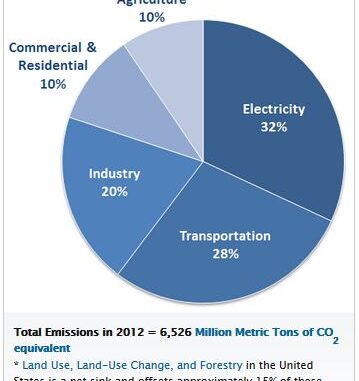
Yesterday the U.S. Supreme Court largely upheld the U.S. Environmental Protection Agency’s (EPA) authority to regulate greenhouse gas emissions from large power plants and refineries under the Clean Air Act. However, the court ruled that some smaller facilities will be exempted including some landfills, pulp and paper facilities, electronics manufacturing plants, chemical production plants and beverage producers.
According to the EPA “Practically speaking, the Court made permanent a temporary exclusion that EPA had already provided for small sources. The Court’s holding leaves in place EPA’s approach with respect to the vast majority of the carbon pollution inventory subject to the Act’s permitting provisions. And, importantly, this decision in no way affects the Agency’s ability to proceed under the Act to address carbon pollution from new and existing power plants.”
The ruling was on a very small part of EPA’s greenhouse gas regulation program (two permitting programs authorized under sections 160 to 169 and sections 501 to 507 of the Clean Air Act). The EPA estimates that as a result of the ruling the preconstruction permit program will cover approximately 83% of the carbon emissions inventory instead of the 86% of emissions that the EPA argued should be covered.
The ruling effectively ends what was initially a broad legal challenge to the EPA’s first greenhouse gas regulations issued in 2009 and 2010. According to the EPA, its first set of carbon pollution rules have now been fully vetted in federal court.
- It is settled law that greenhouse gases are pollutants that the EPA can regulate under the Clean Air Act. (That was originally decided in Massachusetts v. EPA.)
- It is settled law that Clean Air Act section 111 authorizes EPA to issue national rules limiting carbon pollution from stationary sources such as power plants, refineries, and other industrial facilities. (American Electric Power v. Connecticut, upheld by the DC Circuit opinion, and the Supreme Court denied review.)
- The courts affirmed EPA’s first set of regulations, those limiting carbon pollution from cars and trucks. (Upheld by the DC Circuit, and the Supreme Court denied review.)

Be the first to comment