
The challenge of increasing urbanization in a world where anthropogenic pressure on the environment has become threatening is driving the digitalization of urban planning and the design, construction and maintenance and operations of urban infrastructure. Building information modeling and laser and photogrammetric scanning of entire cities is resulting in comprehensive digital twins of the aboveground of cities. But the below ground has been neglected. There is a growing recognition that the subsurface needs to be included in urban planning and construction to reduce the risks of conflicts with subsurface infrastructure and to maximize the benefits of subsurface resources.
Over the last couple of years, the COST TU1206 Sub-Urban program has identified a knowledge and communication gap between subsurface experts, urban planners and decision makers. To bridge this gap it is necessary to improve information about the subsurface, ensure it is broadly accessible, and to make sure that the people receiving the information are able to understand and use the information to take decisions. The objective of the TU1206 Sub-Urban program is to transform the relationship between experts who are developing urban subsurface knowledge and those who can benefit most from it. The Sub-Urban program is developing a network to co-ordinate, integrate and accelerate research into modelling the subsurface in European institutions. 150 researchers in 30 countries are contributing to the Sub-Urban program. Nearly a hundred cities are participating in the program.
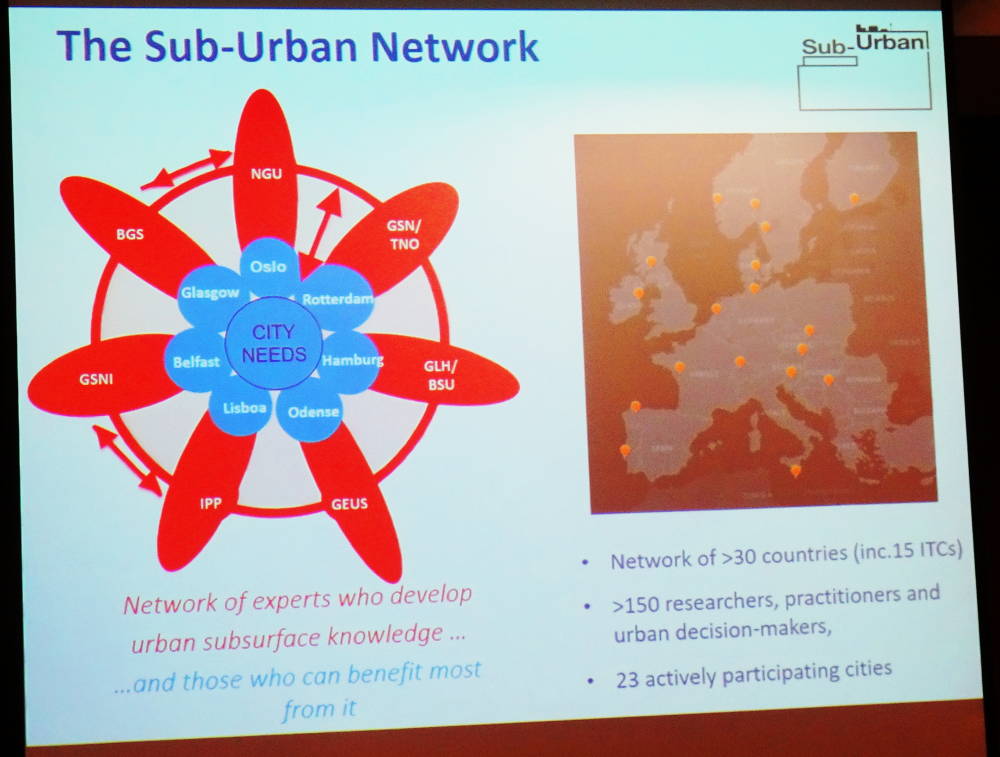 At a preconference workshop organized by Geodan and TNO at the GEO|Design+BIM conference in Amsterdam, Rob van der Krogt, Johannes de Beer and Ignace van Campenhout gave an overview of the work of the TU1206 Sub-Urban program. The program comprises geological survey organizations, cities, and research partners from the member states of the European Union. Its goal is to improve the management of the subsurface in Europe’s cities and to open up knowledge about the subsurface to enable the smart cities of tomorrow. Its objectives are to coordinate cross-disciplinary research on the subsurface, share methodologies and knowledge, inform and empower policy and decision makers and broaden the relevance and impact of our knowledge about the subsurface to make it fully complementary to and interoperable with above ground 3D urban models.
To date the Sub-Urban program has produced nineteen City Reports covering the subsurface information available about specific European cities. It has also generated seven thematic reports related to subsurface topics including subsurface planning, geochemistry, geotechnical issues, geothermal energy, groundwater, data management, 3D modeling, and cultural heritage.
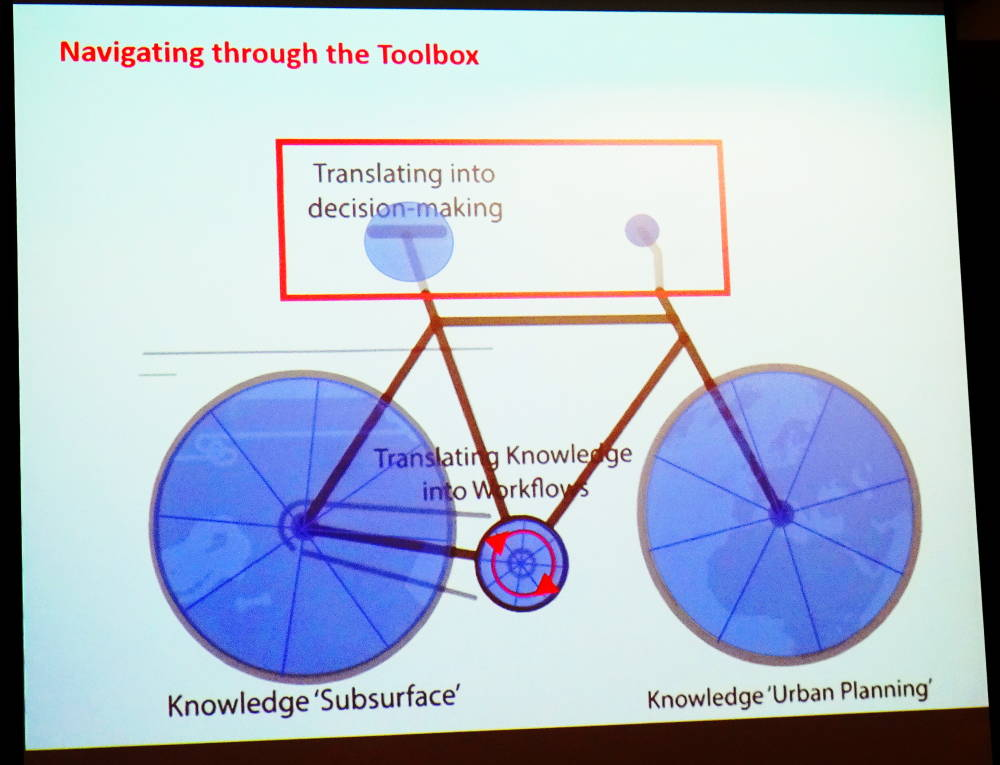
A key goal of the program is to develop a Toolbox to enable subsurface knowledge to be widely disseminated. The Toolbox is a fit-for-purpose suite of recommended methodologies, good practices, guidance and case studies to enable the free flow of key subsurface data knowledge.
One of the challenges identified by the program is that urban planners are not talking to subsurface experts. For example, at the workshop Ignace van Campenhout gave an example where a new stadium was designed without consideration for the subsurface in a part of Rotterdam.
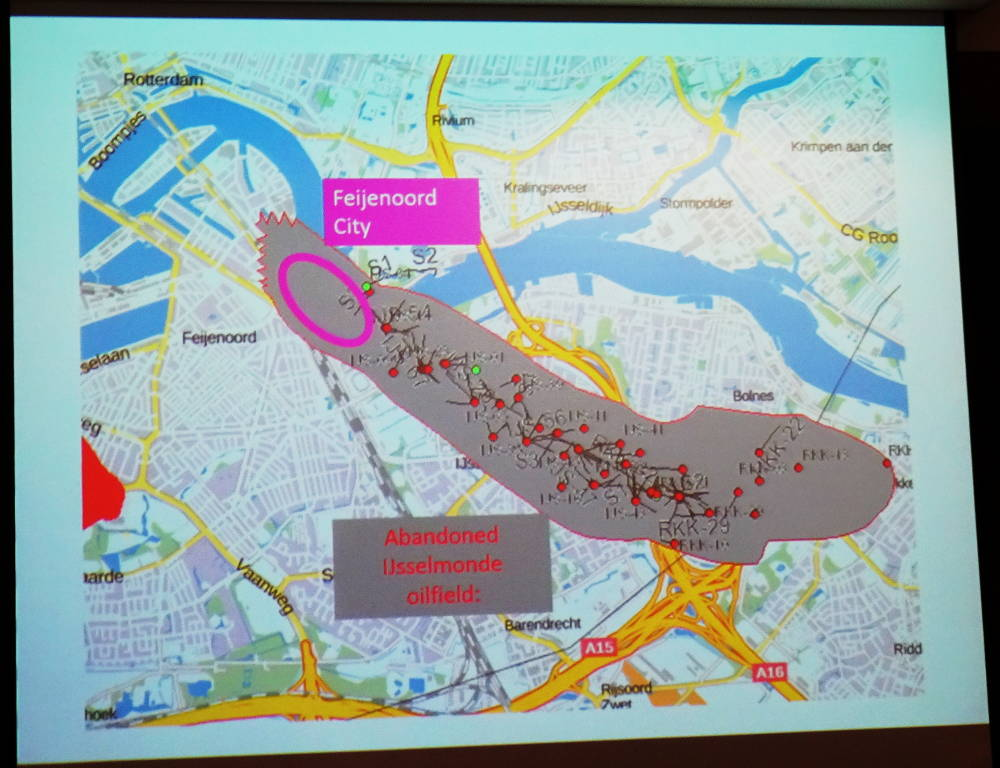
It was discovered subsequently that a major underground gas pipeline goes through the middle of the site. It was also found that the site lies above an abandoned oil field, which would be an opportunity for using geothermal heat to reduce the carbon footprint of the stadium. To begin to get urban planners and designers and subsurface experts communicating was the motivation for the preconference workshop “Utilizing subsurface data for urban planning, design, construction and maintenance” organized by Geodan and TNO at the GEO|Design+BIM conference in Amsterdam which I blogged about yesterday.
The workshop was effective in illuminating the risk of decision making without information about the subsurface. Poor information about the subsurface costs the world economy trillions of dollars. What is underway in the Netherlands with the Key Registry for the Subsurface or BRO is the beginning of a practical solution to this problem and I expect that the TU1206 Sub-Urban program will be directly involved in BRO and will help disseminate information about the BRO program as it is implemented beginning in 2018.

Be the first to comment