
I have been going to Australia at least once annually for many years and am aware of the water challenges that the country faces. Some argue that given the available amount of water the world’s driest populated continent is overpopulated. Most recently there have been serious droughts in Victoria and parts of Queensland. Western Australia’s drought has intensified, having just experienced its driest recorded year. Desalination plants have and are being built in every state. But desalination plants require a lot of electric power. 80% of Australia’s electric power comes from conventional coal-fired power plants, which besides the issue of emissions require a lot of water for cooling.
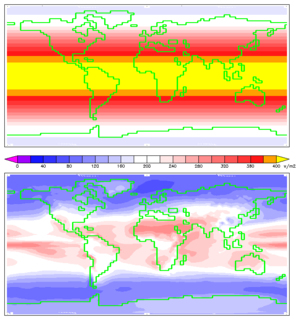
In this context I have always wondered why solar power, especially photovoltaic (PV) which in contrast to concentrated solar power does not require water, has not been a higher priority particularly for desalination. As of September 2010, there was only 300 MW of installed photovoltaic power in Australia. Australia’s insolation greatly exceeds the average values in Europe, Russia, and most of North America. Some states have introduced feed-in-tariff programs similar to Ontario’s to enccourage small scale PV deployment, but to date there have not been utility scale solar plants.
Now in Western Australia, a new solar project called the Greenough River Solar Farm will become the largest operating solar plant in the country, at 10 MW. The solar photovoltaic (PV) farm will be Australia’s first utility scale solar farm. All of the energy it generates will be used by the Southern Seawater Desalination Plant in Binningup, Australia, run by the WA Water Corporation, and which is being expanded. When the expanded plant is complete, at least half of the water needed for the Perth metropolitan area will be supplied from “climate independent” desalination.

Be the first to comment