
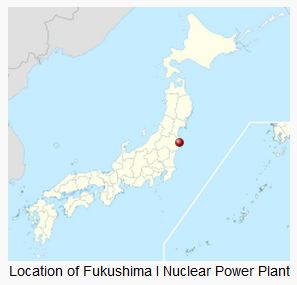
March 21 15:30 UTC the IAEA reported that the overall situation at the Fukushima Daiichi nuclear power plant is improving but remains very serious. High levels of contamination have been measured in the locality of the plant.
Power restored to Unit 2
Off-site electrical power has been restored to Unit 2. Electrical equipment including pumps is being checked, prior to attempting to restore cooling function.
Status of Units 1,2,3,4
Work is progressing to restore power to Units 3 and 4. Seawater is still being injected into the reactor pressure vessels of Units 1, 2 and 3. At Unit 3, pressure in the reactor pressure vessel and the containment vessel drywell, which had been rising yesterday, has again fallen.
Spent fuel pools
Water is being sprayed periodically into the spent fuel pools at Units 2, 3 and 4. The IAEA still lacks data on water levels and temperatures in the spent fuel pools at Units 1, 2, 3 and 4.
At Units 5 and 6, following the restoration of cooling, temperatures in the spent fuel pools continue to decline.
Radiation levels outside plant
“The IAEA radiation monitoring team took measurements at distances from 56 to 200 km from the Fukushima nuclear power plant. At two locations in Fukushima Prefecture gamma dose rate and beta-gamma contamination measurements have been repeated.
“These measurements showed high beta-gamma contamination levels. Measurements by the IAEA and the Japanese authorities were taken at the same time and locations. The Japanese and independent IAEA measurements gave comparable results.
“Measurement of gamma dose rate and beta-gamma contamination were taken on 20 March at more locations. The dose-rate results ranged from 2-160 microsieverts per hour, which compares to a typical natural background level of around 0.1 microsieverts per hour. High levels of beta-gamma contamination have been measured between 16-58 km from the plant. Available results show contamination ranging from 0.2-0.9 MBq per square metre.
“Further measurements are needed to assess possible contamination beyond the area currently monitored – both closer to the facility and further way. The IAEA have no contamination measurements showing that that contamination levels are high at greater distances than 58 km from the plant, but this cannot be excluded.
“Some results on the monitoring of foodstuffs have been made available by Japan to the IAEA and FAO. Results provided recently by the Japanese authorities range up to 55 000 Bq per kg of I-131 in samples of Spinach taken in in the Ibaraki Prefecture. These high values are significantly above Japanese limits for restricting food consumption (i.e. 2 000 Bq/kg). … the Japanese Government is actively considering relevant precautionary measures and has instructed four Prefectures (Ibaraki, Totigi, Gunma, Fukushima) to refrain, for the time being, from distributing two types of vegetables (spinach and kakina) from these Prefectures and milk from Fukshima.”

Be the first to comment