
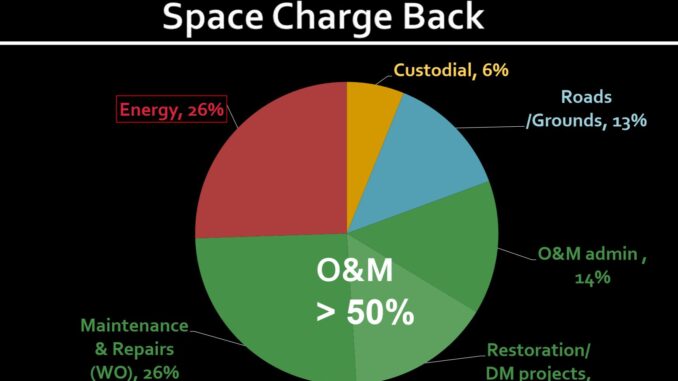
Over 50% of the cost of maintaining a building is what is called operations and maintenance which is comprised of administration, maintenance and repairs, and restoration projects. In most building construction projects, even if BIM is used for design and construction, the building information (specifications, submittal information including equipment and performance data and warranties, finished information, O&M manuals, panel schedules, and the building control system) required for operations and maintenance has to be (re)collected after completion of construction even though the designers and contractors may have already collected this information.
At the BIM Worldwide: Solutions for Canada conference in Toronto, Birgitta Foster, VP Operations and Facility Integration, VDCO Tech, member of the bSI Standards Executive Committee, and involved in developing the buildingSMART Data Dictionary, gave her view of the flow of facility information through the full lifecycle of a building, BIM and the key role of geospatial in this process.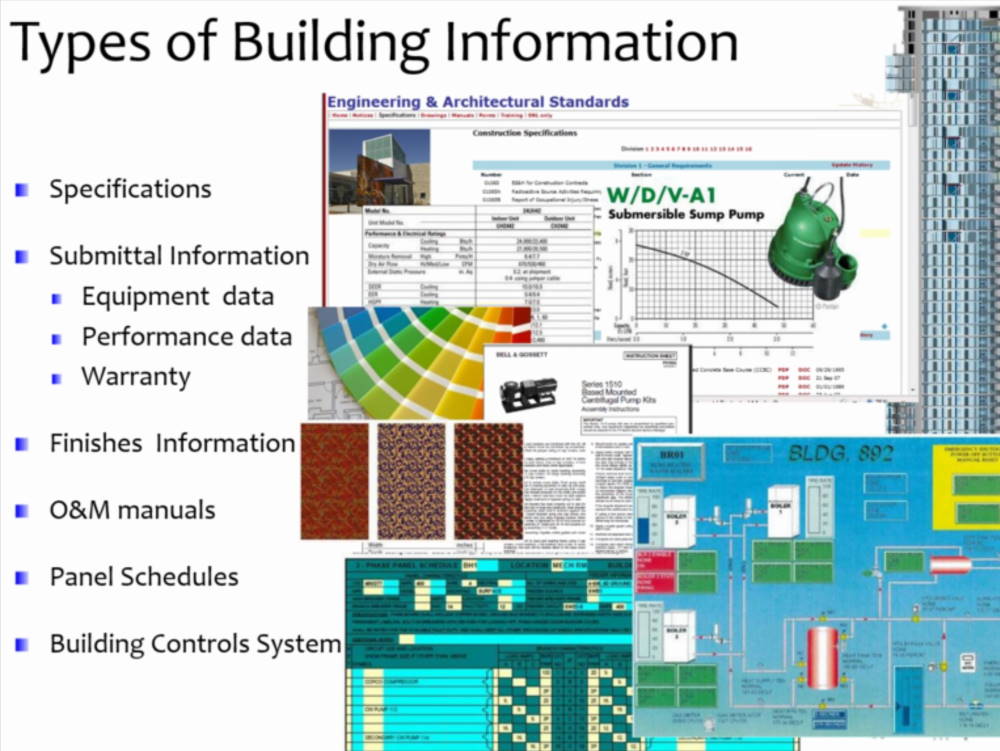
From Birgitta’s perspective BIM is a database of building information with a 3D model interface. It stores and links to information about the building and the equipment in the building. BIM is essential to the project process including design and construction, but she believes (and the UK government also believes) that the full value of BIM can only be found during the operational life of the building where the majority of the life cycle costs occur. To realize this value requires that projects be perceived as not ending with the owner, but starting with the owner, who really knows best what information is important to his/her business processes for operating and maintaining the building.
Birgitta outlined what a full lifecycle facilities information flow looks like. It starts with a facilities information specification from the owner identifying the building information included as part of the final deliverables at the time of commissioning. The facilities information specification should be part of the contract between the owner and the designers and contractors who will construct the building.
The facilities information required by the owner’s specification are entered into BIM d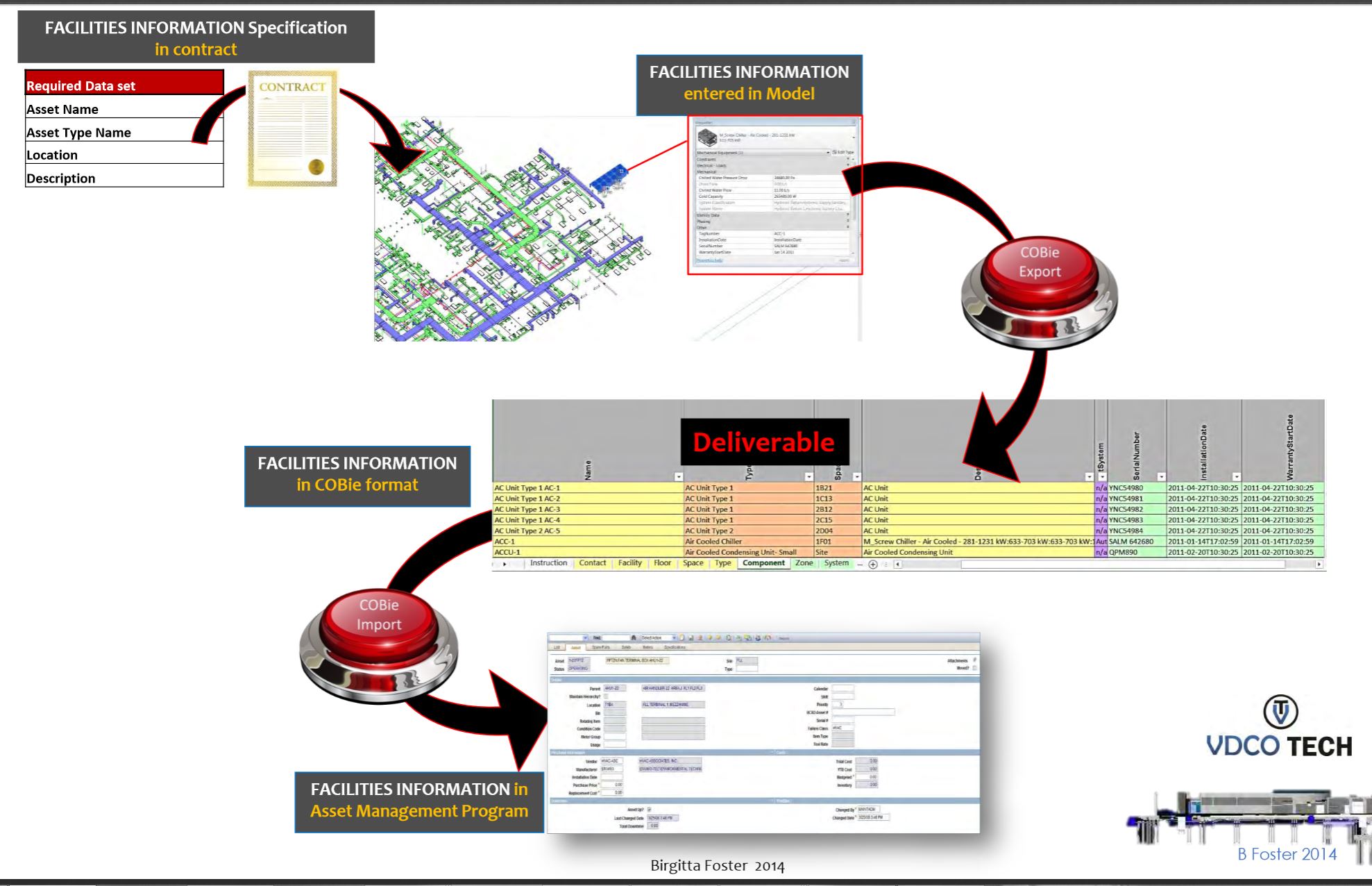 atabase during design and construction by the designers and contractors.
At the completion of construction the facilities information data collected by the designers and contractors and stored with the BIM model in digital form represents a key deliverable to the owner together with the BIM model. The facilities information can then be used to populate the building manager’s asset management/facilities management system database.
One of the challenges is orchestrating a data flow through the various players each of whom has his/her own perspective. Architects, engineers, and contractors live in a model-centric visual world, but building owners live in an information-centric world. Birgitta’s perspective is that most owners are not yet ready to manage “live” BIM models, but many are ready to manage the rich data sets of building information that can be obtained from models.
Geospatial and BIM and full lifecycle building management
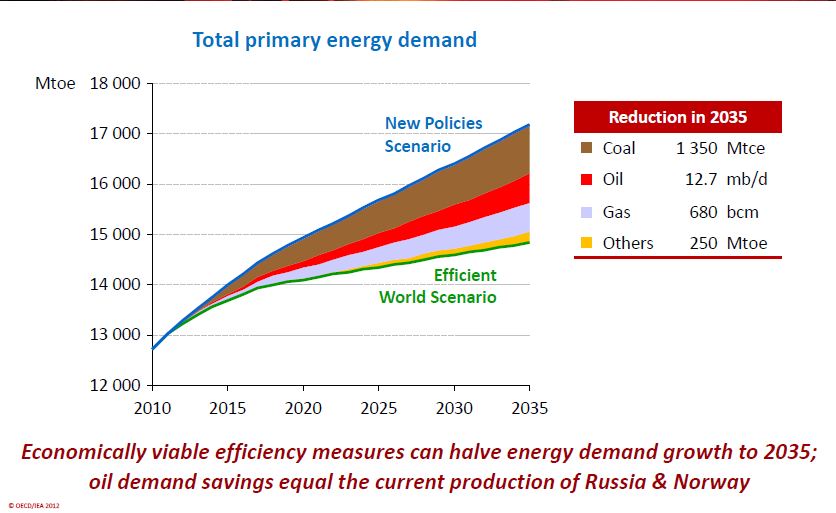 Since the world has become aware of the human impact on the environment, it has become increasingly difficult to design buildings without reference to its geographic context. Many cities have environmental, zoning and other types of by-laws that require designers to take into account neighboring buildings, infrastructure and vegetation. States and national governments are developing building codes that require designers to assess the energy, water, emissions, and other environmental impacts of a new building. Several countries such as the US, EU, and Japan have already mandated zero energy buildings in the near future. This means that when designing and constructing a building, the traditional approach ( often associated with a 0,0 coordinate system ) of design in isolation is no longer adequate for sustainable design. For example, in the UK right-to-light is a legal requirement, so that when designing a a new building in London, the designer has to be able to model the shadowing of neighbouring buildings. Energy performance modeling for buildings involves natural lighting, solar irradiation, and other analyses which require information about neighbouring structures and vegetation.
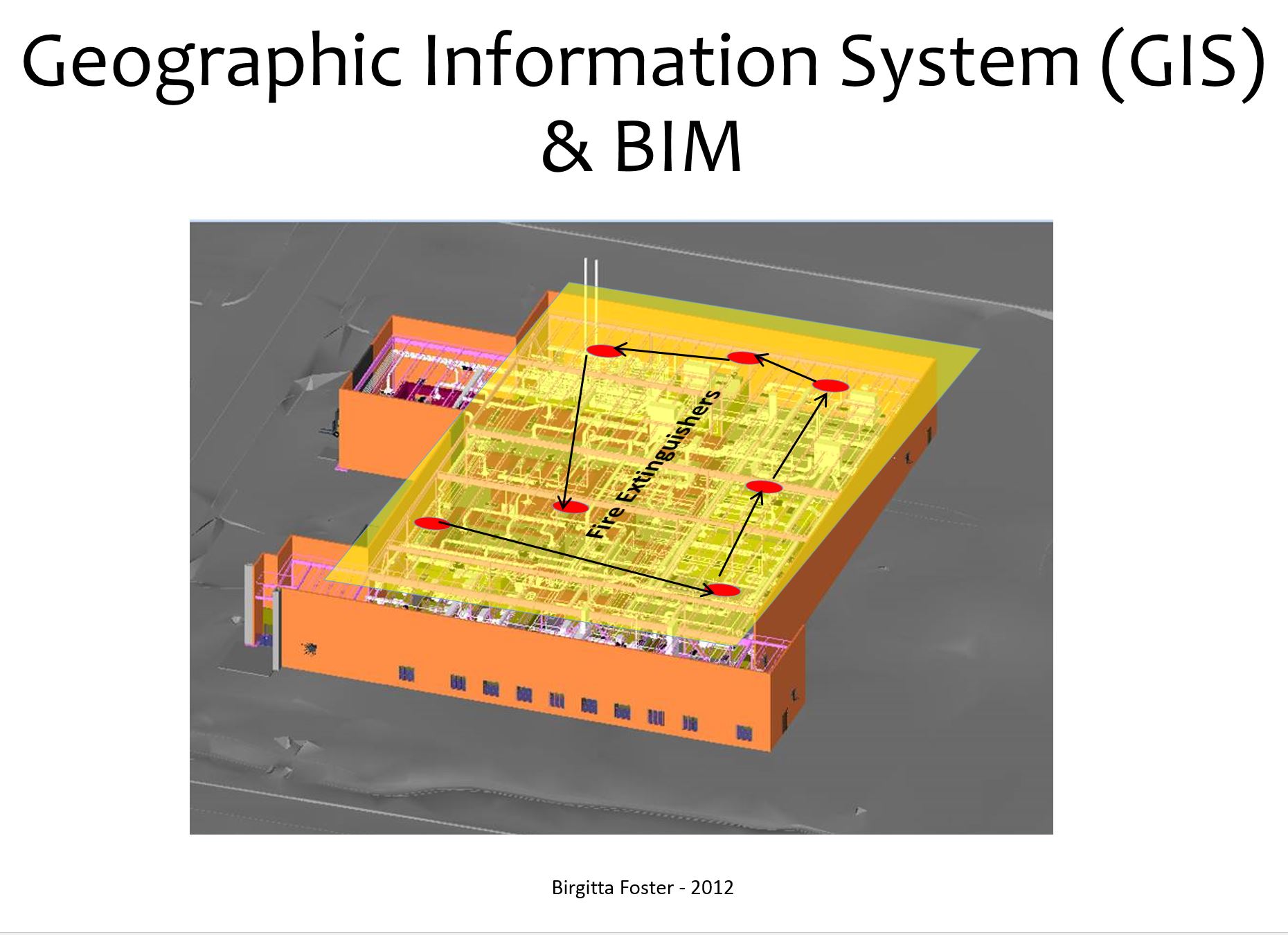 Birgitta argues that integrated geospatial+BIM is even more critical during the operations and maintenance phase of a building. Utilities, transportation, emergency planning, first responder access, energy performance, and evacuation management all require information about internal and external infrastructure. A common geospatial coordinate system enables a comprehensive operational view of all infrastructure including internal and external structures.
COBie
Birgitta learned through hard experience that custom or proprietary spreadsheets creates problems and highly recommends using an industry standard called Construction Operations Building information exchange ( COBie ) which is a free and open standard that in the U.S. is part of the National BIM Standard-US V2. The UK government plans to include a requirement for the UK version of COBie in all national government procurements.
Birgitta’s experience with COBie began in 2007–2009 when she ran a project in which she created a facilities information spreadsheet, which captured all the required asset information in a single place. But she subsequently found that the time and expense of the custom mapping of this information to existing asset management software meant that her spreadsheet for sharing facilities information could not be realised in practice. Fortuitously, at about the same time the US Army Corps of Engineers (USACE) had undertaken to develop a spreadsheet for exchanging facilities information for its construction projects. This spreadsheet ultimately became COBie, which was proposed and accepted in version 2 of National BIM Standard-US in 2012. Once COBie was recognised as an industry standard information exchange standard, vendors began integrating COBie into their software for users.
Birgitta recommends that owners use COBie as the basis for the facilities information specification that should be part of every construction contract. During and as part of the deliverables after construction it can be used for the transfer of facility information between virtual design and construction software and owners. Her recommendation for designers/contractors is to avoid over-stuffing the model with information the owner “might” need, for owners her recommendation is to never ask for more than you can maintain.
COBie offers huge benefits to the facilities manager. Most importantly it enables importing digital facilities information into asset management/facilities management software systems. Another benefit is that the widespread adoption of COBie would transform FM pricing. Pricing an FM contract is cumbersome, with numerous stages before a price can be calculated, and with significant uncertainty in the result. With COBie information, the process is radically streamlined, with fewer stages and greater accuracy.
National Building Modeling Standard United States V3
Version 3 of the National Building Information Modeling Standard-United States (NBIMS-US V3) is expected to be released by year’s end. It includes a BIM Project Planning Guide for Owners and a 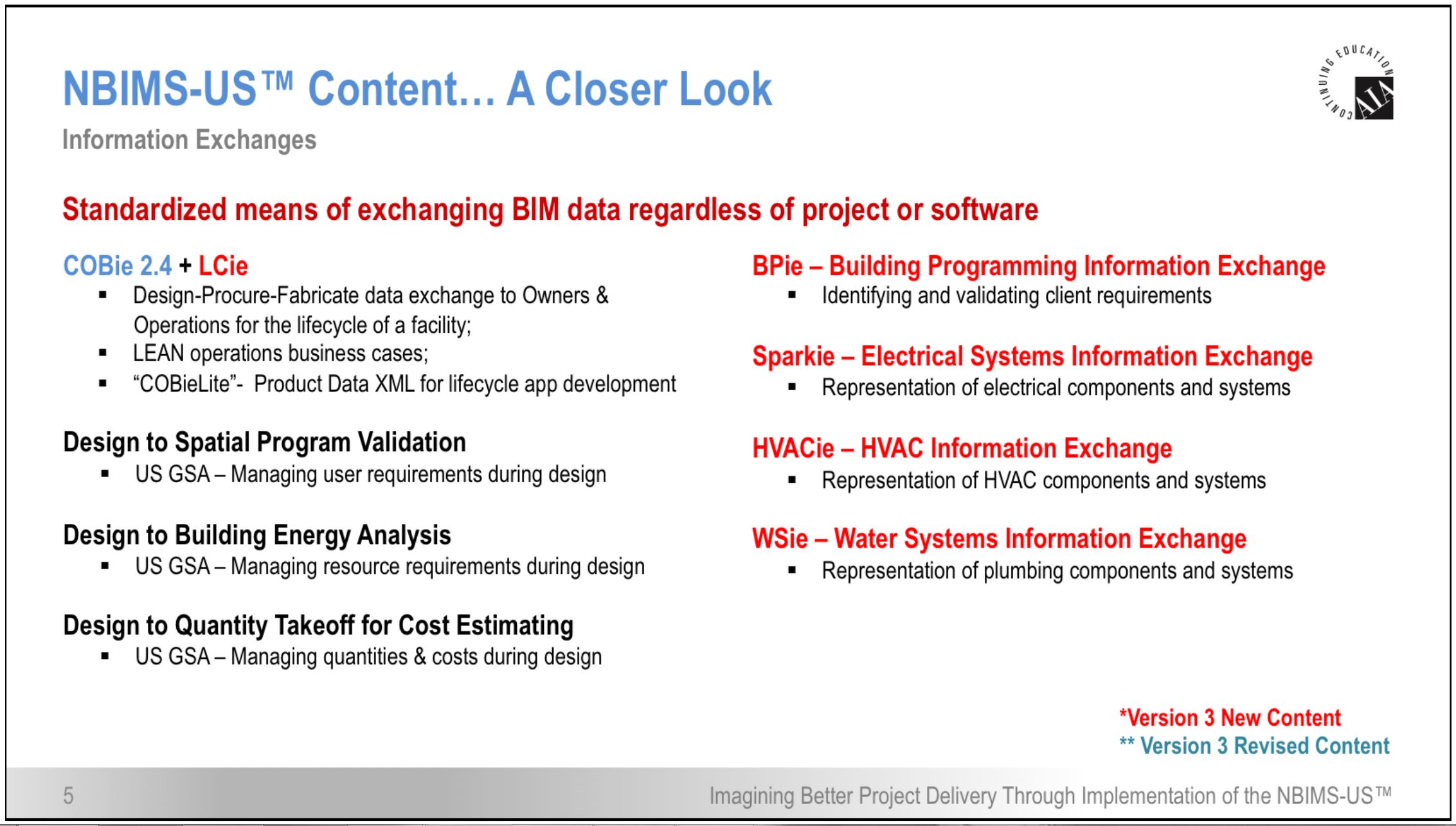 number of new facility data exchange standards and extensions.
- Lifecycle Information Exchange for Product Data (LCie) – for products and product type data exchanges throughout the facility life-cycle
- Building Programming Information Exchange – for managing client’s (owner’s) requirements
- HVAC Information Exchange – Specification and standardization for representation of HVAC systems
- Plumbing Information Exchange – Specification and standardization for representation of water systems – Extends the (industry Foundation Classes 4) IFC4 specification to cover plumbing practices in North America.
- Electrical Information Exchange – Specification and standardization for representation of Electrical systems. Extends IFC4 specification to cover wiring practices in North America
NBIMS-US V3 also includes Practical BIM Contract Requirements, the requirements used by the USACE for its contracts for construction projects.

Be the first to comment