
The Delhi Metrorail Corporation (DMRC) has signed an agreement with the U.S. Green Building Council (USGBC) and Green Business Certification Inc. (GBCI) that will make it possible to incorporate the unique needs of metro installations and mass rapid transit systems for new metro stations and depots within the LEED (Leadership in Energy & Environmental Design) green building rating system. India is one of the USGBC’s top five countries for LEED.
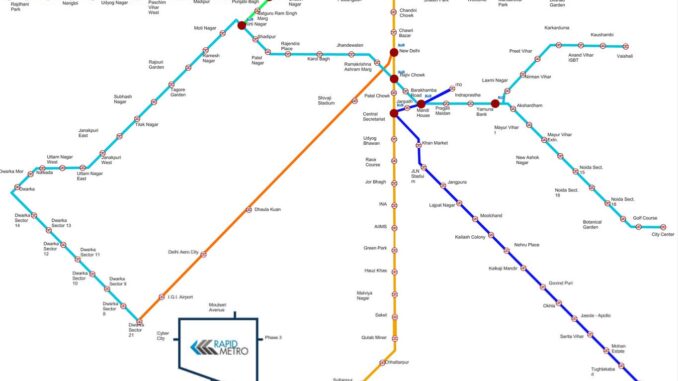
This summer two of Delhi Metro’s new stations were awarded the platinum (highest) rating for adherence to green building norms of the Indian Green Building Council (IGBC). IGBC’s Green Mass Rapid Transit System rating is the world’s first exclusive rating system to address sustainability in new municipal rail systems. The IGBC rating system enables new rail based municipal rapid transit systems (MRTS) to apply green concepts during design and construction to reduce environmental impact. The rating system ranks stations and depots and on a scale of platinum, gold, and silver depending on their adherence to IGBC specifications. All 90 new metro stations which will be completed by 2016 as part of Delhi Metro’s Phase 3 are green buildings. In addition five new solar power facilities have been installed by Delhi Metro at different stations, depots and residential enclaves.
The Delhi Metro is a remarkable achievement in other respects in addition to green. The Government of India and the Government of Delhi jointly set up the Delhi Metro Rail Corporation (DMRC) in 1995. The DMRC is a special purpose organization with great autonomy and powers. The DMRC has full powers to hire people, decide on tenders and control funds. The initial phase of the $2.3 billion project wrapped up in December, 2005, on budget and nearly three years ahead of schedule. According to Business Week “A well-run subway is a marvel even in a first-world city. In India, where public works are often models of dysfunction, it’s nothing short of a miracle.” One reason was that DMRC relied on private funding from the Japan Bank of International Cooperation and other international organizations.

Be the first to comment