
I have blogged previously about what Duke Energy, a vertically integrated electic power company that has generation, transmission, and distribution facilities, is doing to implement smart grid technology. Many of the electric power utilities in the US and in Ontario are electric distribution companies, called local distribution companies (LDC) in Ontario, meaning that they buy their power from external sources. In the US 70% of publically owned utilities don’t own their own generation facilities and buy electric power in bulk. Becasue they buy most of their power externally, electric distribution companies’ priorities for smart grid can be different from vertically integrated companies. For example, demand response is especially appealing to this type of power provider.
PECO, based in Philadelphia, is an example of an investor owned electric (and natural gas) electric distribution company. PECO has 1.6 million electricity customers in southeastern Pennsylvania and operates a network of 550 electric substations and 21,000 miles of distribution and local transmission lines.
Pennsylvania’s 2008 Act 129 requires that all Pennsylvania utilities install digital metering technology for customers as well as help customers reduce their overall energy use and their energy demand during the 100 highest use hours of the year.
PECO’s parent Exelon also has an in-house plan for reducing carbon emissio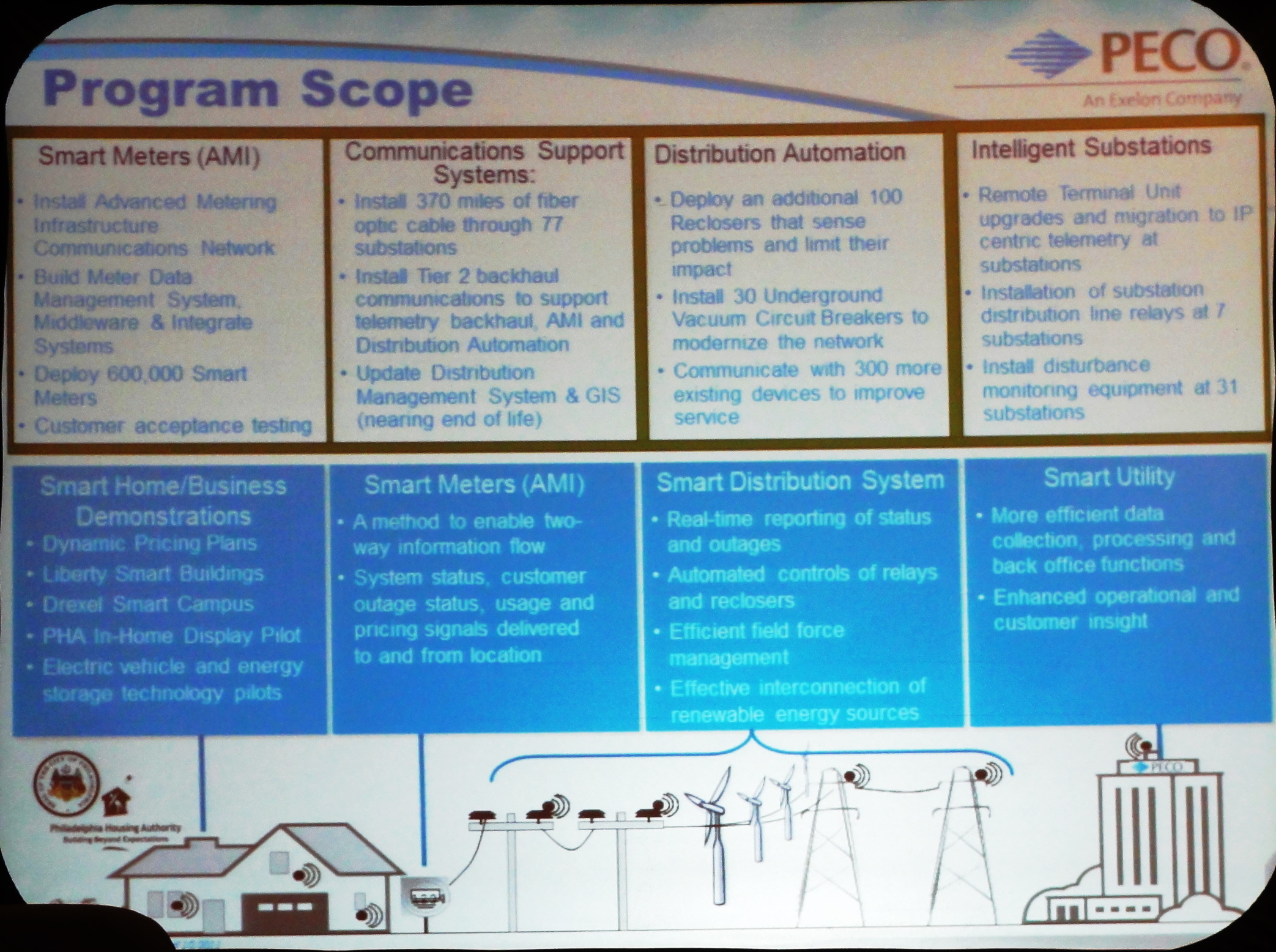 ns calles Exelon 2020: A Low-Carbon Roadmap, with a goal of reducing, offsetting or displacing more than 15 million metric tons of greenhouse gas emissions per year by 2020.
At Gridweek Todd McGregor of PECO outlined the scope of his utility’s smart grid deployment. This provides interesting insight into what electric distribution companies are focussng on in deploying smart grid. The smart grid equipment PECO is deploying includes
- Smart meters (smart meters, AMI, data management)
- Communications (fiber, wireless, backhaul)
- Distribution automation (reclosers, vacuum circuit breakers, communications with other device types)
- Intelligent substations (TRU, line relays, disturbance monitoring equipment)
Installation of this equipment will provide the foundation for the smart grid programs that PECO is piloting currently and plans to roll out to customers.
Smart Home/business Demonstrations
- Dynamic pricing plans
- Liberty Smart Buildings
- Drexel Smart Campus
- PHA In-home display pilot
- Electric vehicle and energy storage pilots
Smart meters (AMI)
- Two way information flow to support
- system status, customer outage status, power usage and pricing signals
Smart distribution system
- Real-time reporting of status and outages
- Automated control relays and reclosers
- Efficient field force management
- Effective interconnection of renewable energy sources
Smart utility
- More efficient data collection, processing, and back office functions
- Enhanced operations and customer insight
The overall project cost is $650 million and in October 2009, the Department of Energy awarded PECO a $170 million SGIG stimulus (ARRA) award. Work is underway to deploy digital metering technology for all of PECO’s 1.6 million electric customers during the next 10 years — 5 years earlier than required under Act 129.

Be the first to comment