
The first State of the Planet Declaration coming out of the Planet under Pressure 2012 conference in London warns that the continued functioning of the Earth climate system and its support for human civilization is at risk. There is the potential for a humanitarian emergency on a global scale, relating to water, food, biodiversity and other critical resources, that requires urgent action.
It argues that humanity’s impact on the Earth system has become comparable to planetary-scale geological processes such as ice ages and that we have d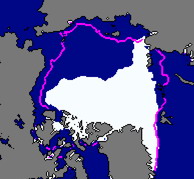 riven the planet into a new epoch, the Anthropocene, in which many Earth climate system processes are now dominated by human activities. The Earth has experienced large-scale, abrupt changes in the past and there is the risk that human activies could lead to abrupt, large scale changes in the future. Researchers are beginning to identify planetary and regional thresholds that, if crossed, could generate unacceptable environmental and social change. For example, researchers are analyzing the abrupt retreat of Arctic sea-ice cover in 2007 and the detection of a new low ice cover state that suggest the Arctic may be approaching a tipping point that would trigger a strongly non-linear response in the internal dynamics of the Arctic climate system.
 Assessments of current mechanisms for governing global environmental change show that existing international arrangements are not dealing quickly enough with current global challenges such as climate change and biodiversity loss. The United Nations Rio+20 Conference in June 2012 is seen as an opportunity to provide a strong strategic framework for a sustainable future including the creation of a Sustainable Development Council within the UN system to integrate social, economic and environmental policy at the global level.
Be the first to comment