
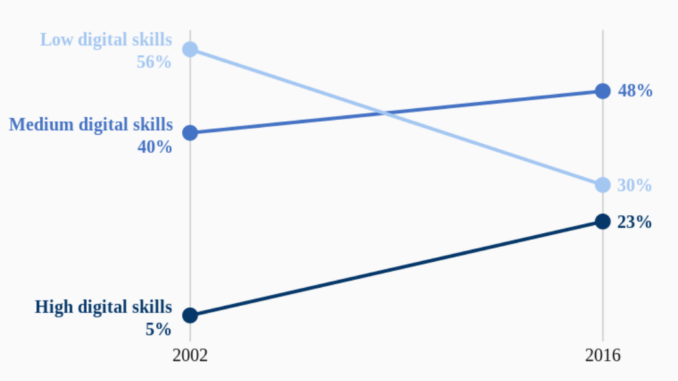
In a new report from the Brookings Institution Digitalization and the American workforce the changing requirements for digital skills for job types covering 90% of the U.S. workforce has found dramatic changes in the last 15 years. As recently as 2002 under half of U.S. jobs required digital skills. By 2016 70% of jobs required digital skills. Almost a quarter of U.S. jobs now require high digital skills.
Virtually all industry groups saw increased digital skill requirements increase from 2002 to 2016. The industries leading the digital charge were professional, scientific and technical services; media; and finance and insurance. Trailing the pack are education, transportation and warehousing, basic goods manufacturing, and construction. Looking at construction the report notes that in the period 2010-2016 construction output out rose by 2.7%, wages rose by 1.4%, and productivity decreased by -0.6%, highlighting the continuing challenge of productivity stagnation in the construction industry. Among occupations construction labourers have the lowest digital skills, perhaps one of the reasons paper drawings still typify construction sites.
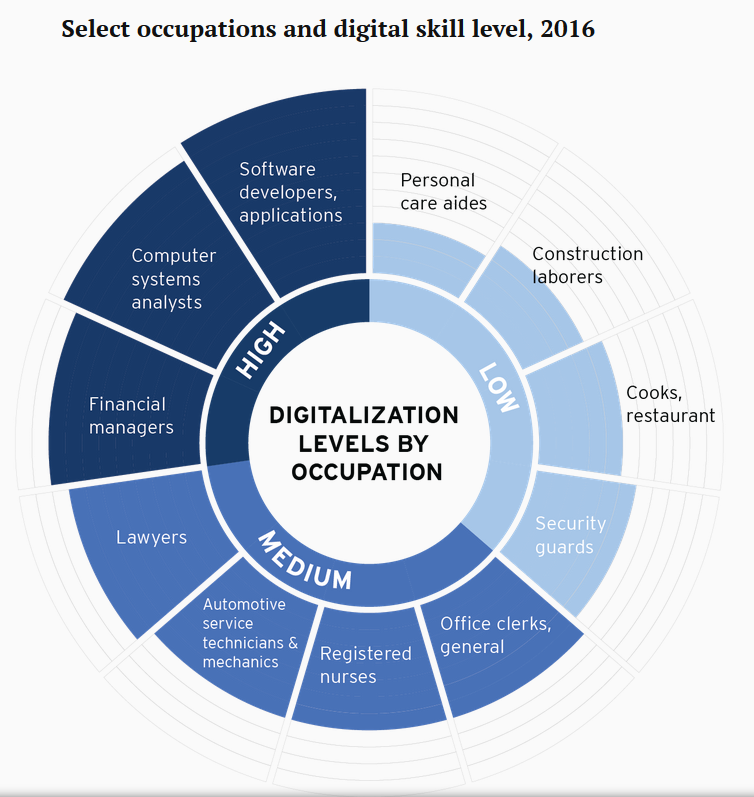 During this period the digital skill level of even the least digitalized occupations have risen. Welders and heavy truck drivers saw their digtial skillls scores triple or more. By 2016 48 percent of low digital skills occupations employing 33 million workers had become medium-digital or even high-digital occupations. Among the occupations transitioning from low digital scores to medium or high include tool and die makers and bus and truck mechanics. Even at the very bottom end, the digital skills of construction laborers increased through not by enough to move them out of the low digital skills category.

Be the first to comment