
One of the new generation of geospatial-related conferences that I have attended for two years now is Location Intelligence for Enterprise USA. It is not a traditional GIS conference but includes talks about vertical business challenges in the commercial space that have benefited from geospatial data and technology. This year it was hosted by Natasha Léger, Editor, LBx Journal and included speakers from Fedex (managing infrastructure), IBM Business Analytics (business intelligence), Walgreens (retail), Microsoft Azure (cloud computing), Jones Lang Lasalle (Healthcare), Thomson Reuters (predictive analytics), Piteny Bowes (business rules in the cloud), Nate Hole of Loeb and Loeb (privacy), and I talked about gaming and data visualization.
Indoor mapping and tracking
One of the panel discussions focussed on indoor location and mappping. It was moderated by George Percivall, Chief Architect and Executive Director of the OGC Interoperability Program, and included Kipp Jones, Chief Architect ,Skyhook, Ankit Agarwal , CEO, Micello Inc, Corey Mandell, Chief Technology Officer, Point inside and Chris Galo, Regional Director of Sales, Aeroscout.
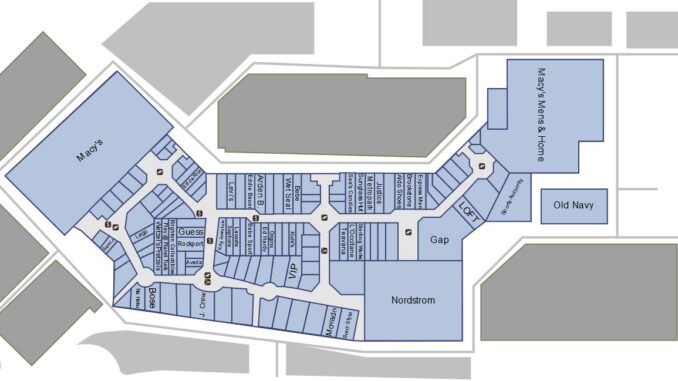
To kick it off George Percivall gave an overview of where things stand wit respec to indoor location. He mentrioned that the Open Geospatial Consortium (OGC) has initiated an IndoorGML Indoor Location Standards Working Group. The objective of the working group to provide a common schema framework for interoperability between indoor navigation applications as well as to integrate indoor space and outdoor space in a seamless way. Indoor mapping is already supported by Google and Bing. Micello is in the business of creating indoor maps of major venues around the world. Most of the activity seems to be focussed on consumers and locations such as malls, airports and department stores. A typical indoor application would help you find particular products in a mall or department store.
Challenges
The major problem that distinguishes indoor from outdoor location and mapping is that there is no indoor equivalent of GPS. When you are outside of buildings on most of the Earth’s surface you can use GPS to determine where you, other people and things are. As soon as you walk into a building, GPS no longer works and it is difficult to automatically track people and objects. For example, to be able to track a firefighter in a building that has not been prepared in advance remains a challenge.
There have been a number of attempts to solve this problem. Aeroscout, recently acquired by Stanley Black & Decker, uses Wifi signals from transmitters with known locations to triangulate locations to with an accuracy of 10-15 feet. Other technologies involve tracking cell phone location by triangulation, RFID, accelerometers, or tracking by low frequency radio frequency waves that are not as affected by walls as high frequency waves. Recently magnetic anomaly-based indoor positioning using smart phones has been developed by IndoorAtlas.
Another challenge is 3D location in tall buildings, translating an elevation in meters or feet to a particular floor and vice versa.
The industry is also facing a serious lack of standards right now like, for example, the CityGML standard for everything outside of buildings. So the OGC’s IndoorGML working group initiative is opportune. In the Netherlands there is a working group associated with Geonovum and the Dutch 3D cadastre that is attempting to align the CityGML ADE GeoBIM standard and the Industry Foundation Classes (IFC) BIM standard maintained by BuildingSmart. IFC is intended to enable the exchange of BIM data between applications developed by different software vendors in a vendor-neutral way. The objective of the work group is to define a standard, semantically meaningful mapping between IFC and GeoBIM.
The business benefit of indoor location is significant because it increases the value of your assets – when you can locate equipment and facilities easily, you will use them more. In the case of hospitals it can be a matter of life and death to find the “crash cart” in seconds rather than minutes.

Be the first to comment