
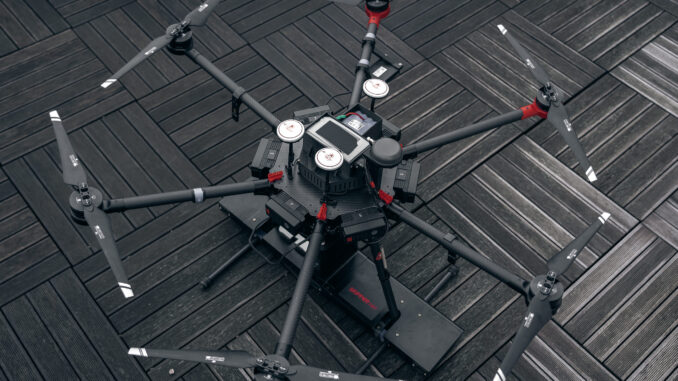
Technologies such as ground penetrating radar (GPR) or acoustic locating for detecting underground utilities involve directing some type of signal, electromagnetic or acoustic, into the ground and measuring the reflection off underground objects. A major challenge for these techniques is attenuation which limits the depth of penetration of the signal. For example, wet soils such as clays can render ground penetrating radar ineffective. Technologies for remotely detecting underground objects that are not susceptible to attenuation include gravimetry and magnetometry. I recently blogged about increased sensitivity of gravimetric equipment using quantum effects, an approach that has shown promising results in academic experiments. However, collecting data is still relatively slow and requires “boots on the pavement” which always raises safety issues. Now a novel approach using magnetometry allows centimetre-accurate locations to be measured for underground metallic pipe networks. Even more importantly, a device combining magnetometers and accurate GNSS is light enough to be mounted on a UAV or drone, which provides much faster and safer data acquisition.
In 2012 a French government’s decree (DT-DICT) mandated that energy network operators accurately map their energy (oil and gas) pipeline networks by 2026. This decree has motivated French energy companies to assess different alternatives for locating and mapping their underground assets. SKIPPER NDT was started in 2016 based on the concept of leveraging the physical principles of magnetism to perform contactless measurements on pipelines with the objective to improve operational safety and rationalizing operational expenditure. Their latest development involved mounting on a drone all the necessary equipment to perform a high precision magnetometric measure to detect underground pipelines. SKIPPER NDT has partnered with Total, GRTgaz, Teréga and other major French energy network operators to demonstrate the performance of their technology in real conditions. The French National Centre for Scientific Research (CNRS) has also provided an objective scientific validation of their approach. Recently I had the opportunity to speak with Luigi Kassir, Co-founder and COO of SKIPPER NDT.
The disadvantage of a remote detecting device such as GPR that has to be wheeled at a walking pace, typically in a grid pattern covering the area of interest is that it requires “boots on the pavement” which is often dangerous especially in active traffic. Towing a rig at highway speeds as in the case of recent ground penetrating equipment is one way to speed up data acquisition and avoid boots on the pavement. However, attenuation is still a problem and adverse soil conditions can render GPR ineffective. As an alternative SKIPPER NDT has developed a device that integrates several magnetometers and accurate GNSS geolocating equipment which is light enough to be loaded on a UAV or drone. The advantage of this approach is that it is unaffected by soil conditions, dramatically speeds up data acquisition and avoids the safety issues associated with ground-based equipment.
Magnetometry involves detecting and measuring the magnetic field emitted by underground conducting objects. To enhance the magnetic signal emitted by a metallic pipe an electric signal generator can be used to inject an electromagnetic signal. The SKIPPER NDT device consists of a proprietary electronic logic card, five 3-axis fluxgate magnetic sensors, a topographic GNSS+RTK capacity as well as a high-precision inertial unit. Magnetic field strength readings, measured in nanoteslas (nT), are recorded continuously by the SKIPPER NDT device and are used to compute the location of the pipe (XYZ) and its depth of cover. A suite of algorithms has been developed to interpret the magnetic field strength measurements under various conditions, for example, overcoming external electromagnetic interference along the pipeline route, such as power poles.
Most importantly the device weighs only 2.5 kg, making it light enough to be mounted on a UAV or drone. The success of Skipper NDT’s drone mounted technology has been scientifically demonstrated and validated under live field conditions. SKIPPER NDT’s performances were validated in the field with the French pipeline operator Teréga. Surveyors contracted by Teréga geolocated two pipelines with diameters of 6’’ and 8’’ in an open ditch. The ditches were then backfilled. In a blind test the SKIPPER NDT team was invited to detect and map the pipelines using hteir drone-based device. Using their drone mounted system the SKIPPER NDT team was able to capture magnetic field readings over 482 feet in just 6 minutes. It was found that the average precision of detection of the underground pipeline was 6.1 inches.
Furthermore, because SKIPPER NDT’s records continuous measurement along the pipeline, it can precisely map bends and elbows. It can also detect metallic objects and structures near the pipeline including other metallic utilities. For example, during one of the field tests, SKIPPER NDT was able to identify another pipeline whose presence had not been previously reported but which crossed the target pipeline.
There are limitations to the effectiveness of magnetometry. External magnetic noise can be a problem. Sources of magnetic noise that are prevalent in urban environments can drown out the target signal and complicate detection of underground pipelines. For this reason, the technology is most effective in rural and semi-rural areas.
In summary the advantage of the SKIPPER NDT drone-mounted device is that it provides fast, safe, and centimetre-accurate data acquisition. Its automated data acquisition and processing tools mean results can be delivered faster than conventional methods making the solution also rapid and cost-efficient.

Be the first to comment