

The INSPIRE Conference 2010 is being held this year in Cracow, Poland, an absolutely stunning location. There have been some riveting presentations as part of the first day’s plenary session that for me put the INSPIRE initiative in a broader international context and in the context of some of the immense transformations that are changing the IT world such as cloud computing and social networking.
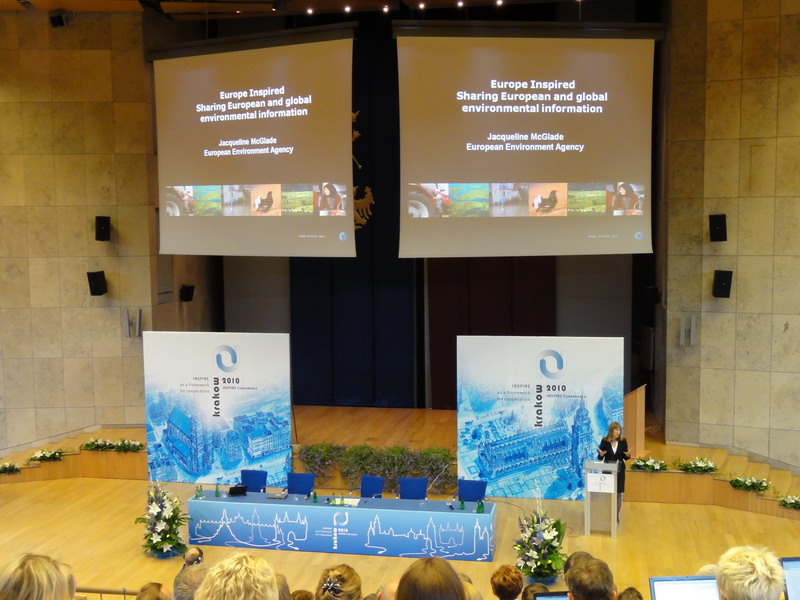 Professor Jacqueline McGlade, Executive Director of the European Environmental Agency (EEA) gave a 50,000 foot overview of what is going on in the EU with respect to the geospatial sector and the environment. In a quick historical summary, she said the EU has moved from shipping trainloads of paper to Brussels, to electronic data submission, to open public access to electronic data. Fully 90% of the data that submitted as part of environmental monitoring and reporting has a geospatial tag.
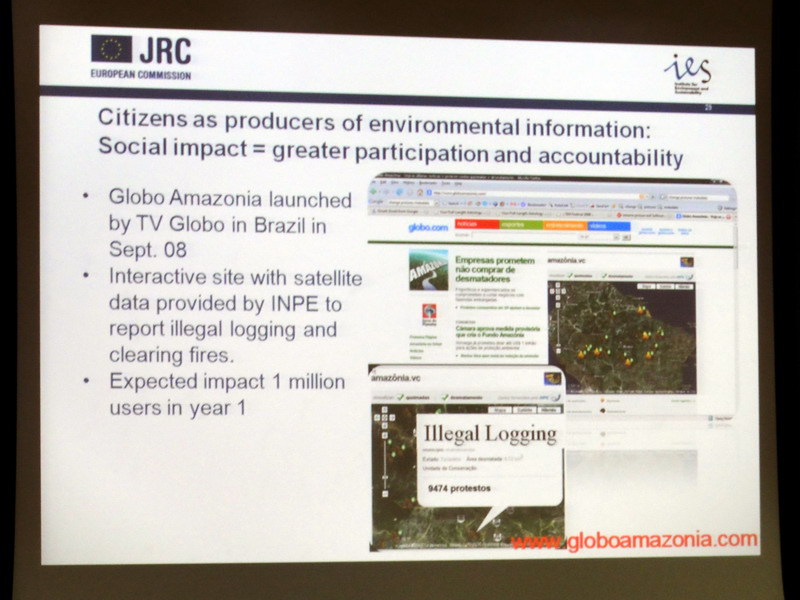 Three areas that are getting a special focus in the EU are forestry, biodiversity, and drought. For example, there is now a biodiveristy web site for Europe called BISE. Starting in 2012 it will be illegal to import wood products from non-sustainable logging sources. Max Craglia, of the EC’s Joint Research Centre (JRC), in a later presentation mentioned as an example of crowd-sourcing that in Brazil illegal logging operations are coming under public scrutiny by way of a Brazilian Globo Amazonia site, that enables anyone to report illegal logging including digital images. TV news channels are following the social networking site and sending reporters to the sites to follow-up on the reported illegal logging operations.
 Cloud computing
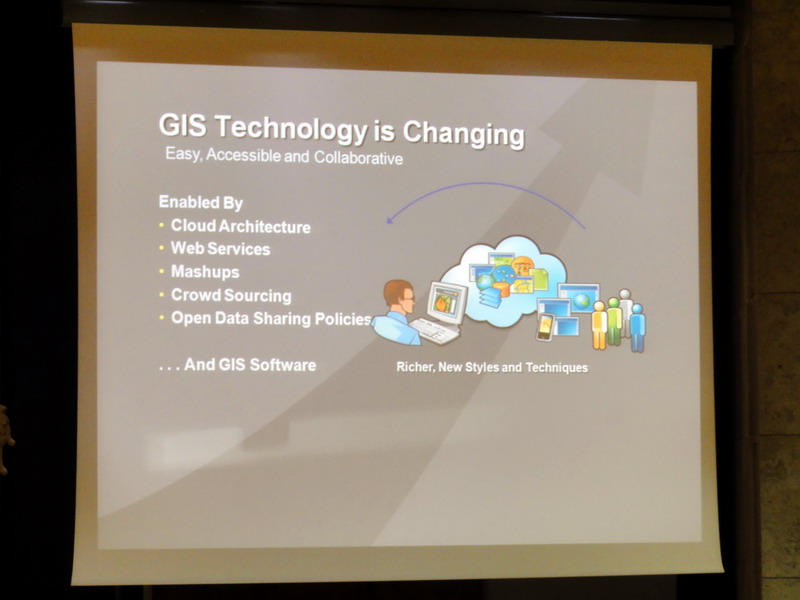
But I think the item that really got my and many other people’s attention was Professor McGlade’s and other speaker’s comments on the impact of cloud computing. She was unequivocal about two things.
- Data is more secure in the cloud.
- And costs are “falling and tumbling.” For example, the EEA is seeing a 60% cost reduction in running costs for spatial data.
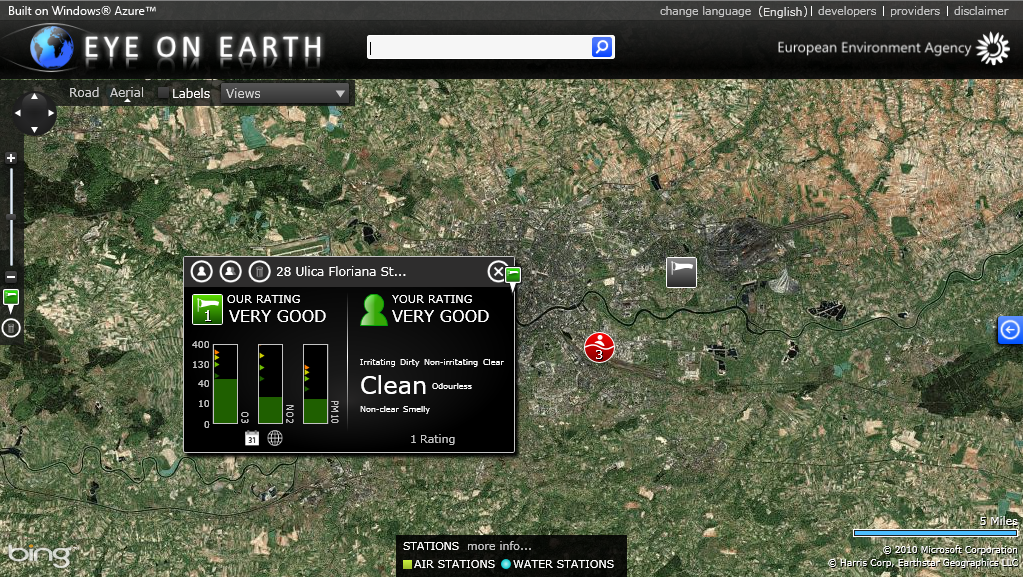 Max Craglia highlighted some of the dramatic changes that are happening as a result of the rise of social networking; more internet traffic associated with social networking than email, mobile exceeding desktop internet, and mobile data exceeding voice. Professor McGlade said that research has found that 42% of EU citizens feel poorly informed about environmental issues and as a result a new site called Eye on Earth has been created to bridge the gap between initiatives like GMES (Global Monitoring for Environment and Security) and INSPIRE and the citizen. For example, you can find current air quality reported for your location on Eye on Earth. But her response to a question about plans for European IT infrastructure for environmental data was very interesting. She said that the EU should be focussing more on quality assurance than on building the IT infrastructure because otherwise there is a risk of being overtaken by the rapid change that is happening in IT, a real risk for big, multi-year government initiatives. Essentially she is saying to leave the IT infrastructure to the commercial sector.
INSPIRE and the world
Professor Mauro Salvemini, President of EUROGI (European Umbrella Organisation for Geographic Information), put INSPIRE in the context of the rest of the world, mentioning a 2010 UN proposal for a world geospatial forum. His argument is that INSPIRE creates opportunities for EU countries on the world stage.
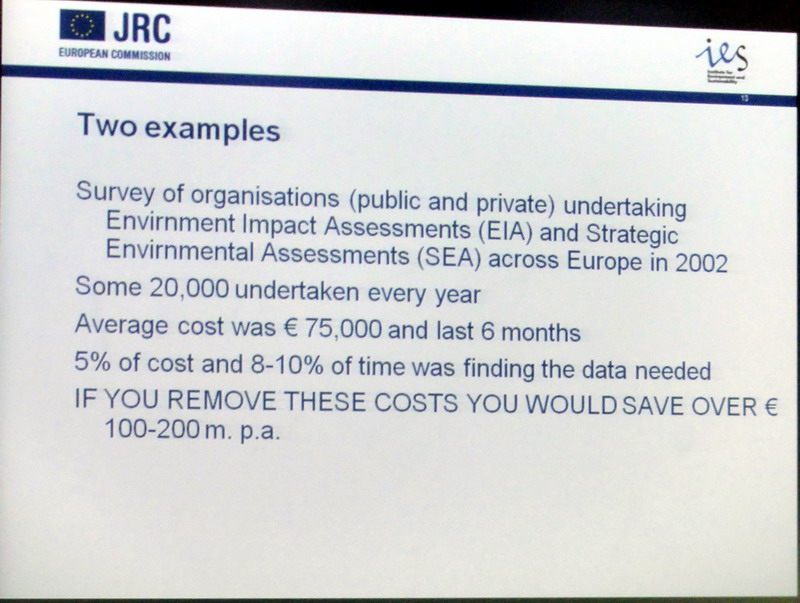 Economic Benefits of INSPIRE
I have blogged previously about two studies, in Australia and New Zealand, that attempted to put a dollar figure on the contribution of the geospatial sector to the national GDP. Max Craglia outlined the results of studies in the EU that attempted to quantify the economic benefits of sharing spatial data. One was the cost reduction across the EU of environmental impact assessments (EIA) and strategic environmental assessments (SEA) where the savings are estimated to be €100 to 200 million per annum. He also mentioned some smaller studies. One was in Catalonia, where the expenditure of €1.5 million over four years saved the local government €2.6 million. The second was in Lombardia, where the expenditure of €4 million on spatial data infrastructure led to savings of €3 million per annum.

Be the first to comment