
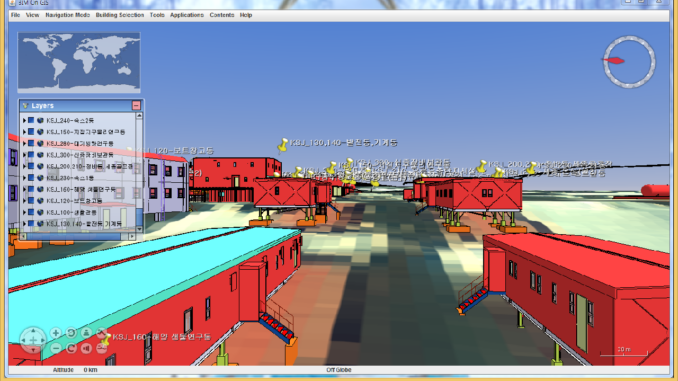
At the Geospatial World Forum in Geneva, several geospatial-related projects from South Korea are being highlighted. One of the most important is a five-year project conceived, sponsored and funded by the Korean Institute of Construction Technology (KICT). The objective of the project, called BIM on GIS Interoperability Open-Platform, is to develop a software platform that enables GIS and BIM interoperability. The project is being carried out by Korean software company Gaia3D.
 Gaia3D has been prototyping a software architecture comprised of application plug-ins, desktop and web clients, 3D BIM/GIS object server, spatial RDBMS, and spatial data including BIM and GIS models. The main functions that the software platform supports are BIM format conversion (rvt to internal) for improved performance, simultaneous spatial query and analysis for geospatial and BIM data, application APIs for facility management (FM) and energy management, interactive navigation inside and outside of buildings, control over transparency (making walls transparent, for example), and 3D visualization.
  It supports large data volumes including BIM, digital terrain models, orthoimagery, photorealistic 3D visualization, textures, augmented reality, both BIM and GIS models and international standards IFC and CityGML. The application is intended to be vendor neutral with respect to both BIM and GIS vendors.
The current prototype relies on open source geospatial software including GeoServer, World Wind SDK for Java, OpenLayers, and PostGIS.
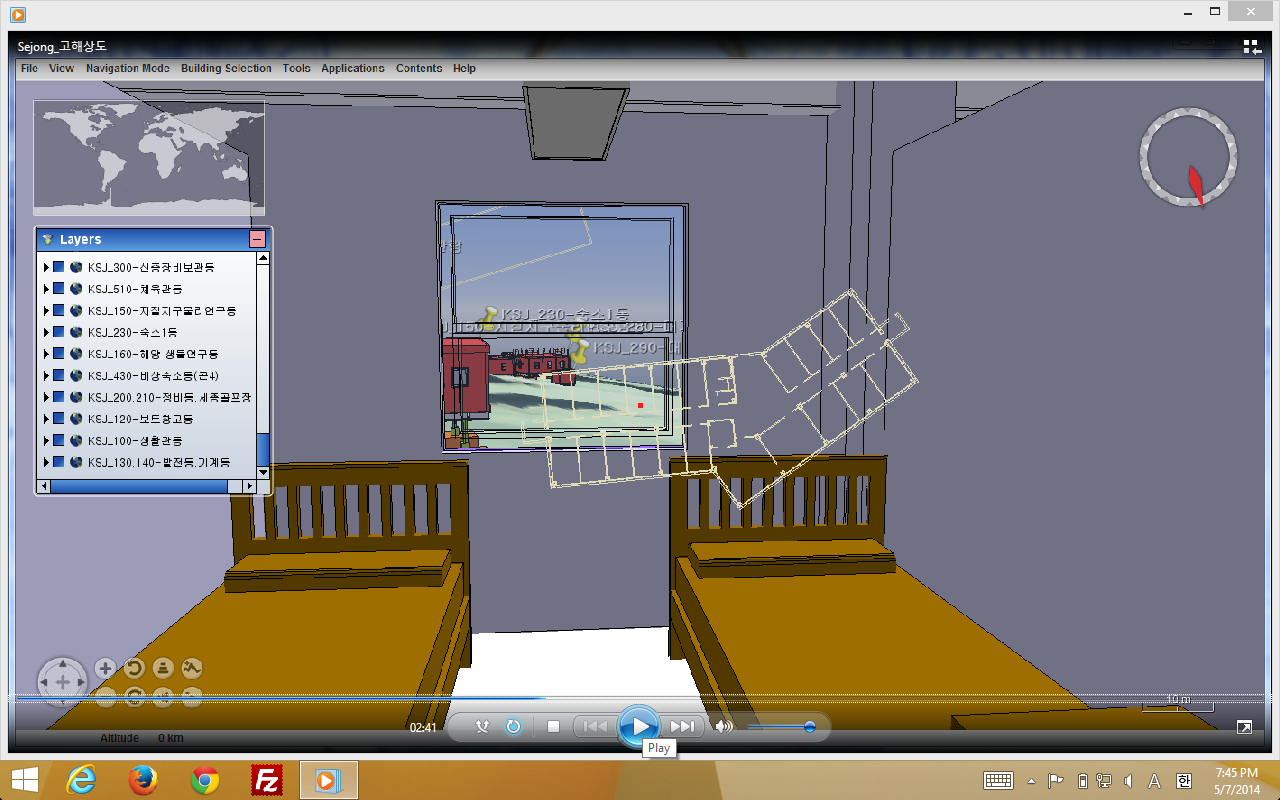
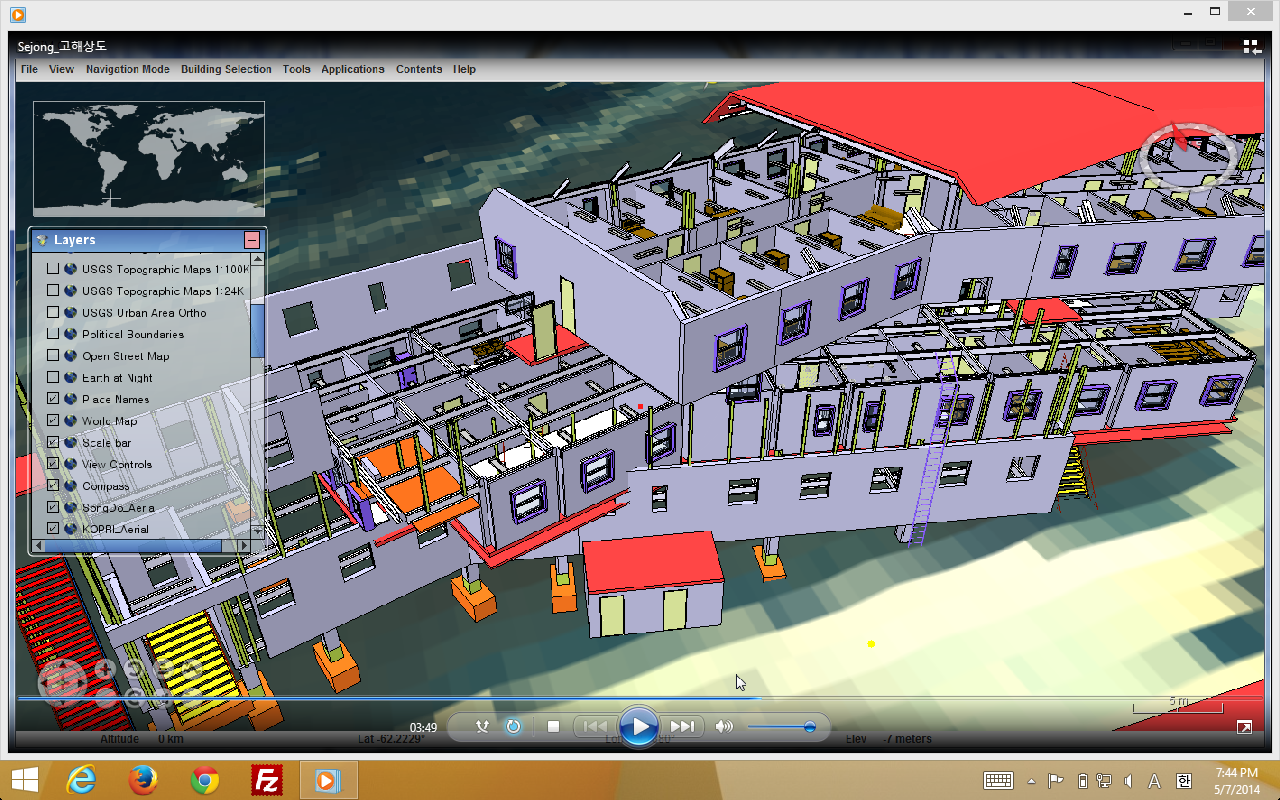
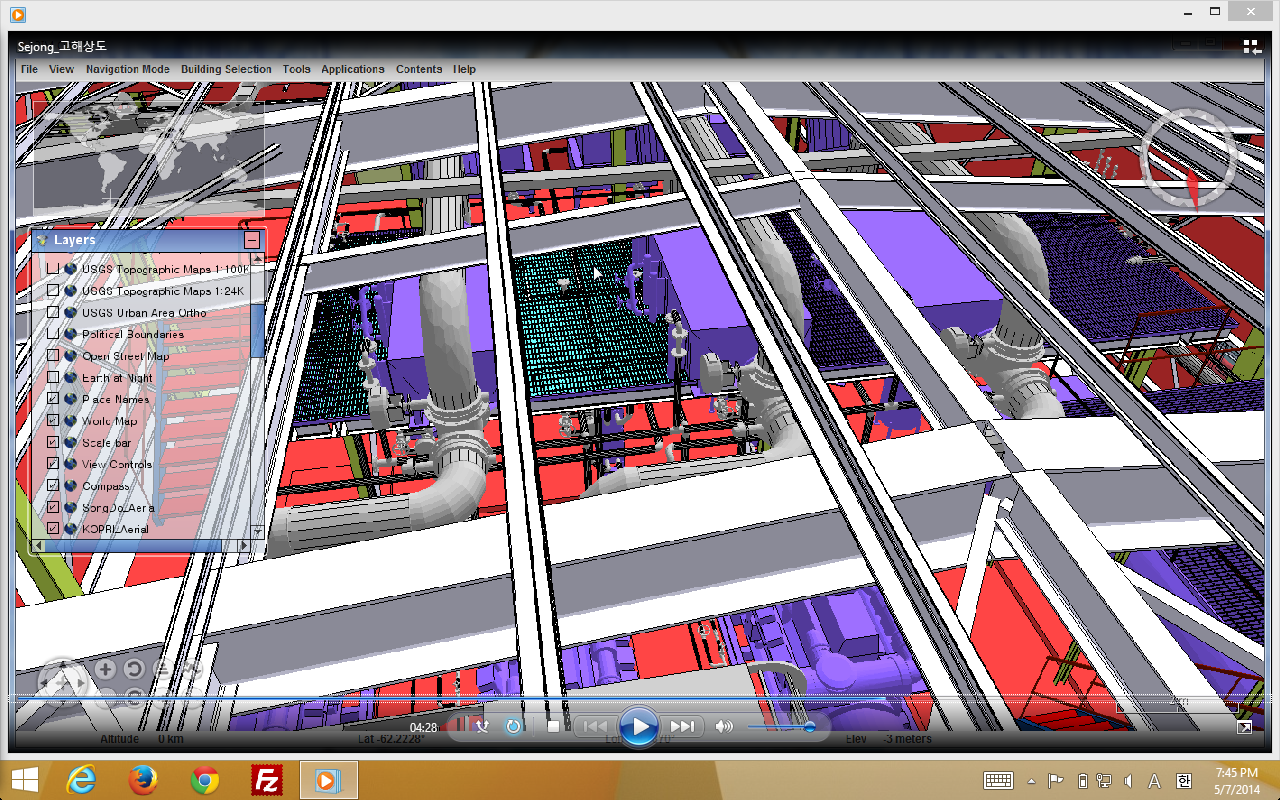 An example that was demonstrated to me at Geospatial World Forum by Heegu Park of Gaia3D was KOPRI (Korea Polar Research Institute), who maintain a research station called King Sejong in Antarctica. BIM models were developed for the 35 buildings of the research station and integrated with geospatial data including a digital terrain model and satellite imagery. Navigation inside and outside of buildings was demonstrated, looking outide through windows, as well as removal of walls and rooves to visualize inside infrastructure.

Be the first to comment