
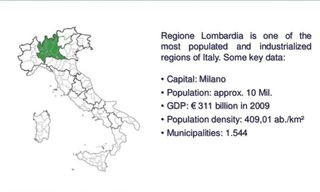
About three years ago at the GI_Forum Symposium in Salzburg, Paolo Viskanic of R3 GIS gave a presentation about a ground breaking project to map underground infrastructure that had been underway in the Region of Lombardy in Northern Italy. This project was kicked off by a pilot project to map all underground infrastructure on the site of Expo Milano in preparation for the 2015 event in Milan.
What I didn’t realize at the time was that this was a joint presentation with Enrico Boi of IDS GeoRadar. Enrico, who was responsible for the ground penetrating radar (GPR) scanning part of the project, wasn’t able to make it to Salzburg. Paulo explained to me repeatedly that I should talk to his co-author from IDS about the GPR scanning, but somehow I never managed to until last week. At the annual Hexagon conference HxGN Live in Anaheim I finally met Enrico. ( At HxGN Enrico gave a fascinating presentation on the application of radar to detect and monitor slope instabilities. )
In recent years IDS Georadar has been in the forefront of technical development in GPR and the Milan pilot project was a ground breaking project that demonstrated the benefits of using GPR to map underground utility infrastructure in an urban environment. For the Milan pilot project all underground infrastructure in the project area (230 000 square meters) including electric power, water, sewers, gas, district heating, street lighting, and telecommunication were mapped both from historical records and using IDS’s ground penetrating radar (GPR) technology. A data model for underground infrastructure was developed for the different types of underground networks based on the Italian DigitPA and the INSPIRE US utility standards.
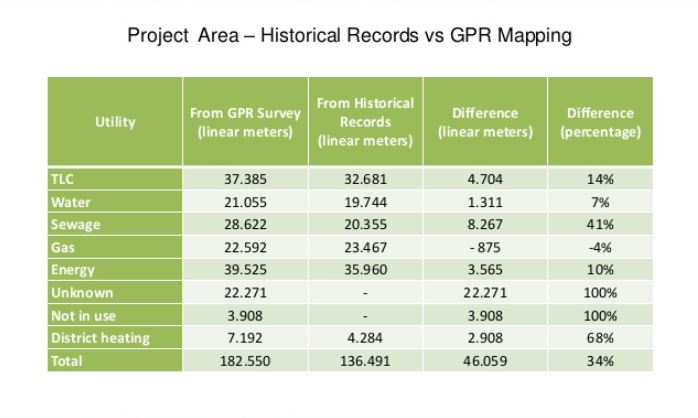
 Comparison of GPR scan with historical records
Return-on-investment
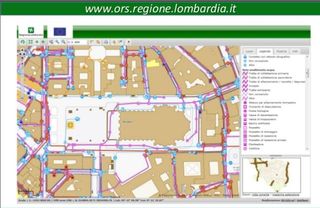 The other ground breaking part of the pilot project was an economic analysis of the costs and benefits of applying GPR to detect the location of underground infrastructure. The analysis estimated that the return on investment is about €16 for every euro invested in improving the reliability information of underground infrastructure. For comparison the ROI in the United States has been estimated to range from up to $21 for every dollar invested. The analysis also emphasized other important, but non-quantifiable benefits including better safety for both workers and the public as well as fewer traffic disruptions.
Be the first to comment