
The challenge of increasing urbanization in a world where anthropogenic pressure on the environment has become threatening is driving the digitalization of urban planning and the design, construction and maintenance and operations of urban infrastructure. 3D maps of the above ground of many cities have been created, but the below ground has been neglected. In the U.S. it is estimated that an underground utility is hit about every minute. Underground utility conflicts and relocations are the number one cause for project delays during road construction. There is a growing recognition that the subsurface needs to be included in urban planning and construction to reduce the risks of conflicts with subsurface infrastructure and to maximize the benefits of subsurface resources.
One relatively inexpensive way to begin mapping underground infrastructure is to record the location of infrastructure uncovered during routine maintenance and other construction excavations. But using a traditional surveying approach would require having survey crews on standby and it would also delay the work.
An innovative pilot in Chicago led by City Digital, Cityzenith, Accenture, HBK Engineering, and the City of Chicago collects digital images of open excavations, extracts 3D information from them and shares the information. When local engineering firms and utilities excavate in streets or sidewalks, workers take a digital photo of the visible pipes and wires exposed by the excavation. The images are then scanned into the mapping platform, which extracts key data points from it: location, depth, and diameter of the pipes and other attributes of the infrastructure in the photo.
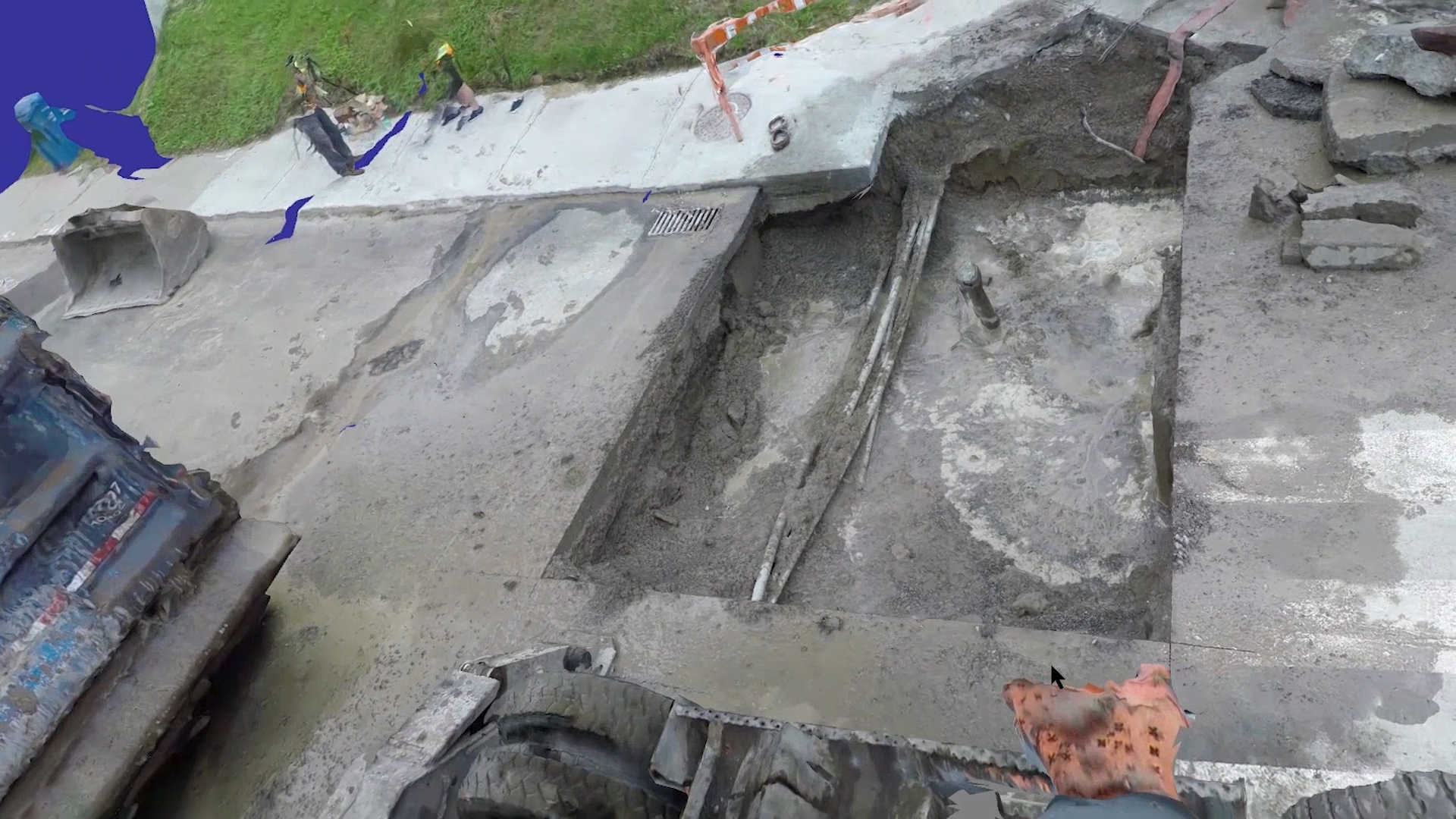
An alternative is to equip excavation equipment with cameras making it possible to record videos during excavation. Then a tool such as Bentley’s ContextCapture could be used to create a 3D mesh showing the uncovered pipes and cables as well as neighbouring structures whose location is known. Together this information would enable the location of the underground infrastructure to be accurately determined
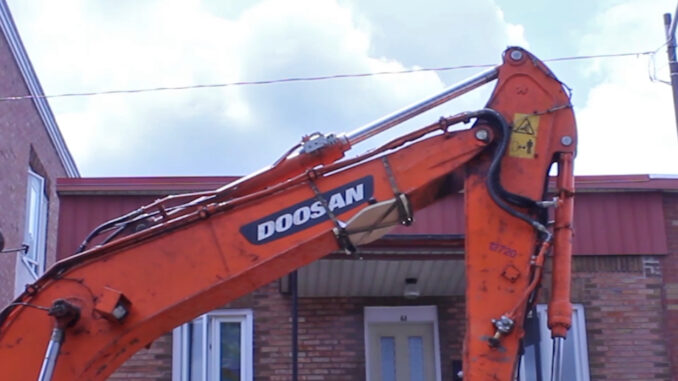
At the Year in Infrastructure 2017 (YII2017) conference In Singapore, Stéphane Côté, Augmented Reality Research Scientist at Bentley Systems, reported the results of an experiment in which he attached to four cameras, two Kodak Panorama and two Gopro cameras to an excavator. The resulting videos and images were then loaded into ContextCapture software to create a mesh. Analyzing the mesh allowed the location of underground pipes and cables that were exposed and the pipes that were laid to be located with centimeter accuracy by referencing neighbouring structures such as houses and other buildings whose locations were accurately known from other sources. Stephane has created a video of the experiment.
 If every piece of excavation equipment were equipped with low cost cameras, a lot of information about the underground could be captured during excavation and drilling with no impact on cost and scheduling. But if this data is stored in project or private databases and not shared, it will be of limited utility. Capturing this data in a shared, open database would a first step toward developing a model of the subsurface that can be reliably used for urban planning, design, construction and maintenance. The Netherlands has recently embarked on a national program supported by legislation and standards to do just that. In 2015 a new law was passed by the States General or parliament in the Netherlands creating a Basisregistratie Ondergrond (BRO) or Key Registry for the Subsurface. The law mandates that if you excavate or drill you have to share your data with the registry. The registry is required to be open and accessible to all citizens of the Netherlands. The combination of an open registry of underground features, as is being implemented in the Netherlands, together with excavation equipment equipped with cameras as in Stephane Cote’s demonstration would be a low cost way to rapidly begin capturing reliable information about underground infrastructure.
Be the first to comment