
Michael Byrne, who was Geographic Information Officer (GIO) of the Federal Communications Commission (FCC) and led the development of the National Broadband Map (NBM), has just been awarded the Citizen Services Medal for creating a series of online maps (National Broadband Map and derived maps) and geospatial visualizations that helped people make informed decisions about the country’s communications systems. It was developed in seven months from a standing start, launched Feb17, 2011, and got half a million hits in the first ten hours it was up.
The Service to America Medals are awarded every year to federal employees who achieve amazing results and epitomize public service.
The National Broadband Map allows users to use a web tool to search broadband availability across the United States and compare real download speeds to advertised broadband performance. All of the data is available for download. The map was part of an FCC stimulus (American Recovery and Reinvestment Act of 2009) initiative to improve broadband coverage/speed across the U.S.
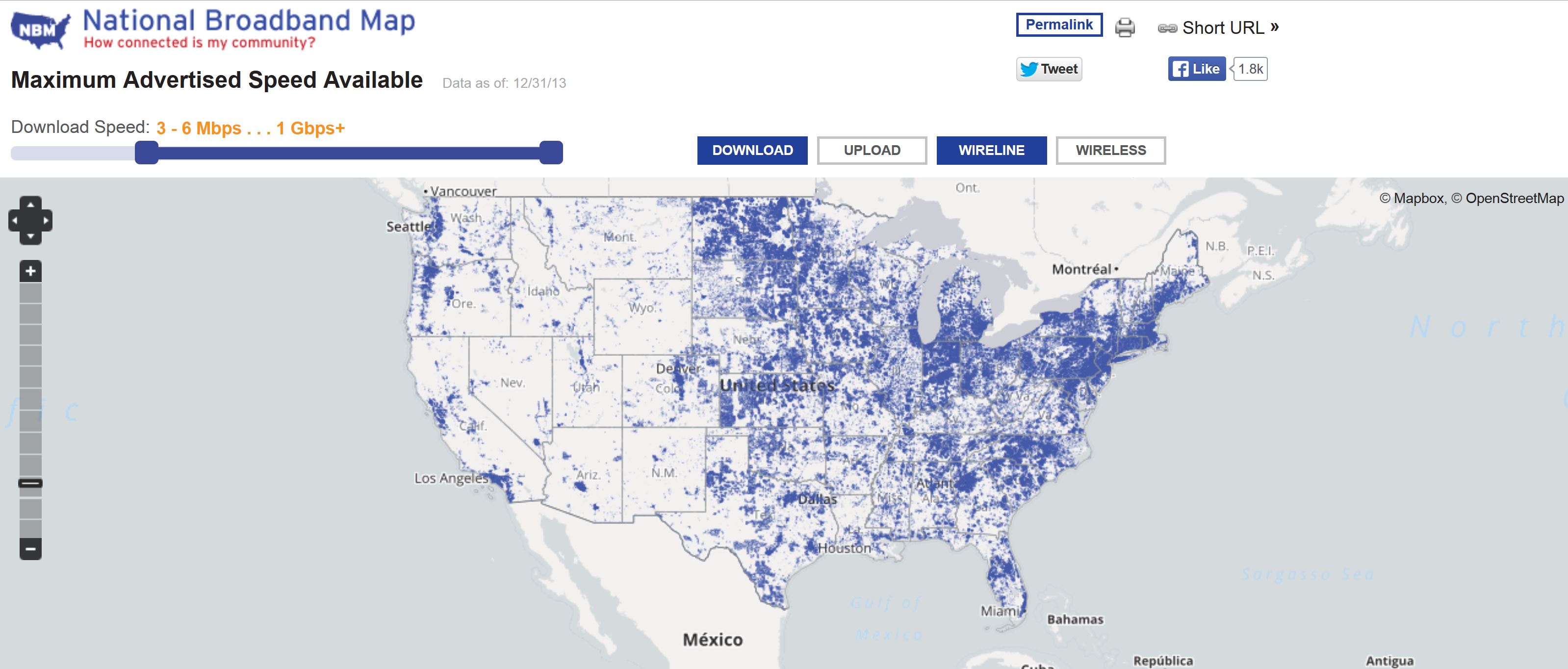 The development of the National Broadband Map is a fascinating story. The business objectives of the National Broadband Map, which were were mandated by Congress, included searchability, interactivity, responsive on-line access and a very tight development timeframe.
The data collection part of the story was a challenge because the FCC had to rely on the states to collect the data. The FCC ended up with data on 3500 broadband providers, submitted by 50 states, 2 territories and the District of Columbia. Michael’s team had to take all this data in many different formats and load it into the NBM database. The end result was a database covering 1650 broadband providers with 25 million records showing where broadband Internet service is available, the technology used to provide the service, the maximum advertised speeds of the service, and the names of the broadband providers.
Michael and his team’s biggest technical challenge was the tight development timeline. The second major challenge was ensuring fast user response time.
Seven months is an incredibly tight development timeline for any enterprise s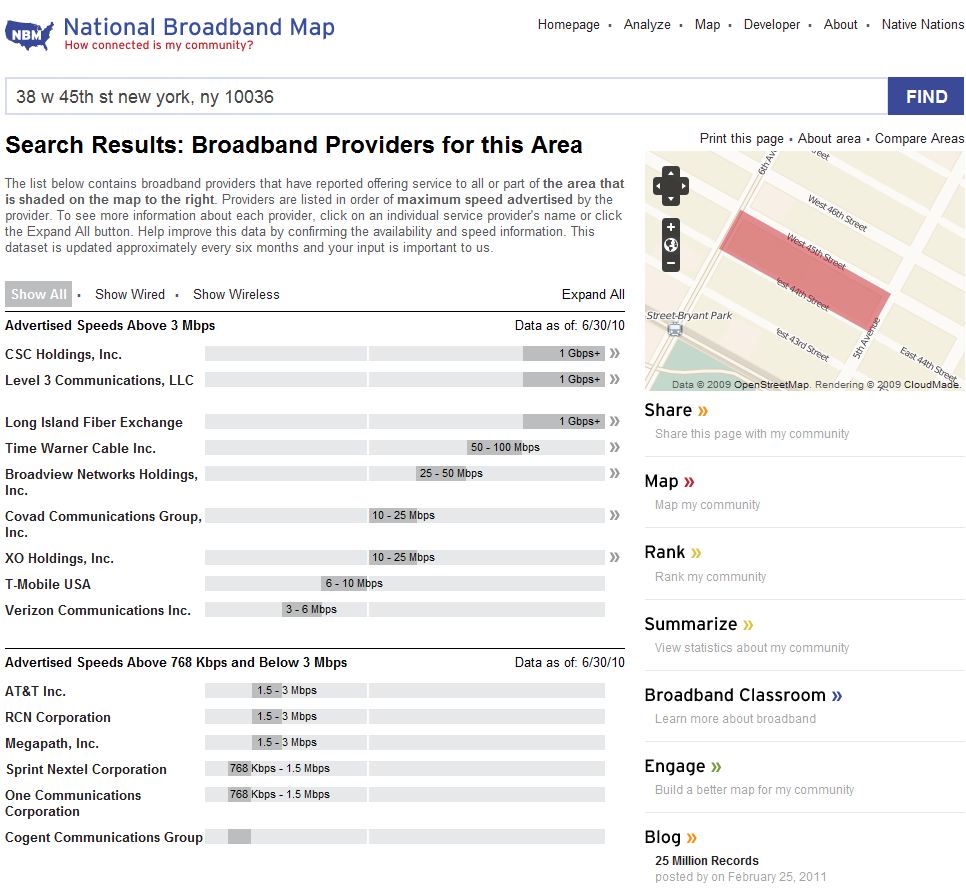 ystem. Early in the development cycle, the technical team, which was comprised of only eight people including Juan Marín Otero, the lead geospatial architect, decided that a RESTful architecture and open source geospatial software were the only way they were going to complete the project within the timeline because they recognized that they had to communicate directly with the developers if they were going to resolve issues in days, rather than months.
After deciding on the open source software and open data stack, the system was developed in four and a half months. It survived a deluge of traffic in its first hours and days. The first day the map went live, the site received 158 million hits.
The open source software and open data stack used for the NBM includes
- Apache Web Server
- AspectJ
- Cloudmade
- EHCACHE DX
- jQuery
- Geolytics
- GeoServer
- GeoWebCache
- Google Analytics
- Google Geocoder
- Google Maps API
- Hibernate
- Hibernate Spatial
- HSQLDB
- Jersey JAX-RS RI
- Junit
- Mapbox
- Maven
- Mockito
- MySQL
- OpenLayers
- OpenStreetMap
- PHP
- Spring Framework
- WordPress
Open source geospatial developers will recognize OpenLayers, Mapbox, GeoServer, GeoWebCache, and Hibernate Spatial (on MySQL) software, Google Maps API and Google Geocoder services and OpenStreetMap geodata. The software incorporates many Open Geospatial Consortium (OGC) geospatial standards. For example, Hibernate Spatial uses the Java Topology Suite (JTS) as its geometry model. JTS is a Java implementation of the OGC Simple Features Implementation Specification for SQL v. 1.1 (SFS).

Be the first to comment