
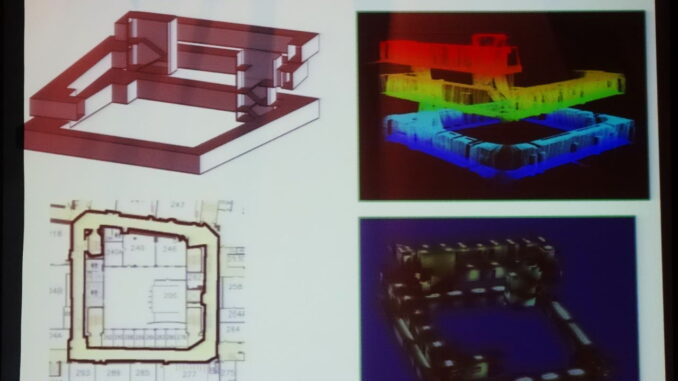
At the SPAR International conference Avideh Zakhor from the University of California Berkeley gave an enthralling presentation about her research on capturing optical and thermal point clouds of the insides of buildings using a portable backpack containing a collection of sensors. Her team has also developed analytical software tools for generating floor plans, distinguishing rooms, identifying staircases, texture mapping surfaces, identifying windows, finding heat sources such as computers and human occupants, identifying lights, and even estimating plug load lower consumption – all automatically. The software her team has developed can generate input in the form of an IDF file for the Department of Energy’s EnergyPlus energy performance analysis program. Avideh said that soon it will also be able to generate a gbXML file, which can be consumed by almost all building energy performance analysis software.
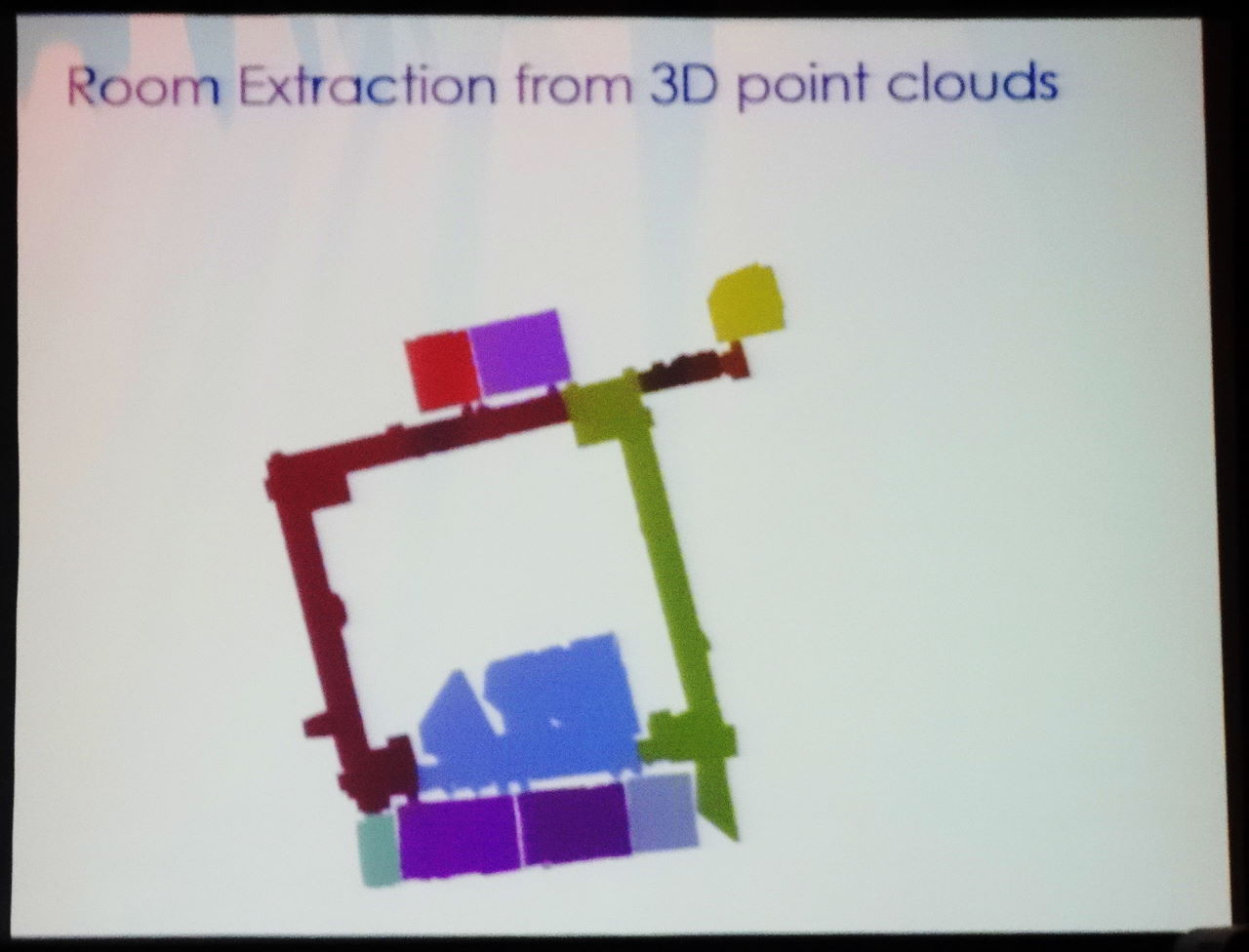 The resulting georeferenced data is then offloaded from the backpack and analyzed to generate different 3D data products including optical and thermal 3D point clouds, a colourized 3D point cloud, surface texture map, and triangulated mesh surfaces. Two different triangulated surfaces are generated for different applications – a very detailed surface and a much simpler model of spaces and walls. Using these data products the software automates feature extraction. It can distinguish windows, staircases, and individual rooms and generate a floorplan. Surface textures can be added to create a 3D photorealtistic rendering.
 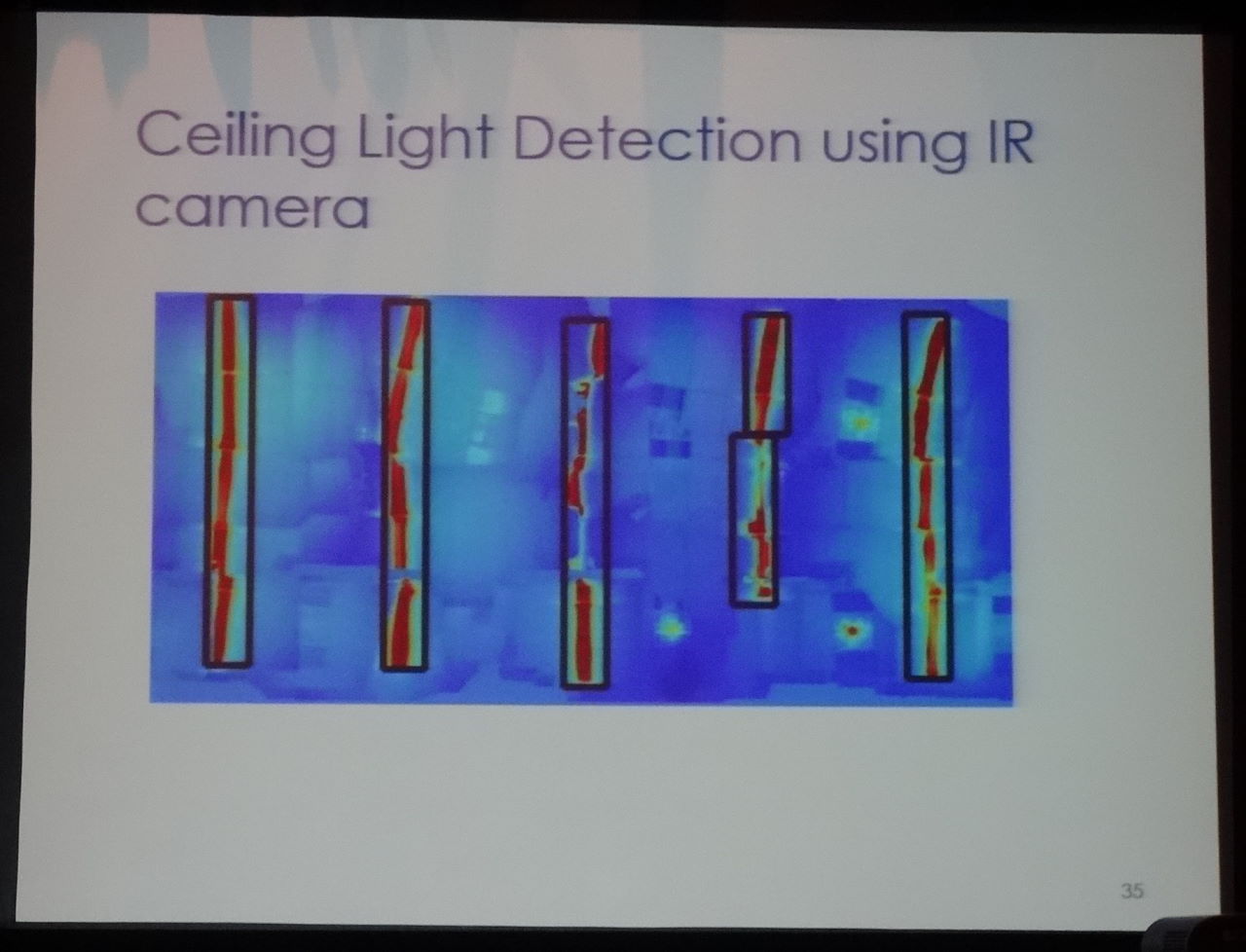 By analyzing both the optical and thermal point clouds the software tools can identify heat sources including computers and human occupants and can even identify lights and estimate power plug loads.
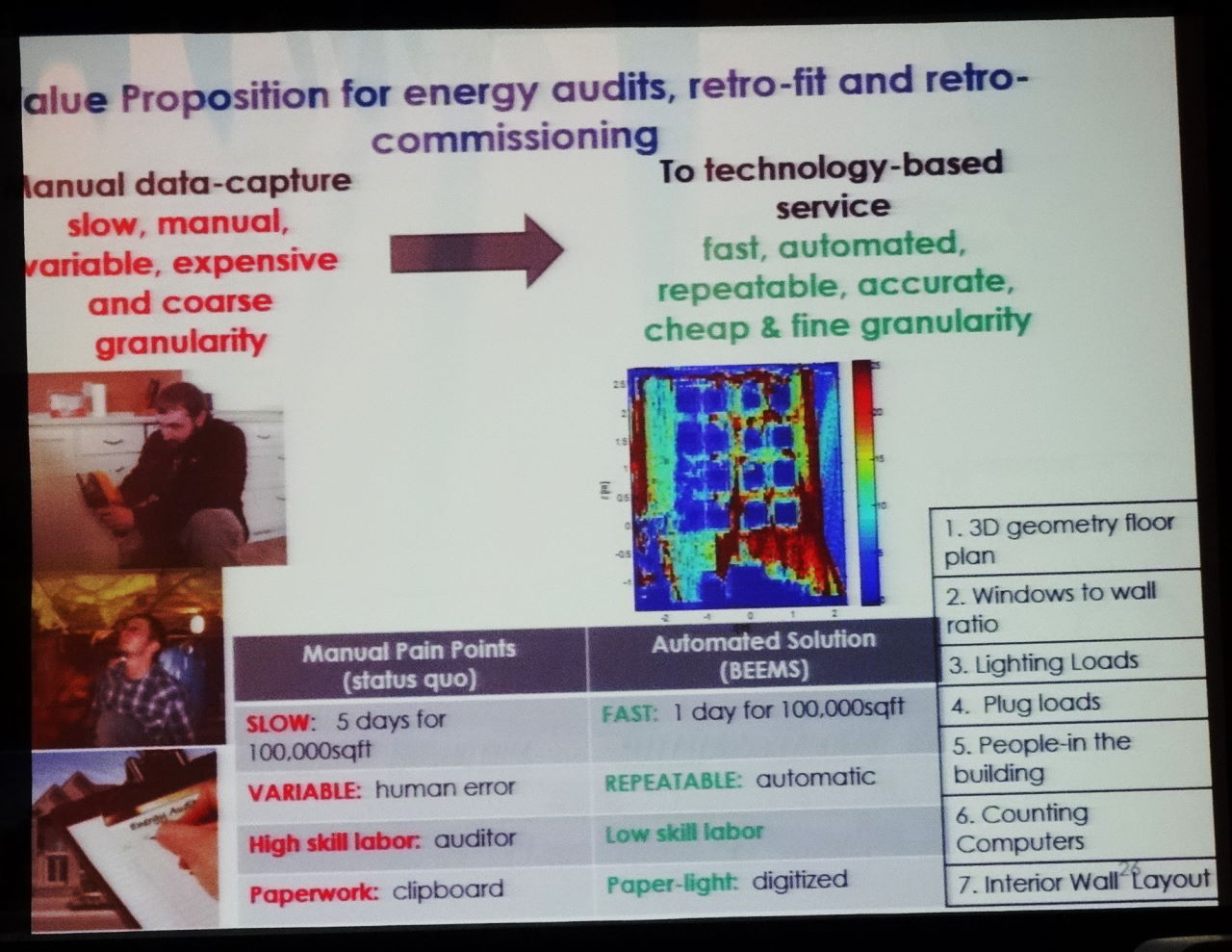 Using the results of the automated feature extraction the software tools can be used to generate the input required for a building energy performance audit. Currently the tools are able to generate input in the form of an IDF file for the Department of Energy’s Energyplus whole building energy simulation program. Avideh said that soon it will be possible to generate an gbXML file, which can be consumed by most building energy performance analysis applications including IESVE and Green Building Studio. This clearly has the potential to convert what is now a slow, manual, expensive process into a fast, repeatable, affordable process.
Be the first to comment