
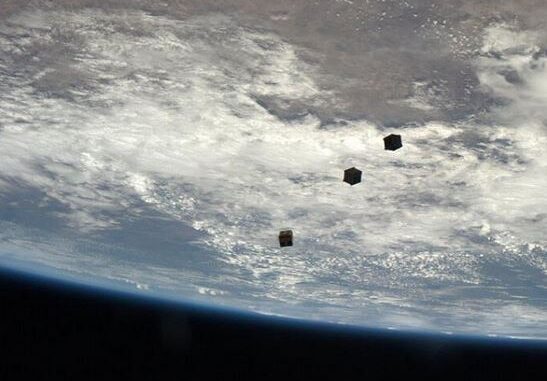
Nanosatellites are very small, low cost satellites typically weighing kilograms and with volumes of a few liters.
NASA has a program called the CubeSat Launch initiative (CSLI) which provides opportunities for nanosatellites to fly inexpensively as auxiliary payloads on rockets supporting major missions.  NASA’s CubeSats are cube-shaped satellites 10cm x 10cm x 10cm with a volume of about a liter and weighing about 1.3 kilograms. The CSLI program promotes innovative technology partnerships among NASA, U.S. industry, and other sectors for the benefit of Agency programs and projects.
Two nanosatellites, NanoSatisfi’s ArduSat 1 and ArduSat X, supported by Kickstarter crowdfunding were placed in orbit from the International Space Station yesterday. using a Japanese-built, spring-loaded launcher.
4D (time + 2D/3D) satellite imagery
Two startup satellite companies have already started putting nanosatellite constellations in space, that promise to provide much more frequent revisits per day than existing satellites can provide and at a much lower cost.
 In April 2013 Planet Labs launched two demonstration satellites, “Dove 1” and “Dove 2”. In early 2014, Planet Labs plans to launch 28 mini- Earth observing satellites at an altitide of 400 km. The satellites will provide frequent snapshots of the planet at a resolution aof about 5 m, allowing users to track changes such as traffic jams, deforestation, conctruction progress in close to real time.
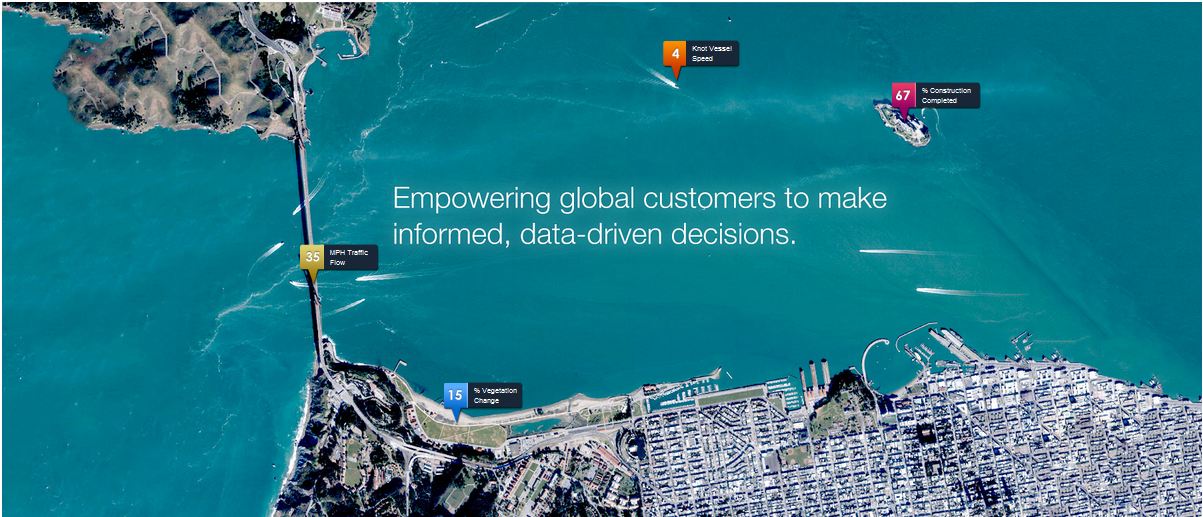
Skybox Imaging plans to launch a constellation of 24+ satellites (each larger than nanosatellites at about 100 kg) that will capture sub-meter imagery and HD-video of any spot on earth, multiple times per day. Skybox will capture the planet on a near real-time basis to provide a tool for addressing global challenges in areas including security, humanitarian efforts, and environmental monitoring. In both cases it is expected that the cost of the imagery will be signficantly less than current pricing.

Be the first to comment