

I have blogged before about how geospatial conferences are broadening their appeal by including more vertical industry content. Dave Sonnen for years predicted that the size of the spatially-enabled or location aware application business would surpass traditional GIS.
As another example of this, I just spent two exciting days at the NC GIS Conference in Raleigh, North Carolina. The NC GIS conference is held every two years. This year 881 people attended, which I find very impressive for a totally volunteer organized event. Most of the attendees were from government and from North Carolina.
Statewide Geodata
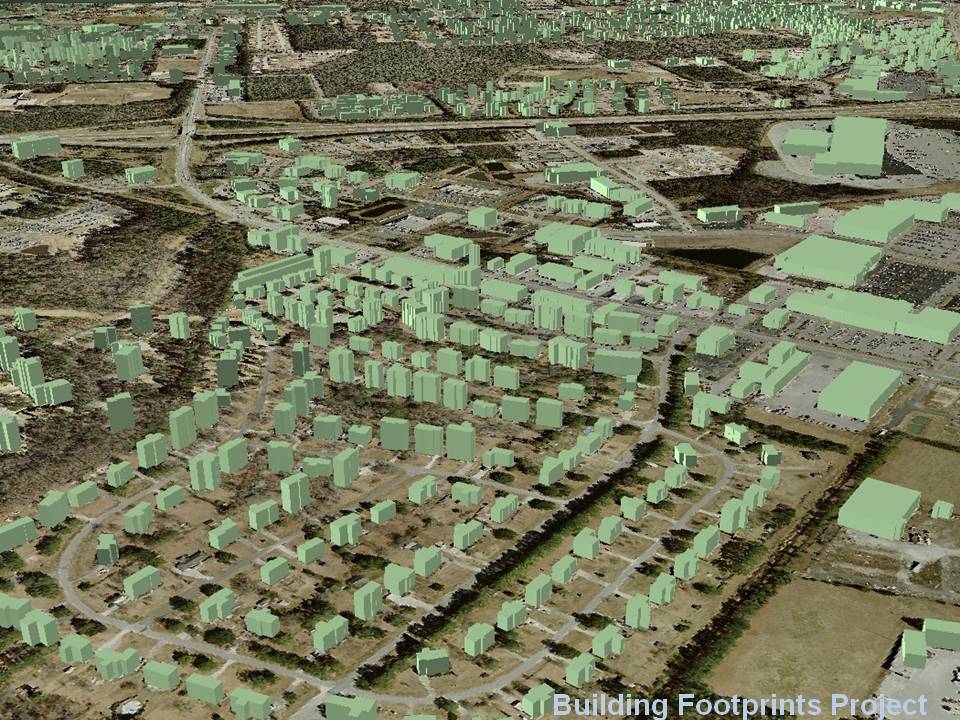 I was impressed to find that North Carolina is leading the nation in several areas of geospatial data capture, statewide 6″ orthophotos, the first county of which has just been delivered, statewide LiDAR coverage and statewide building footprints including all buildings over 800 ft2, about 5.2 million buildings in all. (Slide John Dorman)
Financial Impact of Sea Level Rise
North Carolina is taking global climate change very seriously. Scott Shuford of Onslow County, gave a presentation about the challenges in communicating complex, uncertain information such as global climate change. For example, we know that the observed CO2 concentration in 2008 was just inder 400 ppm, but we don’t know what it will be in 2100. Climate models suggest between 55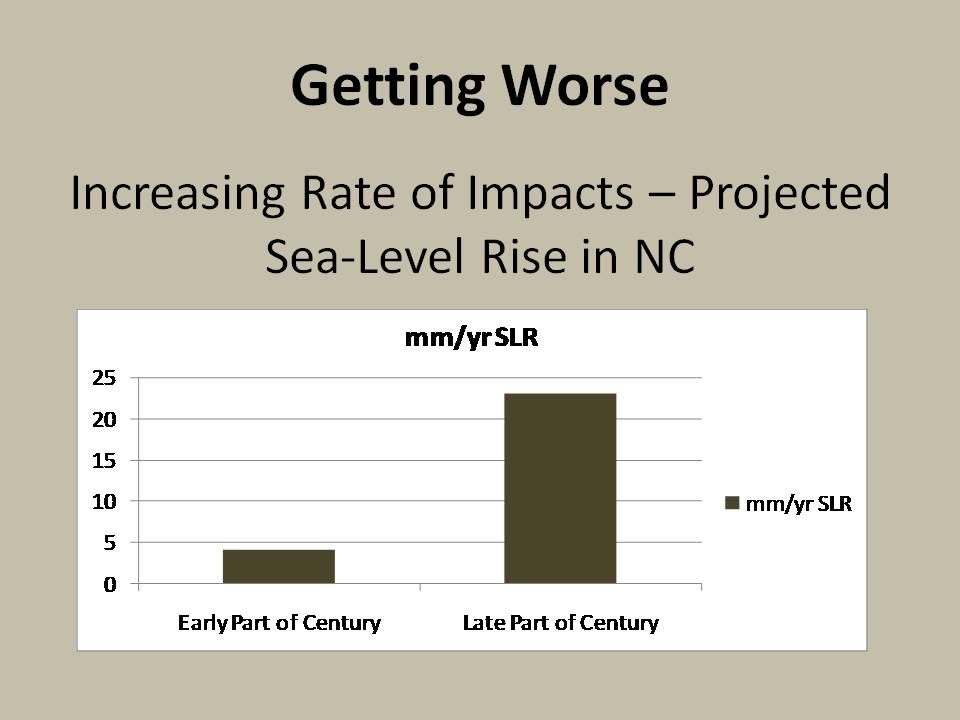 0 and 900 ppm, a very wide range. We know our global climate is warming and that the rate at which this is occurring only makes sense if we take into account human activity. CO2 and other greenhouse gases (GHGs) appear to play a role in the warming trend. We expect that temperatures will continue to rise, and because warm air holds more moisture, we expect precipitation events will become more intense. We expect that by 2070-2090 the climate of New Hampshire will become more like Northern Virginia or North Carolina (It was 70oF in Raleigh Feb 18, the last day of the conference.) We expect that the rate of sea level rise on the North Carolina coast, which is on the order of 4mm/yr now will become 20-25 mm/yr (or 1″/yr) by the end of the century. (Slide Scott Shuford)
John Dorman of the North Carolina Office of Geospatial and Technology Management is involved in a ground breaking risk assessment study of sea level rise that could be come a model for other parts of the country facing a similar problem. The study intends to model the financial impact on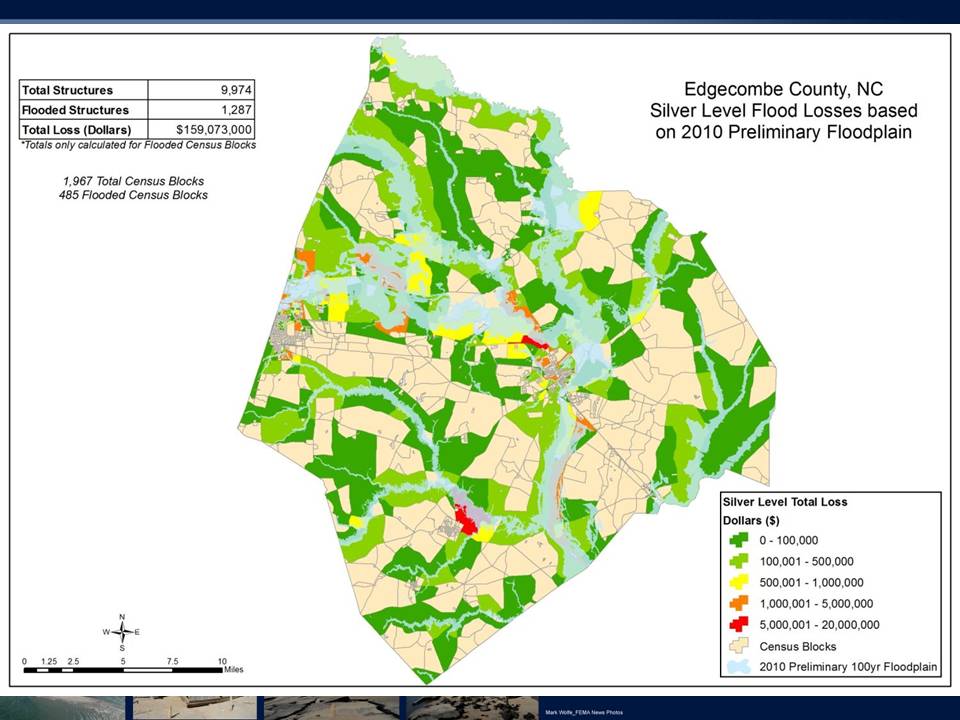
 coast communities of the rise in sea level. resulting from global warming, which is projected to be 1.1 meters by the end of the century. When completed it will be possible to estimate at the community level the financial losses associated with both long term sea level rise and episodic events such as storm surges. This is incredibly valuable because it allows municipaliities to put proposals for remedial action in a financial context as a return on investment. It also will influence patterns for new development, in particular reducing the demand for new development in threatened areas and changing the type of structures that are built in these areas. (Slide John Dorman)
Sustainability
Municipalities in North Carolina are taking sustainability seriously. As an example, Kathleen Snyder of Durham City-County is investigating the impacts of potential municipal solar regulations and reported on her efforts to use imagery data to estimate the total solar PV capacity of roofs in Durham.
3D Visualization
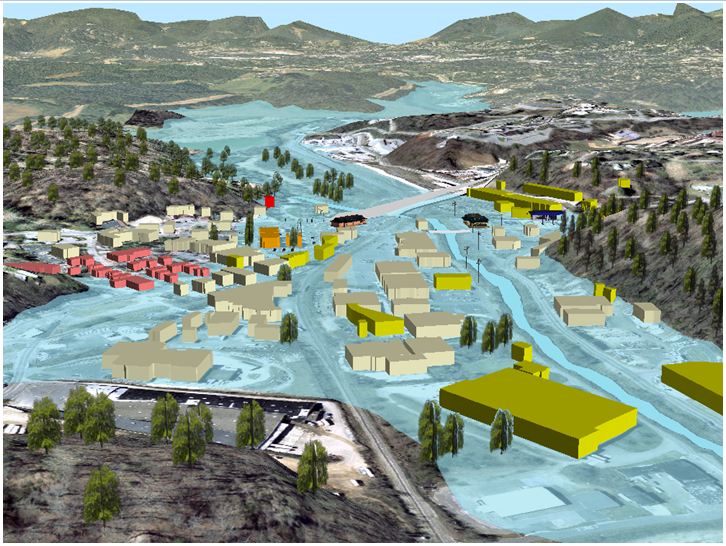 There were several presentation on using 3D visualization technology. Jeff Hicks and Alex Krebs, from RENCI at the University of North Carolina at Asheville, demonstrated using gaming technology to visualize development projects before construction.
One of the most interesting insights about 3D visualization was contributed by Scott Shufard who reported that after the 2004 floods in Asheville, a tour of the devastated area was organized to show public officials first hand how devastating the flooding had been. They were also shown a 3D visualization of the flooding, and Scott reported that the 3D visualization made a greater impression in bringing home to the officials the impact of the flood than the tour of the area. (Image Scott Shuford)
Sanitary Sewer Overflows (SSOs)
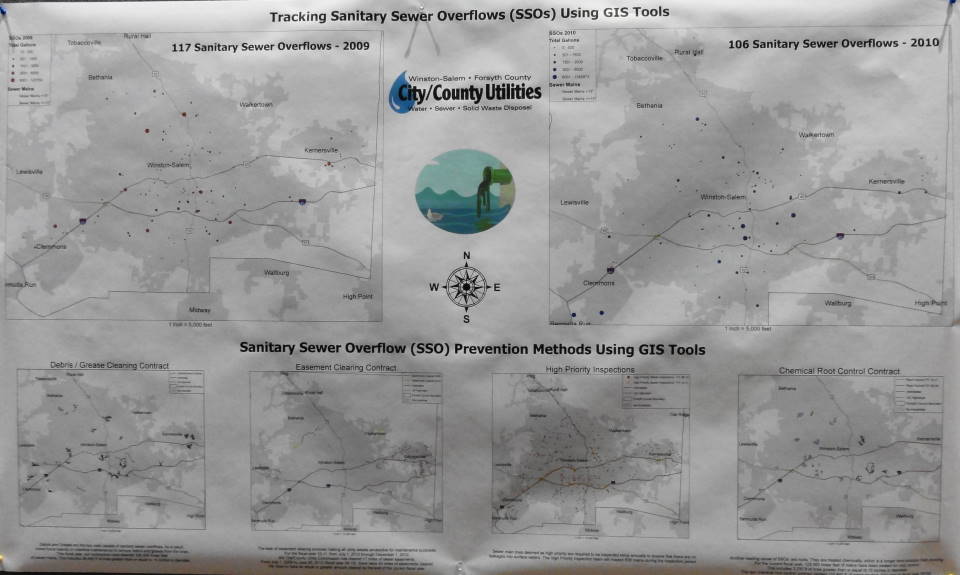 The conference included an extensive poster session among which I found one that caught my attention because it showed graphically a problem that many municipaliities are having to address, sanitary sewer overflows. (North Carolina is one of the few states east of the MIssissippi that does not have combined sewers.) The poster showed sanitary sewer overflows for Winston-Salem and Forsyth County in 2009 and 2010 and the remedial work that was done in 2010 including debris/grease cleaning, easement clearing, high priority inspections, and chemical root control. I think many citizens might be very surprised. and not a little dismayed, by the number, size and location of where sewer overflows are occurring in their neighbourhoods. I suspect that making this kind of information available for every sewer system in the country, as well for combined sewer overflows, would help immeasurably in increasing awareness of how prevalent and serious a problem SSOs and CSOs are.
Be the first to comment